

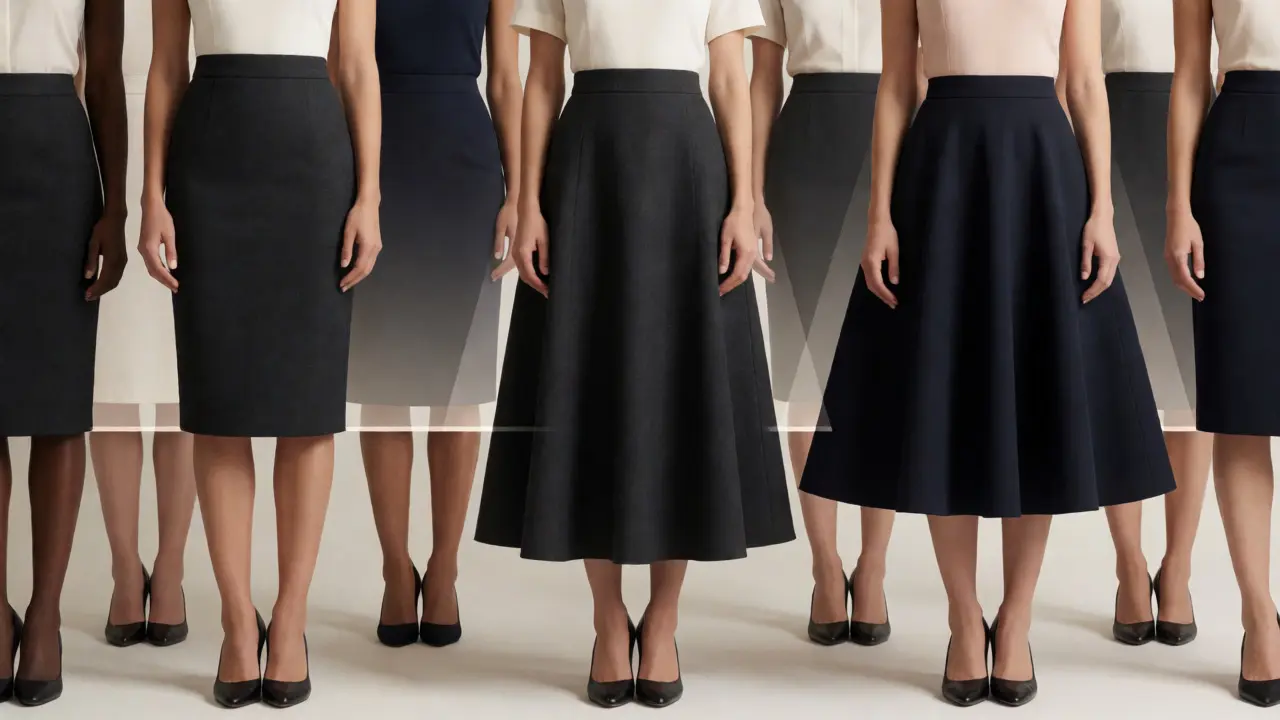
You’ve probably stood in front of your closet holding a skirt that looks amazing on the hanger but feels weird when you put it on. The fabric is right, the color is perfect, but something about the length just doesn’t click. You feel like your legs look shorter than they are, or maybe your waist disappears into the fold of the fabric. This isn’t bad luck; it’s geometry. Skirt lengths interact with body shapes to create visual lines that either elongate or truncate your silhouette. When you understand how a hemline cuts across your frame, you stop guessing and start styling with precision.
The goal here isn’t to hide parts of yourself. It’s about balance. If your shoulders are wide, you might want volume at the hips to even things out. If your legs are long, a high slit can show them off without overwhelming your torso. Let’s break down exactly where the hem should hit for each major body type, so you never have to wonder if a midi skirt is working for you or against you again.
The Geometry of Visual Weight
Before we match skirts to bodies, you need to grasp one core principle: horizontal lines cut vertical space. Every time a skirt ends, it creates a horizontal line across your body. Where that line lands determines how people perceive your height and width.
A hem that hits mid-calf, for example, breaks the leg in half. Unless you have very toned calves, this can make legs look thicker and shorter. A hem that hits just below the knee, however, leaves a small sliver of calf visible before the shoe starts, which often tricks the eye into seeing a longer, uninterrupted line. This is why proportion balancing is less about size and more about placement. You are manipulating where the eye stops and starts.
Think of your body as a canvas. Your natural waist is usually the anchor point. Skirts that sit above or below this point change the ratio of your top half to your bottom half. High-waisted skirts raise the visual center of gravity, making legs appear longer. Low-rise skirts lower it, emphasizing the torso. Knowing your personal ratios helps you choose the rise, not just the length.
Hourglass Figures: Highlighting the Waist Without Adding Bulk
If you have an hourglass shape, your bust and hips are roughly equal, with a defined waist. You don’t need to create curves; you already have them. The risk here is adding bulk around the hips, which can obscure your waistline and make you look wider than you are.
For hourglass figures, pencil skirts are classic for a reason. They follow the curve without adding extra fabric. But length matters. A pencil skirt that hits just below the knee is ideal because it keeps the silhouette sleek. If the skirt is too short, it can look overly casual or disproportionate to a fuller hip measurement. If it’s too long and tight, it restricts movement and can pull awkwardly at the thighs.
Pleated skirts also work well, but watch the pleat depth. Deep box pleats add volume right at the hip bone, which might widen your appearance. Instead, opt for knife pleats that start from the waistband and fall straight down. This maintains the narrowest part of your waist while allowing the fabric to skim over the hips rather than clinging or bulging. A-line skirts are another safe bet, as they flare gently from the waist, balancing the bust without adding unnecessary weight to the hips.
Pear-Shaped Bodies: Balancing Narrow Shoulders with Wider Hips
Pear shapes have narrower shoulders and busts compared to their hips and thighs. The styling goal is often to draw attention upward or to balance the lower half so it doesn’t dominate the frame. Here, hemline selection plays a critical role in minimizing hip emphasis.
Avoid hemlines that end exactly at the widest part of your hips. This draws a direct line across your broadest area. Instead, look for skirts that skim past the hips. An A-line skirt is your best friend here because it flares away from the body starting at the waist, covering the hips and thighs smoothly. It creates a triangular shape that counteracts the inverted triangle of the upper body.
Midi lengths can be tricky for pear shapes. If the hem hits mid-thigh, it emphasizes the width. If it hits mid-calf, it can shorten the leg. The sweet spot is often just below the knee or ankle-length. Ankle-length skirts with a slight slit allow movement and keep the eye traveling downward, creating a continuous line from shoulder to toe. Darker colors on the bottom help visually recede the hips, while lighter or patterned tops draw the eye up.
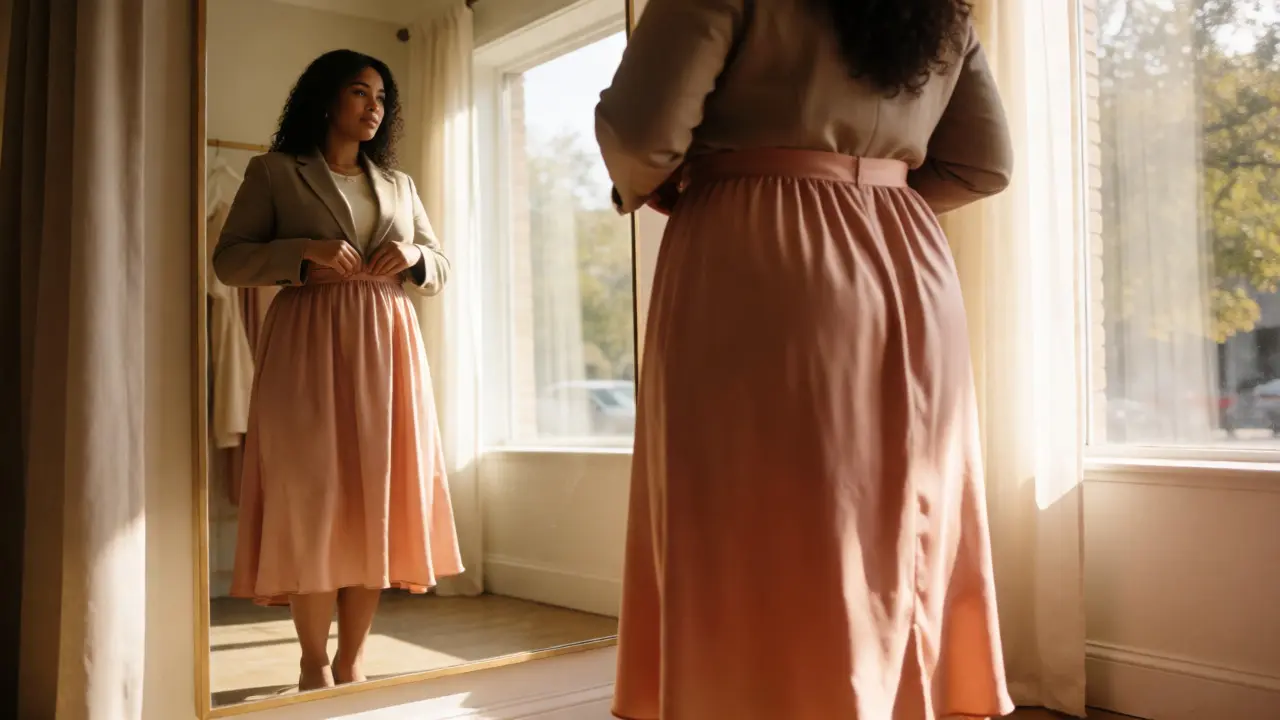
Apple-Shaped Bodies: Creating Definition Around the Midsection
Apple shapes carry weight in the midsection, with slimmer arms and legs. The challenge is defining a waist without squeezing it uncomfortably or drawing attention to the belly. Tight waistbands can dig in and create bulges, while shapeless sacks can make you look larger overall.
Empire waists are excellent for apple shapes. These skirts gather just under the bust and flow loosely over the stomach. This skips the midsection entirely, focusing on the smallest part of your torso (under the bust) and letting the fabric drape over any tummy concerns. Pair this with a structured blazer or jacket to add definition to the shoulders, balancing the softness of the skirt.
Wrap skirts also work well because they create a V-neck effect at the waist, which elongates the torso. However, ensure the wrap ties at the side rather than the front if you’re self-conscious about the midsection. A side tie creates an asymmetrical line that distracts from the center. Avoid stiff fabrics that stick out; choose materials with some drape, like jersey or silk blends, that conform gently without clinging.
Rectangle and Athletic Builds: Adding Curves Through Volume
Rectangle shapes have similar measurements for bust, waist, and hips, lacking a pronounced curve. Athletic builds share this trait but often have more muscle definition. The goal here is to create the illusion of curves by adding volume to specific areas.
Tutu-style or circle skirts add immediate volume to the hips, creating a visual curve where there wasn’t one. Because these skirts flare out dramatically, they contrast sharply with the straighter lines of the torso, tricking the eye into seeing a defined waist. A belt worn over a full skirt can further accentuate the waistline, carving out a shape from the rectangular frame.
Layering is key. Wearing a skirt with texture, such as ruffles or tiers, adds dimension. Horizontal stripes on a tiered skirt can widen the hips slightly, balancing the shoulders. For athletic builds, consider asymmetrical hems. These break up the straight vertical line of the body and add dynamic interest, drawing the eye to the movement of the fabric rather than the static shape of the torso.
Inverted Triangles: Softening Broad Shoulders
Inverted triangles have broad shoulders and busts with narrower hips. To balance this, you need to add visual weight to the lower half. Straight or column skirts can sometimes make the top-heavy look more pronounced because they offer no counterbalance at the bottom.
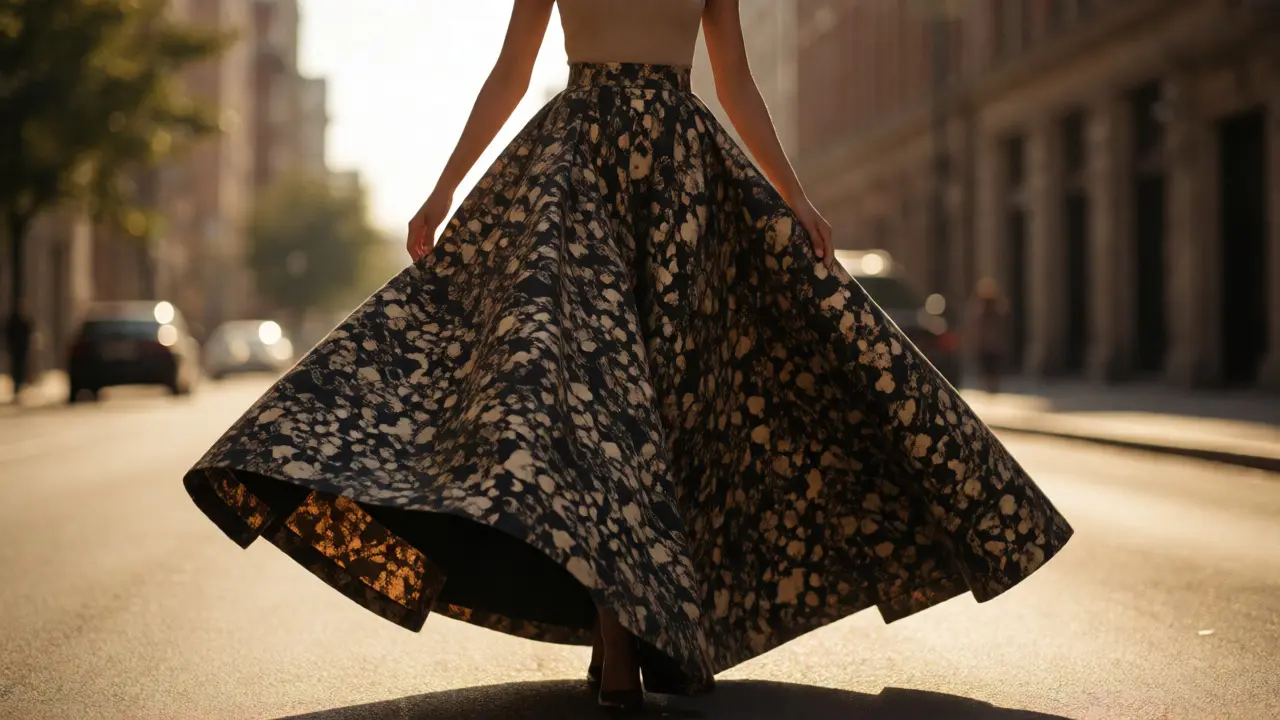
Full skirts with volume at the hem are ideal. Think ballgown styles or wide A-lines that flare significantly from the waist. This added width at the bottom mirrors the width of the shoulders, creating a balanced hourglass-like silhouette. Patterns on the skirt, especially bold prints or bright colors, draw the eye downward, shifting focus away from the shoulders.
Hemlines that hit at the ankle or floor are particularly effective here. Long, flowing fabrics soften the angularity of the upper body. Avoid heavy detailing on the shoulders, like epaulets or puff sleeves, when wearing a voluminous skirt, as this can overwhelm the frame. Keep the top simple and let the skirt do the heavy lifting in terms of balance.
Practical Guidelines for Trying On Skirts
Knowing the theory is half the battle. The other half is testing it in real life. Here’s how to evaluate a skirt quickly when you’re shopping or getting dressed:
- Sit Down Test: Always sit in a skirt before buying. Some lengths look great standing but ride up or bunch awkwardly when seated. If a mini skirt exposes too much when you sit, it’s not practical for daily wear unless you pair it with opaque tights or shorts.
- Check the Rise: Pull the waistband up and down. Does it sit comfortably on your natural waist? If it slides down, it will change the proportions throughout the day. A secure fit at the waist ensures the hem stays where you intended it.
- Walk Around: Move naturally. Does the fabric cling to your thighs? Does it swing freely? Athletic legs might find certain synthetic fabrics clingy, while curvier hips might find stiff fabrics restrictive. Movement reveals comfort and fit issues that standing still hides.
- Shoe Synergy: Try the skirt with the shoes you plan to wear most often. Heels change the way a hem hangs. A midi skirt that looks bulky with flats might look streamlined with heels. Conversely, a mini skirt might look too short with bare legs but perfect with knee-high boots.
| Body Shape | Best Hemline | Why It Works | What to Avoid |
|---|---|---|---|
| Hourglass | Just below knee | Keeps silhouette sleek; highlights waist without adding hip bulk. | Bulky pleats at hips; very short minis that unbalance proportions. |
| Pear | Ankle or just below knee | Skims past widest point; creates vertical line. | Hemlines ending at mid-thigh or widest hip point. |
| Apple | Empire or Midi | Skips midsection; defines smallest part of torso. | Low-rise waists; stiff fabrics that cling to stomach. |
| Rectangle | Mini or Full Circle | Adds volume to hips; creates illusion of curves. | Straight column skirts that emphasize lack of waist. |
| Inverted Triangle | Floor-length or Wide A-Line | Adds weight to bottom; balances broad shoulders. | Narrow pencil skirts that exaggerate top-heaviness. |
Common Pitfalls and How to Fix Them
Even with the right guidelines, mistakes happen. One common issue is the "midi mishap." Many people think midi skirts are universally flattering, but for petite frames, a standard midi length can swallow them whole. If you are under 5'4", look for "petite" sizing specifically designed to raise the hemline, or roll the hem up slightly to hit just below the knee instead of mid-calf.
Another trap is ignoring the shoe-to-skirt gap. If there is a large gap between your hem and your shoe, it can chop your leg. Tucking pants into boots or choosing nude shoes that match your skin tone can extend the leg line, making any skirt length look more proportional. Conversely, if you are tall, you might feel like everything is too short. In this case, opting for maxi skirts or pairing minis with knee-high socks can restore balance.
Finally, don’t forget context. A hemline that works for the office might not work for a beach day. Consider the activity level. Active days call for durable fabrics and secure fits, while formal events allow for delicate drapes and longer trains. Matching the length to the occasion ensures you feel confident, not just stylish.
Can I wear a mini skirt if I have thick thighs?
Absolutely. The key is the fit and the pairing. Choose a mini skirt that skims rather than clings, perhaps in an A-line shape. Pair it with opaque tights or knee-high boots to create a continuous vertical line, which prevents the hem from cutting off the leg visually. Balance the exposed leg with a more covered-up top, like a sweater or blazer, to keep the look sophisticated.
Are midi skirts only for tall people?
No, but they require careful styling for shorter frames. Petite individuals should look for midi skirts that hit just below the knee rather than mid-calf. Pairing them with pointed-toe shoes and high heels helps elongate the leg. Monochromatic outfits, where the skirt matches the top or shoes, also prevent the horizontal line from breaking the body’s vertical flow.
How do I know my body shape accurately?
Measure your bust, waist, and hips. Compare the numbers. If bust and hips are similar and waist is significantly smaller, you’re an hourglass. If hips are larger than bust, you’re a pear. If bust is larger than hips, you’re an inverted triangle. If all three are similar within a few inches, you’re likely a rectangle. Remember, bodies change over time, so re-measure periodically.
Does fabric choice affect how skirt length looks?
Yes, significantly. Stiff fabrics like denim or taffeta hold their shape and can add volume, which might widen the silhouette. Draping fabrics like silk, rayon, or jersey hug the body and follow curves, which can emphasize existing shapes. For balancing purposes, use stiffer fabrics to add structure where needed and softer fabrics to streamline areas you want to de-emphasize.
What is the most versatile skirt length?
The "knee-grazing" length (just above or just below the knee) is generally considered the most versatile. It works for professional settings, casual outings, and semi-formal events. It is rarely too short or too long, making it a safe base for building a capsule wardrobe. However, always adjust based on your specific body proportions for the best fit.


Write a comment