

Most people treat socks like an afterthought. You grab a pair from the drawer that doesn't have holes, pull them on, and forget about them until laundry day. But in the world of modern style, that mindset is costing you. Socks are no longer just functional items to keep your feet warm; they are one of the most accessible ways to inject personality into an outfit. Think of them as the punctuation mark at the end of a sentence-they might be small, but they define how the whole statement reads.
Whether you are rocking a crisp suit or casual denim, the right choice in color, pattern, and texture can transform a basic look into something intentional and sharp. It’s not about spending a fortune on designer brands. It’s about understanding the rules of contrast, harmony, and proportion so you can make every step count.
The Psychology of Color Coordination
Color is the first thing people notice, and it sets the tone for your entire ensemble. The old rule was to match your socks exactly to your shoes or your trousers. That approach is safe, but it’s also boring. Today, we play with contrast to create visual interest.
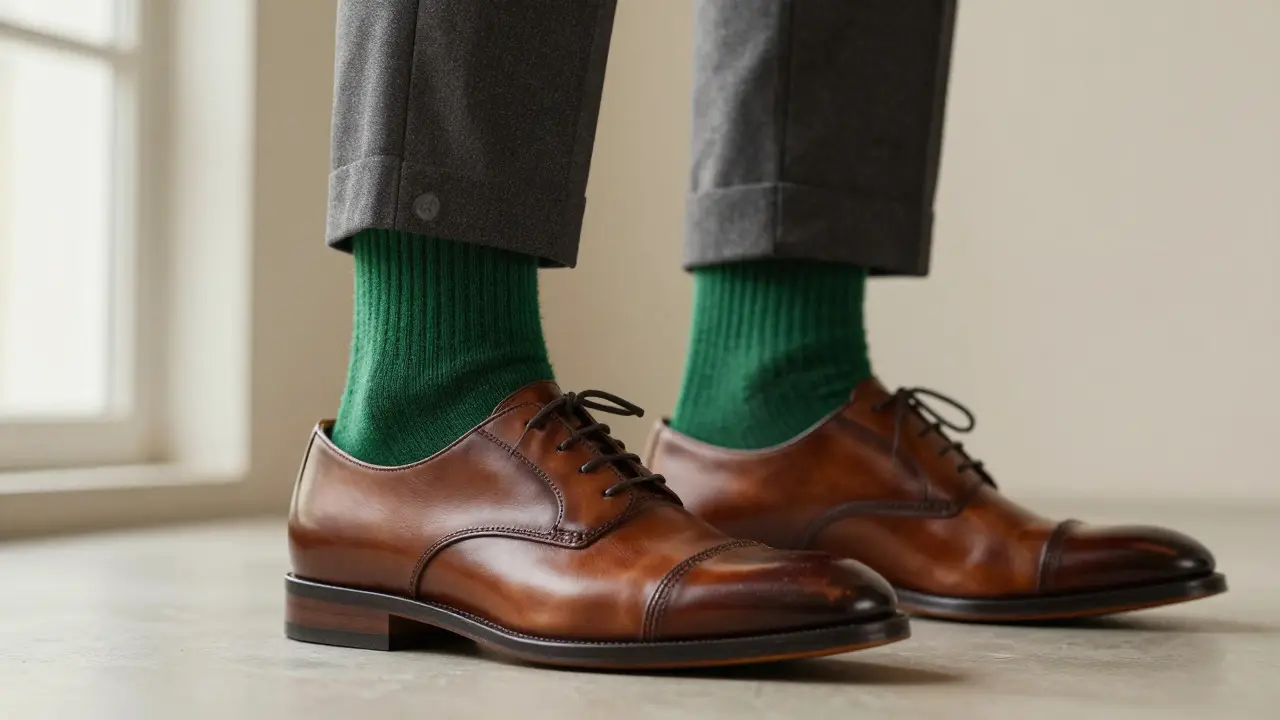
If you are wearing neutral shoes-like black leather loafers, brown oxfords, or white sneakers-you have a blank canvas. This is where you introduce color. A deep navy blue sock pairs beautifully with brown leather because the cool tone of the blue contrasts nicely with the warm earthiness of the brown. Similarly, forest green or burgundy socks add a sophisticated pop against charcoal grey trousers.
| Shoe Color | Recommended Sock Colors | Vibe/Style |
|---|---|---|
| Black Leather | Navy Blue, Charcoal Grey, Deep Red | Formal, Sharp |
| Brown/Tan Leather | Olive Green, Mustard Yellow, Burgundy | Casual, Earthy |
| White Sneakers | Pastels, Bright Neons, Striped Patterns | Youthful, Playful |
| Grey Sneakers | Light Blue, Pink, White | Clean, Minimalist |
Avoid matching your socks exactly to your pants unless you are trying to elongate your legs visually. When your sock matches your pant leg, the line breaks at the ankle, which can make your legs look shorter. Instead, choose a sock color that complements another element in your outfit, like your shirt or a bag. This creates a cohesive loop that ties the look together.
Playing with Patterns Without Overwhelming
Once you get comfortable with solid colors, patterns become your next tool for expression. However, patterns require a bit more finesse. The key is balance. If your outfit is already busy-say, a plaid shirt with checkered trousers-keep your socks simple. Solid colors work best here to prevent visual clutter.
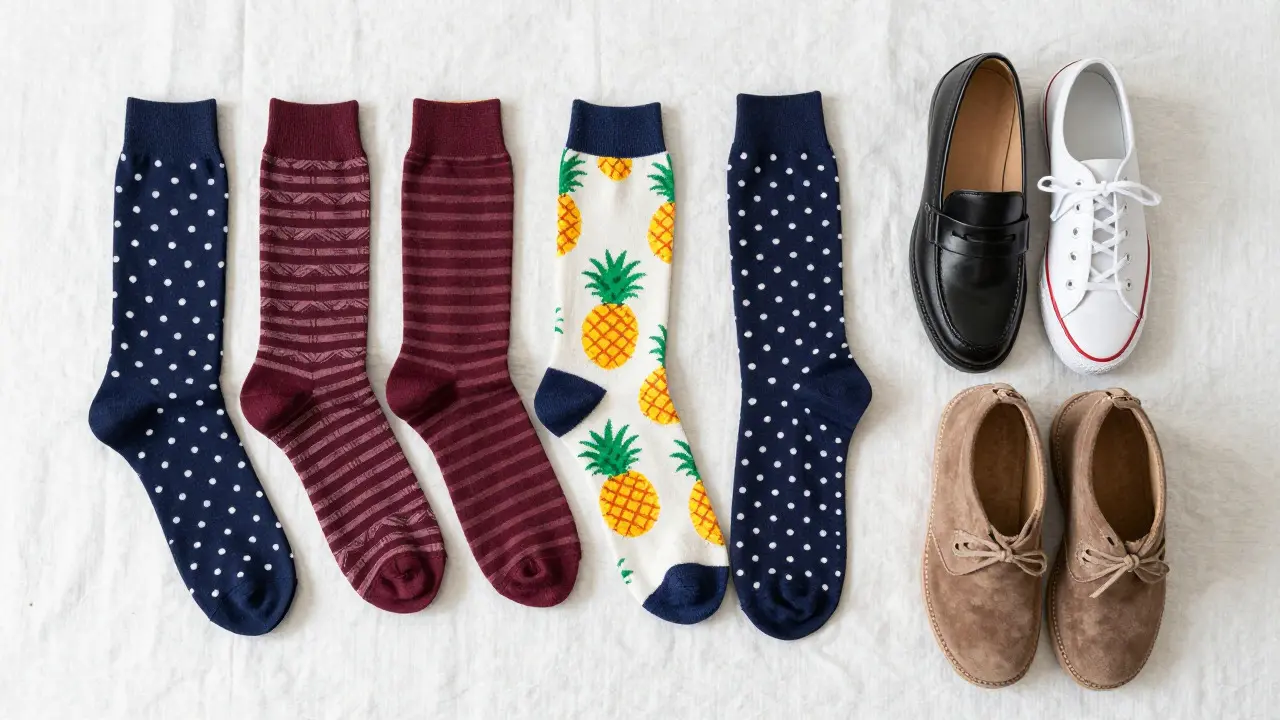
On the other hand, if you are wearing a plain navy blazer and grey chinos, this is the perfect opportunity to bring out the fun stuff. Polka dots, geometric shapes, and subtle stripes can add a layer of sophistication without shouting for attention. For a bolder look, try novelty prints like pineapples, guitars, or abstract art, but reserve these for casual settings or creative workplaces.
When mixing patterns, pay attention to scale. Large, bold patterns on socks should be paired with smaller, subtler patterns elsewhere in your outfit, or vice versa. Avoid combining two large-scale patterns, as they will compete for dominance and create a chaotic effect. A good rule of thumb is to let the socks be the focal point if the rest of your outfit is understated.
The Impact of Texture and Material
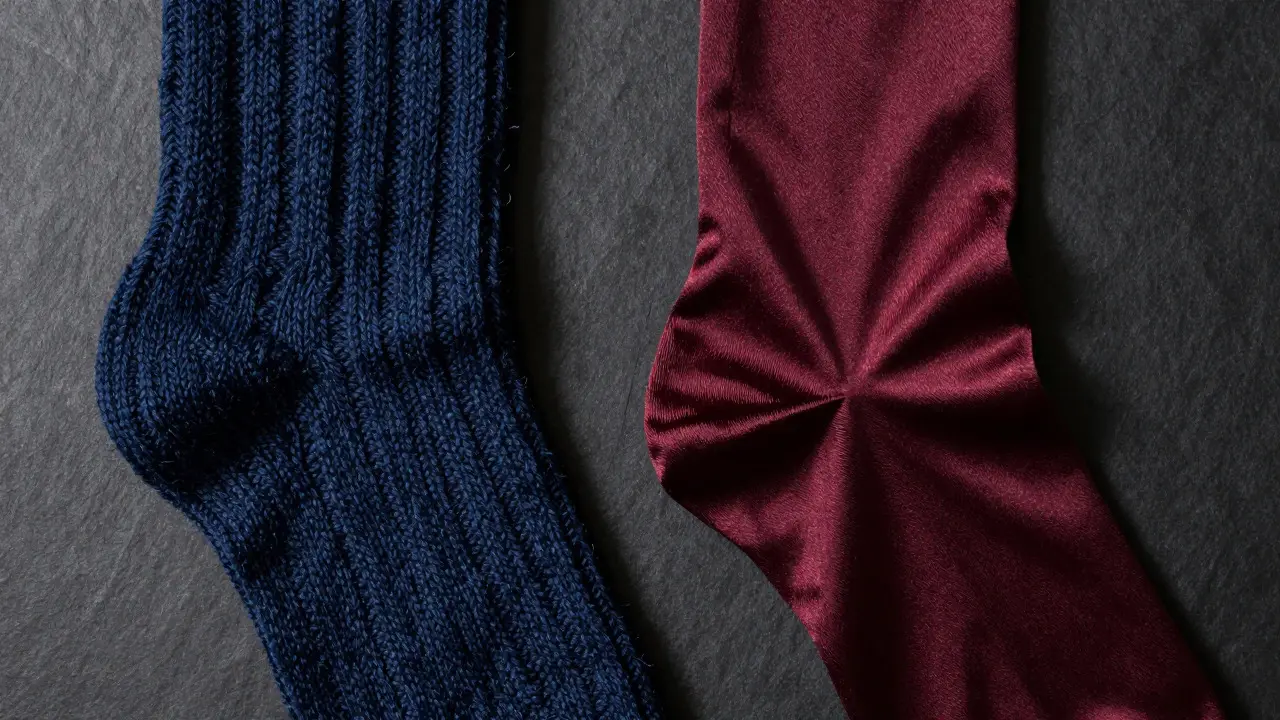
We often overlook texture, but it adds depth and richness to an outfit. A smooth cotton sock looks very different from a chunky knit wool sock, even if they are the same color. Texture introduces tactile elements that catch the light and create shadows, adding dimension to your lower half.
Cable-knit socks are thick, textured socks made from interwoven yarns that create raised patterns. They are perfect for fall and winter outfits, pairing well with suede boots or heavy denim. The roughness of the knit contrasts nicely with smooth leather shoes, creating a balanced aesthetic.
For summer, opt for lightweight materials like bamboo or thin cotton blends. These breathe better and sit closer to the skin, making them ideal for loafers or slip-ons. Silk-blend socks offer a luxurious sheen that elevates formal wear, reflecting light subtly and adding a touch of elegance to tuxedos or dark suits.
Consider the season when choosing texture. Heavy knits in July feel out of place and uncomfortable, while thin synthetics in January lack the warmth and visual weight needed for colder months. Aligning your sock material with the weather ensures both comfort and stylistic coherence.
Matching Socks to Specific Footwear Styles
Different shoes demand different approaches to sock styling. Let’s break down some common footwear types and how to accessorize them effectively.
- Oxfords and Derbies: These formal shoes typically call for mid-calf dress socks. Ensure the sock covers your calf enough so that no skin shows when you sit down. Darker colors and subtle patterns work best here.
- Loafers: Loafers offer versatility. You can go no-show for a sleek, minimalist look, especially in warmer weather. Alternatively, colorful or patterned socks peeking out from penny loafers create a preppy, Ivy League vibe.
- Sneakers: Sneakers are the wild card. High-top sneakers often hide socks entirely, but low-tops allow you to show off crew-length socks. Bold graphics, bright colors, or retro athletic designs complement the casual nature of sneakers.
- Boots: With Chelsea or chukka boots, you want socks that provide cushioning and height. Thick wool socks tucked neatly inside prevent bunching and maintain a clean silhouette. Avoid overly long socks that spill over the top unless you’re going for a rugged, outdoor look.
Remember, the goal is harmony between the shoe and the sock. A delicate lace-up shoe paired with a bulky hiking sock creates a disconnect. Match the formality and bulk of the sock to the structure of the shoe.
Common Mistakes to Avoid
Even seasoned style enthusiasts make errors when it comes to socks. Here are a few pitfalls to watch out for:
- Showing bare ankles in formal settings: Unless you are intentionally breaking the rules for a specific avant-garde look, showing skin between your trouser hem and shoe is generally considered inappropriate in professional environments.
- Ignoring fit: Socks that are too loose slide down, creating wrinkles and discomfort. Too tight, and they cut off circulation. Invest in quality socks with reinforced heels and toes for a better fit.
- Overdoing novelty prints: While fun, socks with faces, logos, or excessive text can distract from the rest of your outfit. Use them sparingly and ensure they align with your personal brand or mood.
- Mismatching left and right: It happens to everyone, but stepping out with mismatched socks sends a signal of carelessness. Double-check before leaving the house.
Building a Versatile Sock Collection
You don’t need hundreds of pairs to master sock styling. Start with a core collection of versatile basics and gradually expand into more expressive options. Aim for a mix of solids, subtle patterns, and varied textures.
Begin with five pairs of solid neutral socks (black, navy, grey, brown, beige) for everyday use. Add three pairs with simple patterns like stripes or dots for business casual days. Finally, include two or three statement pieces with bold colors or unique designs for weekends or social events. This curated approach ensures you always have something appropriate for any occasion without overwhelming your wardrobe.
As you experiment, take note of what feels good and looks good on you. Style is deeply personal, and confidence plays a huge role in how your outfit is perceived. Don’t be afraid to try new combinations, even if they seem unconventional at first. Sometimes, the most memorable looks come from unexpected pairings.
Should socks match shoes or pants?
Traditionally, socks were matched to either shoes or pants to create a seamless line. However, modern style favors contrast. Matching socks to pants can elongate your legs, while contrasting socks add visual interest. Choose based on the desired effect: seamless flow vs. bold statement.
What length socks should I wear with shorts?
With shorts, ankle socks or no-show socks are standard for a clean, sporty look. Crew-length socks can work if you are aiming for a retro or streetwear aesthetic, but ensure they coordinate well with your sneakers to avoid looking accidental.
Can I wear white socks with non-white shoes?
Yes, white socks are versatile and can be worn with almost any shoe color, especially sneakers. They provide a crisp, clean contrast that works well in casual settings. Avoid white socks with formal dress shoes unless you are deliberately subverting tradition.
How do I choose socks for a wedding?
For weddings, opt for elegant, high-quality materials like silk blends or fine merino wool. Stick to classic colors such as black, navy, or burgundy, perhaps with a subtle pattern like micro-dots or faint stripes. Avoid loud prints unless the wedding theme explicitly encourages them.
Are thick socks okay with slim-fit jeans?
Thick socks can bunch up under slim-fit jeans, creating unsightly wrinkles. Opt for thinner, fitted socks that lie flat against your skin. If you prefer thicker socks for warmth, consider slightly looser jeans or tuck them in carefully to minimize bulk.