

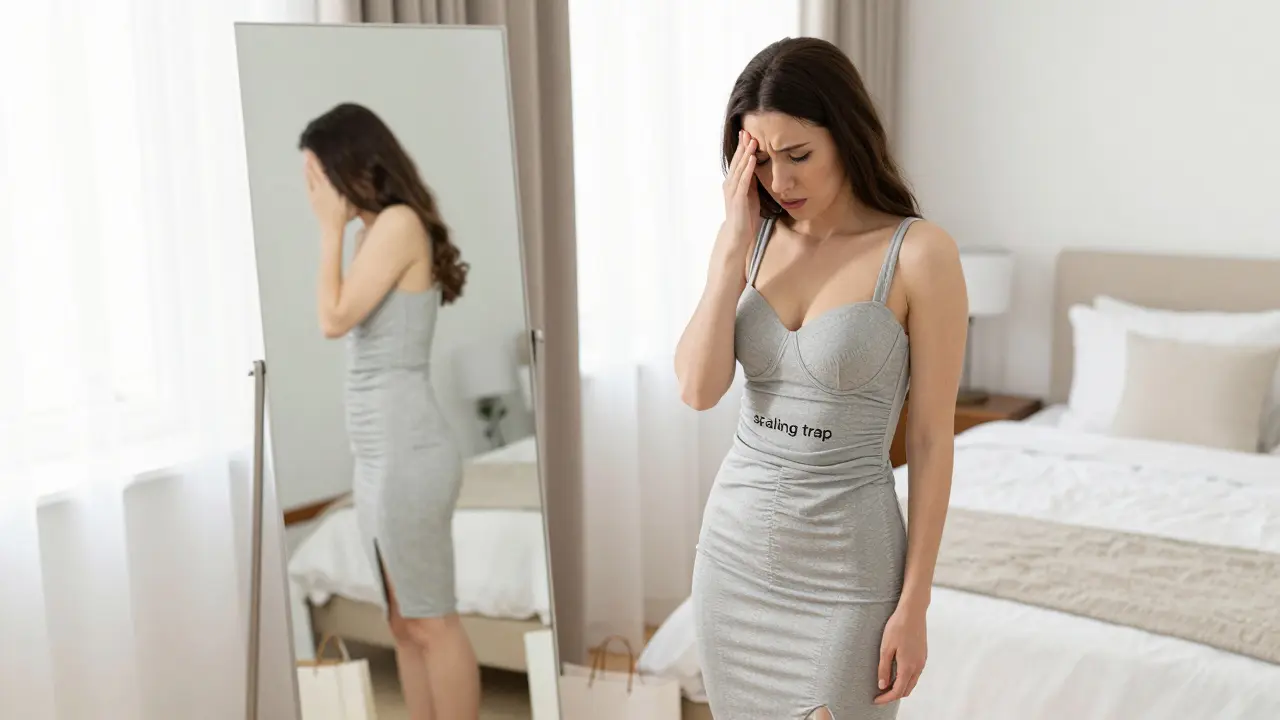
If you've ever felt like the fashion industry is fighting against your shape, you're not alone. The goal isn't just to find clothes that "fit" in the sense that you can zip them up, but to find pieces that flatter your proportions and move with you. Achieving this requires a mix of understanding garment construction, knowing your specific measurements, and sometimes a little bit of strategic altering.
Основные моменты (Key Takeaways)
- Standard scaling often fails because it doesn't account for unique curve distributions.
- Measuring your "widest points" is more important than relying on a size label.
- Fabric choice-specifically stretch and drape-drastically changes how a garment sits on a plus-size frame.
- Small tailoring adjustments can make a cheap find look like a custom piece.
- Inclusive fashion is moving toward "fit-first" design rather than just adding extra fabric.
The Scaling Trap: Why "Plus Size" Doesn't Always Mean "Fit"
For a long time, the industry relied on a process called grading. This is where a designer creates a sample in a size 6, and then a technician adds a set amount of inches to every seam to create a 1X or 2X. The problem is that a body doesn't grow linearly. A person might need more room in the bust but have a narrower waist, or they might carry more weight in the thighs while having a smaller torso. When brands use basic grading, they end up with the "gap and pinch" effect.
True inclusive fashion is the practice of designing clothing that accommodates a wide range of body shapes, sizes, and abilities from the initial sketch. Instead of just scaling up, inclusive designers create separate patterns for different size blocks. This means they look at how a size 22 shoulder differs from a size 4 shoulder, rather than just adding two inches of fabric. This shift is what separates a garment that merely covers your body from one that actually contours to it.
Common Fit Hurdles and How to Beat Them
Let's get into the real-world annoyances. The "waist gap" in jeans is perhaps the most notorious. This happens because the curve from the hip to the waist is steeper in plus-size bodies than the patterns anticipate. To solve this, look for "curvy fit" lines specifically. These are engineered with a higher hip-to-waist ratio, meaning more room in the rear and a narrower cut at the top. If you've already bought the jeans, a simple dart in the back waistband can close that gap for a few dollars at a local tailor.
Then there's the armhole issue. Many plus-size tops have armholes that are either too tight (restricting movement) or too low (exposing undergarments). The secret here is checking the shoulder seam. If the seam hangs off your shoulder, the armhole is likely too big. If it pulls toward your neck, it's too small. When shopping, try the "hug test": cross your arms as if you're hugging yourself. If the fabric pulls tight across your shoulder blades, the garment lacks the necessary ease for a comfortable range of motion.
We also have to talk about the dreaded "torso length" struggle. Depending on where you carry your weight, a standard shirt might ride up too high, or a dress might be too long in the waist, creating an awkward bunch of fabric. This is where knowing your vertical measurements comes in. Measure from your shoulder to your natural waist. If you're long-waisted, look for brands that offer "tall" options, which provide extra length in the torso without adding unnecessary width to the hips.
The Science of Fabric: Stretch vs. Structure
The material you choose can either hide a fit flaw or highlight it. Many plus-size brands lean heavily on Spandex or Elastane because it's an easy way to make a garment fit multiple people. While stretch is great for comfort, too much of it can lead to "clinging," where the fabric hugs every fold of the skin in a way that might not be desired. Spandex is a synthetic fiber known for its exceptional elasticity, but it can also lose its shape over time if the percentage is too high without a stable base fabric.
For a more polished look, look for fabrics with a balanced drape. A Jersey Knit is a great middle ground-it offers the flexibility of a knit but the look of a woven fabric. If you're going for something structured, like a blazer, look for fabrics with a small percentage of stretch (about 2-5%) and a high-quality lining. A fully lined jacket provides a structural skeleton that holds the garment's shape, preventing it from collapsing or wrinkging at the joints.
| Fabric Type | Best For... | Fit Attribute | Common Pitfall |
|---|---|---|---|
| Heavyweight Jersey | T-shirts, Day Dresses | High drape, modest stretch | Can be too heavy in summer |
| Woven Cotton with Elastane | Jeans, Chinos | Shape retention | Too much elastane leads to bagging knees |
| Crepe | Blouses, Wide-leg pants | Fluid movement | Prone to wrinkling |
| Ponté Knit | Ponte Pants, Blazers | Firm structure + stretch | Can be too thick for layering |
Mastering Your Measurements: Beyond the Size Tag
The biggest mistake people make is shopping by size number. A size 18 in one brand is a size 22 in another. To stop the guessing game, you need a set of your own "golden numbers." Don't just measure your waist; measure the widest part of your hips, the fullest part of your bust, and your upper arm circumference.
When you're shopping online, ignore the size chart's "S/M/L" or "1X/2X" labels. Instead, look at the actual measurements of the garment. A pro tip is to measure a piece of clothing you already own that fits perfectly. Lay it flat on a table, measure across the chest and waist, and double those numbers. Compare these "flat measurements" to the brand's size guide. This removes the emotional stress of the number on the tag and focuses on the physics of the fabric.
Strategic Alterations: The Final Touch
Even the best-fitting mass-market clothing isn't truly custom. This is where a tailor becomes your best friend. Most people think tailoring is only for expensive suits, but a few simple tweaks can transform a $30 dress into a high-end look.
Ask your tailor about "taking in the waist." If a dress fits your chest and hips but balloons in the middle, adding a few darts can create a defined silhouette without making the garment feel tight. Another game-changer is shortening the hem or adjusting the sleeve length. When a sleeve ends exactly at your wrist bone rather than covering your knuckles, the entire garment looks more intentional and expensive. Don't be afraid to buy a size up to fit your largest area and then pay to have the smaller areas tailored down. It's almost always cheaper to buy a larger size and shrink it than to try and stretch a too-small garment.
Building a Sustainable Plus-Size Wardrobe
Avoid the trap of "fast fashion" trends that prioritize low cost over quality fit. Cheaply made plus-size clothes often use thin fabrics that lose shape after two washes, meaning you're constantly replacing your wardrobe. Instead, invest in "foundation pieces"-well-fitting black trousers, a structured blazer, and a few high-quality tees. These pieces should be the ones you spend the most time fitting and tailoring.
Focus on versatility. A wide-leg trouser in a neutral tone can be dressed up with a heel or down with a sneaker, and because it has a more relaxed silhouette, it's generally more forgiving in the fit than a skinny cut. When building your collection, prioritize the "touch and feel" of the fabric. If it feels scratchy or too thin in the store, it will likely irritate your skin or wear through in high-friction areas like the inner thighs.
Why do my clothes fit in the store but feel different at home?
Lighting and movement play a huge role. In a dressing room, you're usually standing still and looking in a mirror. At home, you're sitting, bending, and walking. If a garment feels tight after an hour of wear, it's likely because it lacks enough "ease"-the extra space between your body and the fabric-or it's made of a fabric that doesn't breathe, causing it to cling as you warm up.
How can I tell if a brand is truly inclusive or just scaling up?
Look at the product photos. If a brand only uses one model who is a "standard" plus size (usually a size 14 or 16), they might just be scaling. If they show the same garment on a size 16, 22, and 30, and the fit looks proportional on all of them, it's a sign they've invested in separate pattern grading for different size brackets.
What is the best way to stop thighs from rubbing through fabric?
Look for "reinforced inseams" or fabrics with a higher density of weave, like Ponté knit. You can also have a tailor sew a small piece of cotton fabric (a "gusset" or patch) inside the thigh area of your favorite pants to add an extra layer of protection against friction.
Are shapewear pieces necessary for a better fit?
Shapewear is a tool, not a requirement. It can help a garment glide over your curves without clinging, but it shouldn't be used to "shrink" your body to fit a too-small dress. If you need extreme compression just to zip up a garment, the fit is wrong. Use shapewear for smoothing and support, not for sizing down.
What are the most forgiving silhouettes for plus-size bodies?
A-line skirts, empire waists, and wrap dresses are classically forgiving because they allow you to adjust the fit at the narrowest part of your body while providing room for hips and bust. Wide-leg trousers are also excellent as they create a balanced vertical line from the hip down.


Write a comment