

Spring/Summer 2026 isn’t just another season-it’s a reset. After years of pandemic-inspired comfort and quiet luxury, designers are pushing back with boldness, texture, and a raw sense of freedom. The runways in New York, Milan, Paris, and Tokyo didn’t just show clothes; they showed moods. And those moods are loud, tactile, and deeply personal. If you’re wondering what to wear next year, stop scrolling through influencers and look at what actually walked down the runway. Here’s what’s real.
Color Is Back-But Not the Way You Think
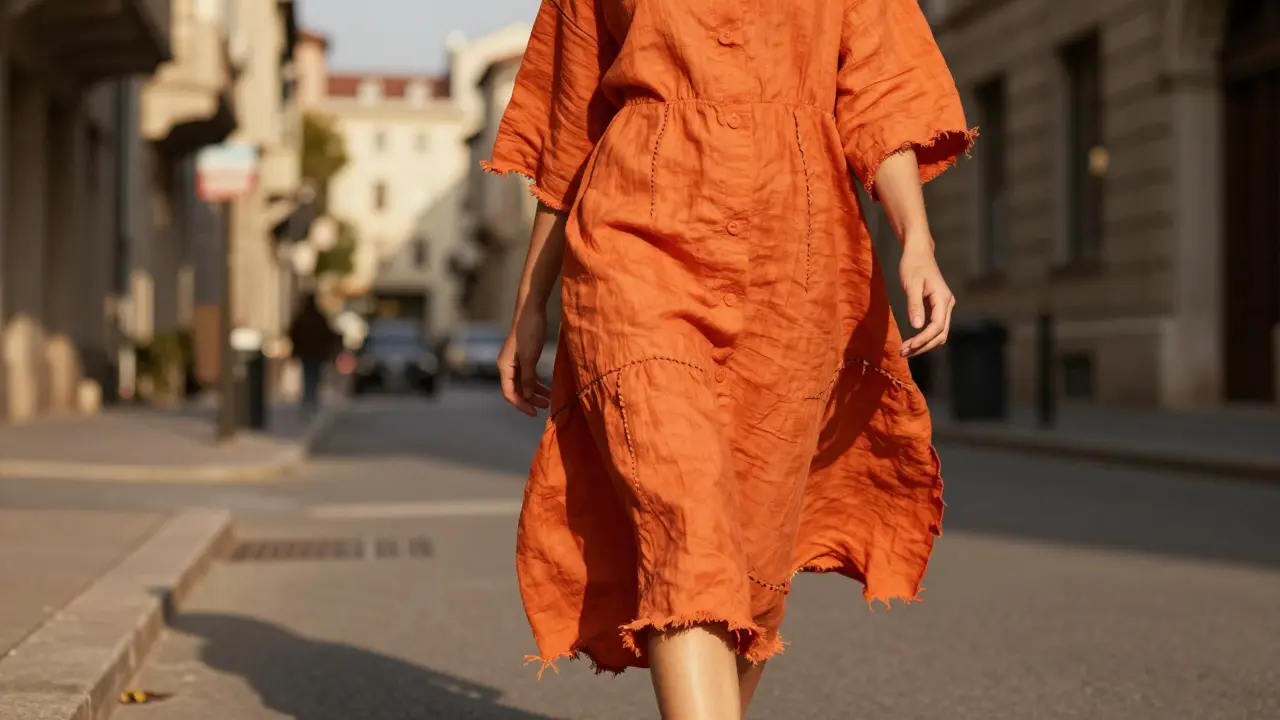
Forget pastel palettes and muted neutrals. Spring/Summer 2026 is saturated. Not in a rainbow overload way, but in intentional, electric bursts. Think acid green that looks like it was pulled from a neon sign at 3 a.m., deep tangerine that glows under sunlight, and electric violet that reads as both futuristic and nostalgic. These aren’t accents-they’re full outfits. Designers like Miu Miu, Balenciaga, and Loewe sent models down the street in head-to-toe tones that demand attention. But here’s the twist: these colors are paired with raw, unfinished fabrics. A tangerine linen dress with visible seams. A violet silk shirt with frayed hems. It’s not polished. It’s alive.
Why now? Because after years of restraint, people are tired of blending in. A survey by the Fashion Institute of Technology showed that 68% of Gen Z and millennial shoppers say they want to feel seen, not just dressed. Color isn’t just aesthetic-it’s identity.
Texture Over Print
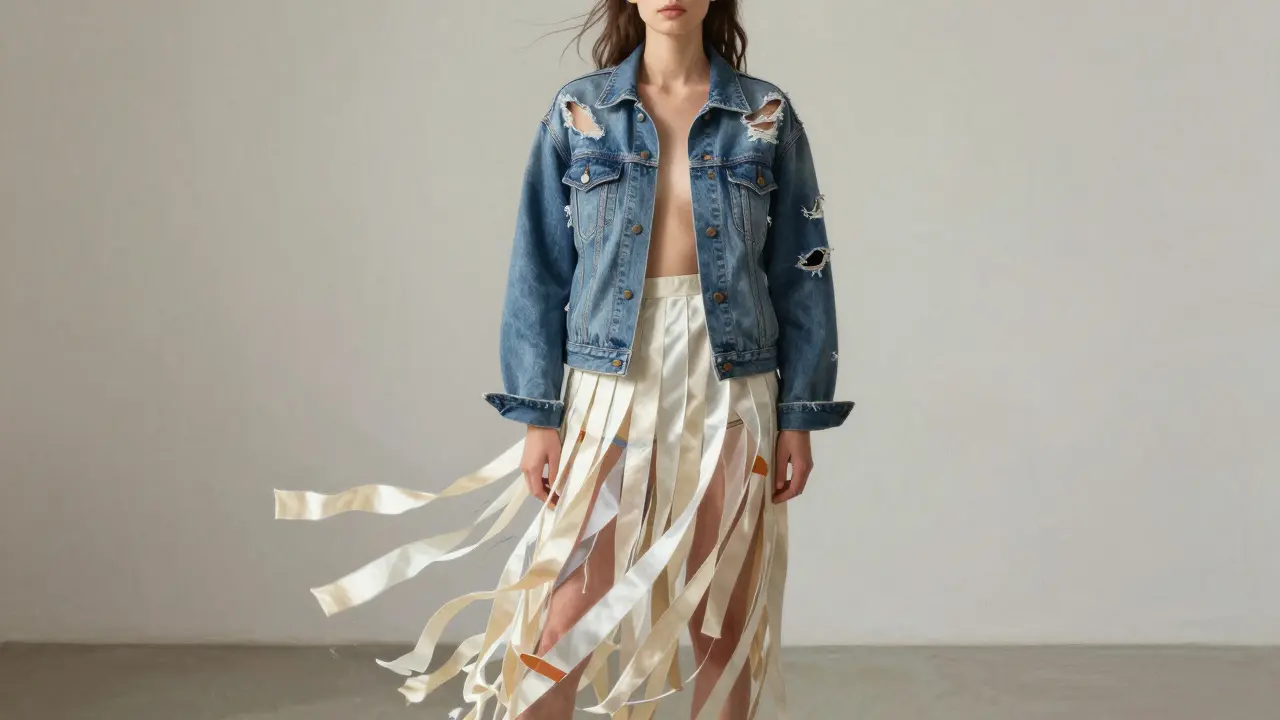
Prints are taking a backseat. Instead, texture is the new language. Designers focused on how fabric moves, catches light, and interacts with the body. Think knitted lace that looks like it was crocheted by hand, crinkled organza that ripples with every step, and double-layered denim where one layer is shredded and the other is pristine. At Rick Owens, models wore coats made of tightly wound wool ropes-like armor woven from yarn. At Chanel, skirts were constructed from hundreds of hand-cut silk strips that fluttered like wind chimes.
This isn’t just about looking different. It’s about feeling different. These textures create sound, movement, and surprise. A dress doesn’t just hang-it breathes. A jacket doesn’t just cover-it reacts. And that’s the point. You’re not wearing a garment; you’re wearing an experience.
Utility Gets Glamorous
Workwear is still everywhere-but it’s been remixed. Cargo pants? Yes. But now they’re made from liquid satin and stitched with metallic thread. Tool belts? Still there. But they’re attached to silk slip dresses. The utility trend isn’t about practicality anymore. It’s about rebellion dressed as function.
At Prada, models walked in high-waisted, wide-leg trousers with oversized pockets that held nothing but air-yet looked essential. At Bottega Veneta, aprons were worn over tailored suits, not as costume, but as a statement of labor as art. Even the shoes leaned into this: chunky soles with exposed stitching, buckles that looked like they came from a construction site, but were made from polished brass.
This isn’t cosplay. It’s a new kind of elegance-one that doesn’t hide effort. It celebrates the process of making, moving, and doing.
Transparency as Armor
Sheer fabrics are back, but not in the way they were in the 90s. This time, transparency isn’t about revealing skin-it’s about revealing structure. Designers layered translucent materials over bold underpinnings: a mesh top over a sculpted corset, a semi-sheer tunic over a high-neck bodysuit in metallic foil. At Iris van Herpen, dresses were made from laser-cut polyurethane that looked like frozen smoke, revealing the body’s shape without exposing it.
There’s power in this. It’s not about being seen-it’s about controlling what’s seen. You decide where the light hits. Where the shadow falls. Transparency became a tool of agency, not vulnerability.
Footwear: No Rules, Just Shapes
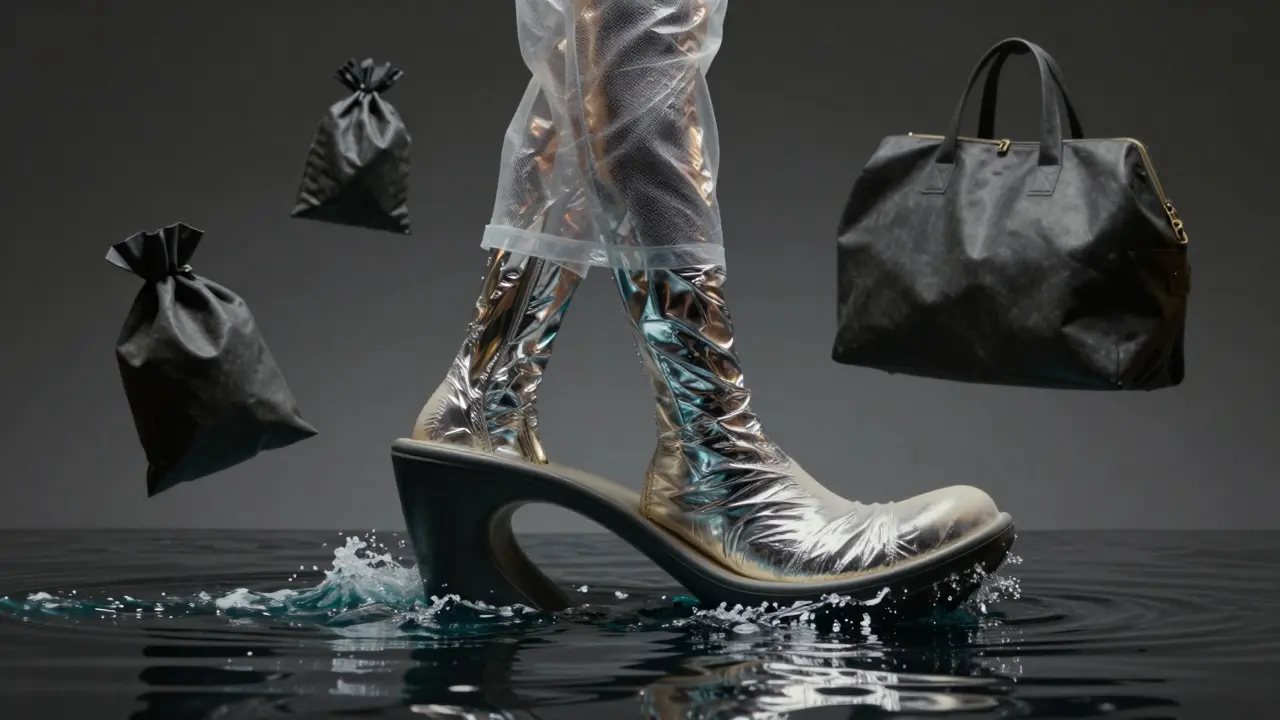
Sneakers? Still here. But so are platforms that look like they were carved from stone. Heels? Yes-but some are shaped like tree branches, others like stacked ceramic tiles. At Balenciaga, models wore boots with soles that curved upward at the toe, making every step feel like walking on a wave. At Jil Sander, sandals had no straps-just a single band of leather wrapped around the foot like a bandage.
The message? Your feet don’t need to conform. They need to express. Comfort isn’t the goal. Presence is.
Accessories: Less Is More-Unless It’s Not
Bag trends split into two extremes. On one side: micro bags the size of a credit card, worn like pendants on thin chains. On the other: oversized, slouchy totes made from recycled rubber and raw canvas, big enough to carry a laptop, a water bottle, and a change of clothes. At Gucci, bags had no zippers-just magnetic flaps that snapped shut with a satisfying click. At Saint Laurent, clutches were shaped like abstract sculptures, made from molded leather that looked like it had been dipped in molten metal.
Jewelry followed suit. Earrings were huge-some as long as your forearm-but made from lightweight resin. Necklaces layered like chains of office keys. Rings stacked so high they looked like tiny crowns. The rule? If it catches the eye, it belongs.
What to Buy (and What to Skip)
Not every trend is for everyone. Here’s what actually works in real life:
- Buy: A single statement piece in acid green or electric violet-it can be worn with everything you already own.
- Buy: One textured item-a knitted lace top, a crinkled skirt, or a double-layered denim jacket. It adds depth without needing a full outfit overhaul.
- Buy: One pair of unconventional shoes. Even if they’re not your usual style, they’ll make you feel different-and that’s worth it.
- Skip: Full head-to-toe trends unless you’re confident in your silhouette. Too much of one look can feel like a costume.
- Skip: Anything labeled “2026 trend” in fast fashion. These are knockoffs without the craft. Real texture, real color, real construction don’t come cheap-and they shouldn’t.
Why This Matters
This season isn’t just about clothes. It’s about reclaiming joy in dressing. After years of being told to be quiet, to be minimal, to be safe-designers are shouting. And people are listening. The trends of Spring/Summer 2026 aren’t about following rules. They’re about rewriting them. Your wardrobe doesn’t need to match your neighbor’s. It needs to match your mood. Your energy. Your truth.
Next time you stand in front of your closet, ask yourself: Do I want to blend in-or do I want to move through the world like I belong here? Because that’s what these clothes are asking you to do.
Are the Spring/Summer 2026 trends wearable for everyday life?
Yes-but selectively. The trends are bold, but they’re designed to be mixed. You don’t need to wear a full acid green outfit. One standout piece-a textured jacket, a pair of sculptural shoes, or a sheer top over a simple tank-can transform your look without overwhelming it. Focus on one element at a time. Let the rest of your outfit stay grounded.
Is sustainability still a factor in 2026 fashion?
Absolutely. Every major brand featured in the 2026 collections used recycled materials, deadstock fabrics, or low-impact dyes. What’s different is how they’re showing it. Instead of hiding sustainability behind labels, designers are making it visible-exposed seams, raw edges, and upcycled textures are now part of the aesthetic. Sustainability isn’t a selling point anymore-it’s the foundation.
What’s the most affordable way to try these trends?
Thrift stores and rental platforms are your best friends. Look for vintage pieces with interesting texture-like 90s knitwear, 80s metallic fabrics, or 70s linen. A secondhand acid green blazer or a pair of raw-edge denim can cost less than $50. Renting statement shoes or accessories for events is also a smart, low-commitment way to test the look.
Will these trends last beyond 2026?
Some will, some won’t. But the underlying shift will. The move toward texture over print, individuality over uniformity, and emotional expression over conformity isn’t a trend-it’s a cultural reset. Even if acid green fades, the idea of bold, personal style won’t. These trends are the beginning of a new chapter, not the end of one.
How do I style these trends if I’m not tall or curvy?
Scale doesn’t matter. A cropped, textured jacket looks powerful on any body. Wide-leg pants can be tailored to fit your hips. Oversized bags can be worn crossbody. The key is proportion, not size. A small person in a sculptural shoe looks intentional. A tall person in a micro bag looks modern. Confidence is the only fit requirement.


Write a comment