

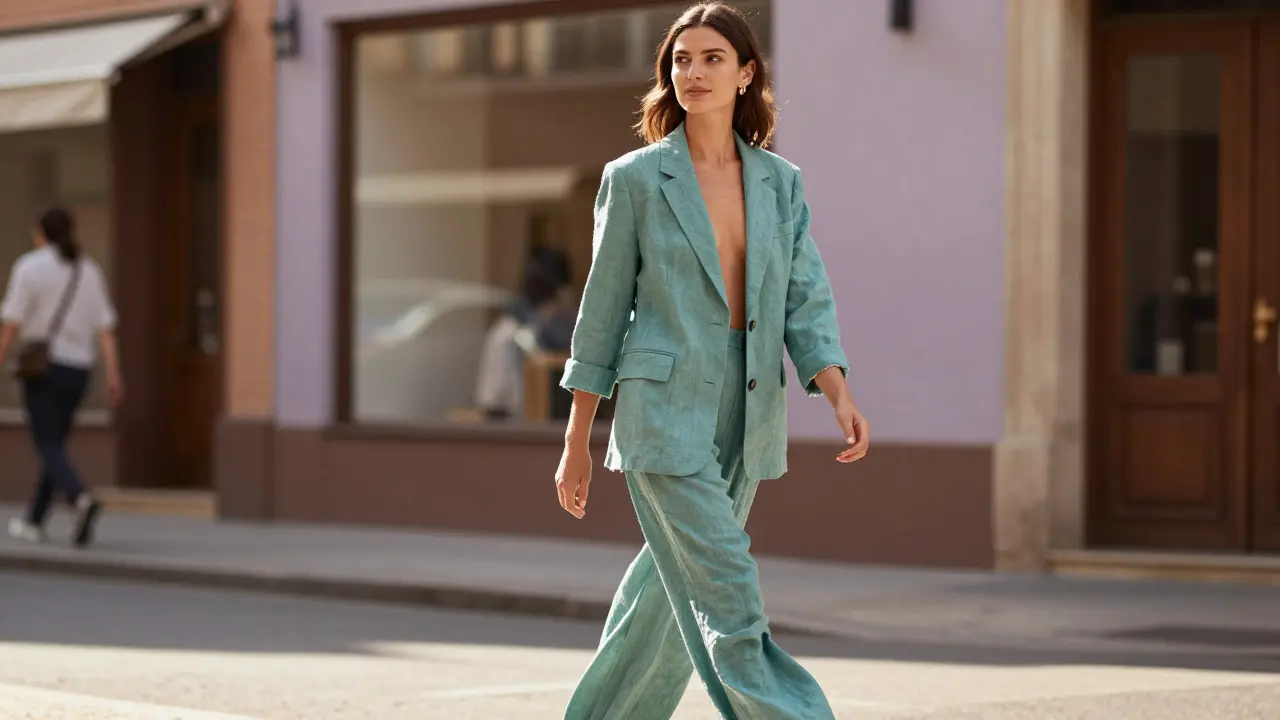
When you walk into a store in April 2026, you won’t just see new colors-you’ll see a whole new way of dressing. The Spring/Summer 2026 runway shows in New York, Paris, Milan, and London didn’t just drop trends; they dropped a mood. This season isn’t about following rules. It’s about breaking them with confidence, comfort, and a little bit of rebellion.
Quiet Luxury Is Dead. Long Live Quiet Confidence
The term ‘quiet luxury’ is officially retired. What replaced it? Quiet confidence. Designers stopped trying to hide wealth behind neutral tones and perfect tailoring. Instead, they let texture, fit, and movement speak for themselves. Think linen blazers with raw hems, silk slip dresses that cling just right, and wide-leg trousers that move like water when you walk. No logos. No embellishments. Just pieces that look expensive because they’re made well-not because they scream it.
Brands like The Row, Lemaire, and even Zara’s new ‘Essentials’ line leaned into this. Fabric weight matters more than ever. A cotton poplin shirt from this season doesn’t just feel soft-it feels substantial. You know it’s not fast fashion because it holds its shape after three washes. That’s the new standard.
Color Is Back-But Not How You Think
Forget pastels. This season’s palette is bold, but not loud. The standout shades? Chalky teal, burnt sienna, and sun-bleached lavender. These aren’t neon or saturated. They’re muted, almost nostalgic-like faded postcards from a summer you never had but still remember.
At Milan Fashion Week, Prada sent out models in coats the color of old porcelain. In New York, Proenza Schouler paired chalky teal with raw denim that looked like it had been washed by the ocean. These colors don’t compete. They calm. They blend. They make you feel grounded, even in a city that never sleeps.
And here’s the twist: these tones work on every skin tone. Chalky teal doesn’t wash out darker complexions-it enhances them. Burnt sienna flatters olive and fair skin alike. This isn’t trend-driven color. It’s human-driven color.
Zero-Waste Patterns Are the New Normal
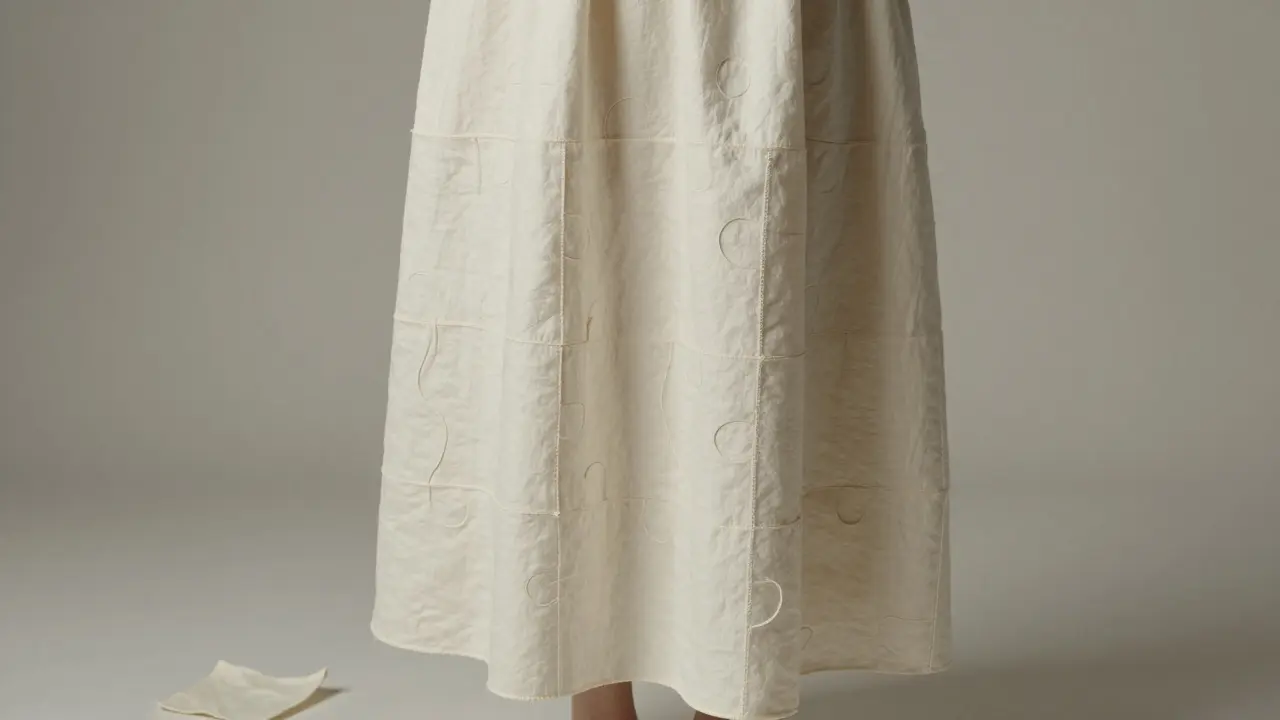
By 2026, sustainability isn’t a selling point-it’s a requirement. Designers aren’t just using recycled fabrics anymore. They’re designing patterns that use every inch of material. No scraps. No waste.
At Paris Fashion Week, Marine Serre showed a full collection made from zero-waste cutting techniques. Dresses were constructed from interlocking geometric shapes that fit together like puzzle pieces. Even the seams were designed to minimize fabric use. The result? Clothing that looks intentional, not just eco-friendly.
Smaller brands like Reformation and Everlane have adopted this too. Their new ‘Zero Cut’ line uses digital pattern-making software to reduce fabric waste by 92% compared to traditional methods. You won’t see a tag that says ‘sustainable.’ You’ll just notice that the garment fits perfectly, with no leftover fabric hanging off the edges.
Shoes That Feel Like Barefoot Walking
Heels are still here-but they’re softer. Flats are still here-but they’re smarter. The biggest shift? Footwear that mimics barefoot movement.
Brands like Allbirds, Veja, and even Nike’s new ‘Freeform’ line released shoes with ultra-thin soles, wide toe boxes, and zero arch support. Why? Because your feet were never meant to be squeezed into a pointy toe box for eight hours a day.
Runway models walked in these shoes for hours during shows. No complaints. No blisters. Just natural alignment. The trend isn’t just about comfort-it’s about health. Podiatrists are already noticing fewer cases of bunions and plantar fasciitis in younger women who switched to these designs.
And the styles? Minimalist. Slip-ons. Loafers with no laces. Sandals with straps that hug your foot, not pinch it. They look simple. But they’re engineered.
Transparent Layering Is the New Power Dressing
Forget blazers over tanks. This season, layering is see-through. Sheer organza over silk camisoles. Mesh panels on tailored shirts. Lightweight tulle skirts worn over bike shorts. It’s not about showing skin-it’s about showing structure.
At London Fashion Week, Simone Rocha sent out models in translucent cotton dresses layered over cropped leather vests. The contrast wasn’t sexy-it was smart. You could see the shape of the body underneath, but the silhouette stayed clean. It’s a new kind of modesty: confident, not covered.
And it’s practical. In cities like New York, where temperatures swing 20 degrees in a single day, this layering lets you adjust without changing your whole outfit. A sheer jacket over a tank in the morning. A cropped vest underneath in the afternoon. One outfit, three looks.
Accessories? Less Is More-But Bolder
Jewelry got smaller. Bags got simpler. But the details? They got louder.
Ear cuffs are back-but only if they’re asymmetrical. One ear with a thin gold band, the other with a single pearl. No matching sets. No bracelets stacked three deep. Just one statement piece that feels personal.
Bags? The top-handle box bag is gone. In its place: a slouchy, unstructured pouch made from recycled ocean plastic. It’s not big enough for your laptop, but it holds your phone, keys, and lipstick. Perfect for walking through the city. No zippers. No hardware. Just a drawstring.
And hats? Only one made the cut: the micro-brimmed sun hat. Not wide like a beach hat. Not tiny like a beret. Just enough to shade your face without blocking your view. Worn slightly tilted. Always.

What to Buy-and What to Skip
Here’s what actually works in real life:
- Buy: A linen-blend blazer in chalky teal. It goes with everything and lasts for years.
- Buy: Zero-waste cut trousers with a high waist and wide leg. They’re flattering, comfortable, and timeless.
- Buy: A pair of barefoot-style loafers. Your feet will thank you in June.
- Skip: Oversized everything. This season’s volume is intentional, not sloppy.
- Skip: Neon colors. They’re out. The new boldness is in subtlety.
- Skip: Logo-heavy accessories. They look dated in 2026.
Why This Season Feels Different
This isn’t just another fashion cycle. It’s a reset. After years of pandemic dressing, influencer trends, and fast fashion overload, people are done pretending. They want clothes that feel like they belong to them-not to a brand, a trend, or a feed.
The designers got it. They stopped chasing viral moments. They started listening to how people actually live. How they move. How they work. How they breathe.
That’s why this season doesn’t feel like fashion. It feels like life.
Are these trends only for tall or thin people?
No. The key trends-like wide-leg trousers, zero-waste cuts, and barefoot shoes-are designed for all body types. The focus is on movement and fit, not silhouette. Brands are using inclusive sizing across the board, and many are offering extended ranges up to size 24. If a piece feels restrictive, it’s not the trend-it’s the brand.
Can I mix these trends with my existing wardrobe?
Absolutely. Start with one piece: a linen blazer in chalky teal or a pair of zero-waste trousers. Pair them with what you already own-jeans, white tees, old sneakers. These pieces are meant to blend, not replace. You don’t need to buy everything new to look current.
Is sustainable fashion still expensive?
Not anymore. While high-end brands like Stella McCartney still command premium prices, fast fashion retailers like H&M and Uniqlo now offer zero-waste collections under $50. The cost difference is shrinking because production is more efficient, not because quality dropped. You’re paying for craftsmanship, not hype.
What if I hate barefoot shoes?
You don’t have to wear them. But consider this: the trend isn’t about the shoe-it’s about comfort as a priority. If barefoot shoes aren’t your thing, try a low-block heel with a wide base or a soft leather loafer with a cushioned footbed. The goal is to move without pain. Find what works for your body.
Will these trends last beyond 2026?
Yes. The quiet confidence aesthetic, zero-waste construction, and functional footwear aren’t passing fads. They’re responses to real needs: sustainability, comfort, and authenticity. These are the foundations of modern fashion now. Next season will build on them, not replace them.
Where to Start
Don’t try to overhaul your closet overnight. Pick one trend that speaks to you-maybe it’s the color, the fabric, or the way the shoes feel. Buy one thing that feels like it was made for you. Then live in it. Let it shape how you dress for the next few months.
Fashion in 2026 isn’t about looking like the runway. It’s about feeling like yourself-on purpose.


Write a comment