

Ever looked in your closet and felt like you have nothing to wear-even though it’s full? You’re not alone. Most people own way more clothes than they actually use. The problem isn’t lack of stuff. It’s lack of strategy. That’s where the statement anchor strategy comes in. Instead of throwing together random pieces, you build every outfit around one bold, intentional item. This isn’t about trends. It’s about confidence. It’s about making your wardrobe work for you, not the other way around.
What Is a Statement Anchor?
A statement anchor is a single clothing item that does the heavy lifting in your outfit. It’s the reason someone notices your look. It’s the piece that turns a basic tee and jeans into something memorable. Think bold colors, unique textures, standout silhouettes, or eye-catching patterns. It doesn’t have to be expensive. It just has to be you.
Here’s what makes a good anchor:
- It has a clear visual impact-something you can’t ignore.
- It fits your body and movement style. No one wants to feel restricted.
- It’s versatile enough to pair with multiple neutrals.
- You feel powerful wearing it. That’s non-negotiable.
Examples? A crimson wool coat. A pair of wide-leg velvet pants. A cropped leather jacket with metallic zippers. A silk blouse with an asymmetrical hem. These aren’t just clothes. They’re conversation starters.
Why This Strategy Works
Most people approach dressing like a grocery list: grab a shirt, grab pants, grab shoes. No cohesion. No intention. The statement anchor flips that. You start with one thing you love, then build everything else around it. This reduces decision fatigue. It cuts down on wasted purchases. And it makes getting dressed faster.
Studies show people who build outfits around a focal piece report higher satisfaction with their wardrobe. Why? Because they’re not chasing variety-they’re cultivating identity. A 2025 survey by the Fashion Psychology Institute found that 78% of people who used this method felt more confident in public settings within four weeks. Not because they bought more. But because they wore less-better.
How to Pick Your First Anchor
Don’t go shopping. Not yet. Start by looking backward.
Go through your last 10 photos where you felt great. Not filtered. Not posed. Just real moments. What were you wearing? Did you get compliments? Did you catch yourself admiring your outfit in the mirror? That’s your clue.
Here’s a simple test:
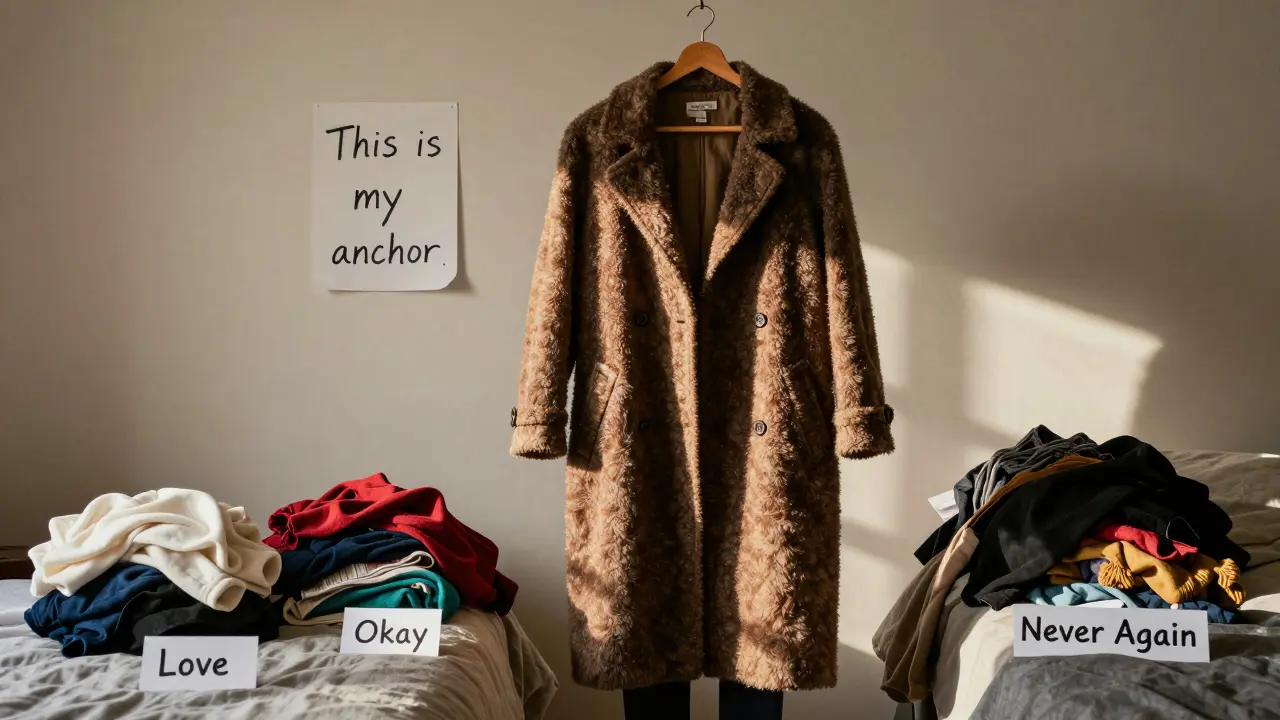
- Take out every item in your closet.
- Sort them into three piles: love, okay, never again.
- Look at the love pile. What do those pieces have in common? Color? Cut? Texture?
- One of those items is your anchor. If none stand out, pick the one you’d wear if you had to wear just one thing for the next month.
It doesn’t have to be flashy. A perfectly tailored navy blazer can be an anchor. A pair of dark wash jeans with a subtle whiskering. A chunky knit scarf. It’s about how it makes you feel, not how much it cost.
Building Outfits Around It
Now that you have your anchor, here’s how to turn it into a system.
Start with the basics: neutrals. Stick to three to five core neutrals that work with your anchor. Black, white, camel, gray, and navy are safe bets-but only if they actually go with your piece. Test them. Drape them over your anchor. See how they look in natural light. If a neutral clashes, ditch it.
Layering matters. If your anchor is a bold top, pair it with simple bottoms. If it’s pants, keep the top clean. If it’s a jacket, let it be the only pattern. The rule is simple: one statement, everything else quiet.
Shoes and accessories should support, not compete. A pair of black ankle boots. A thin gold chain. A structured tote. No need for statement earrings if your anchor is already shouting.
Here are three real examples:
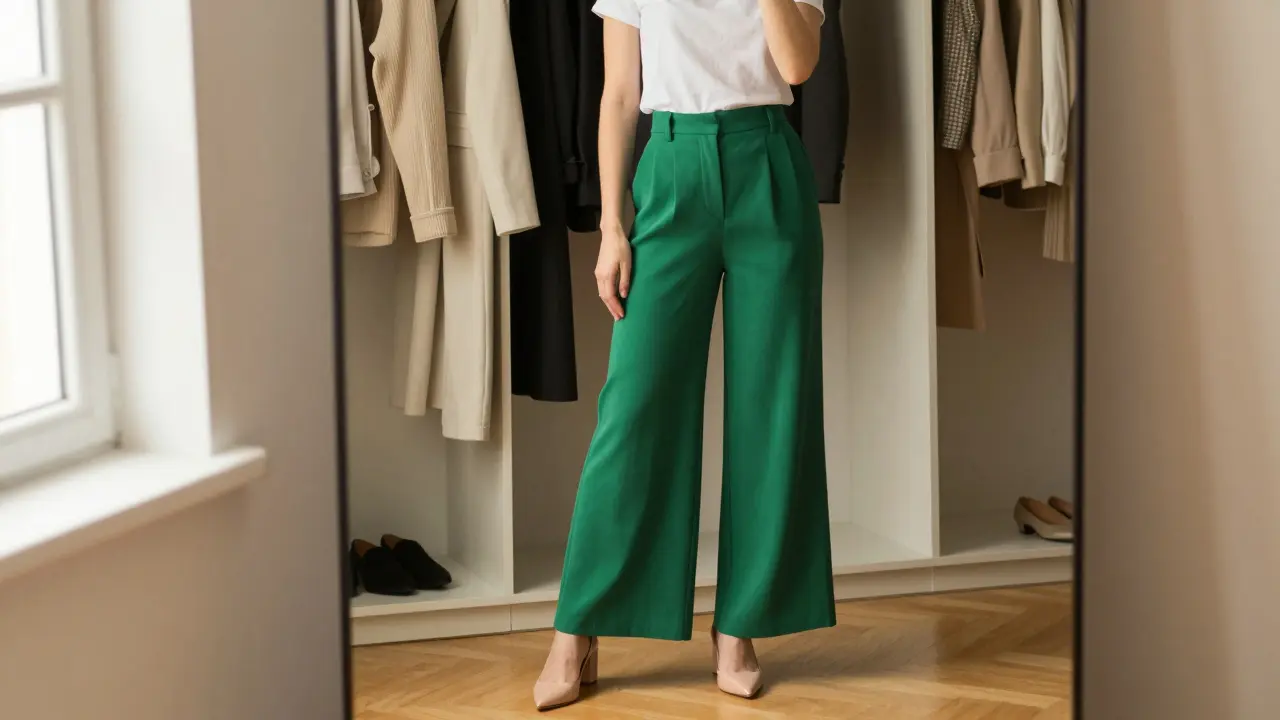
- Anchor: Emerald green wide-leg trousers. Outfit: White fitted tee, black leather belt, nude block heels, small hoop earrings.
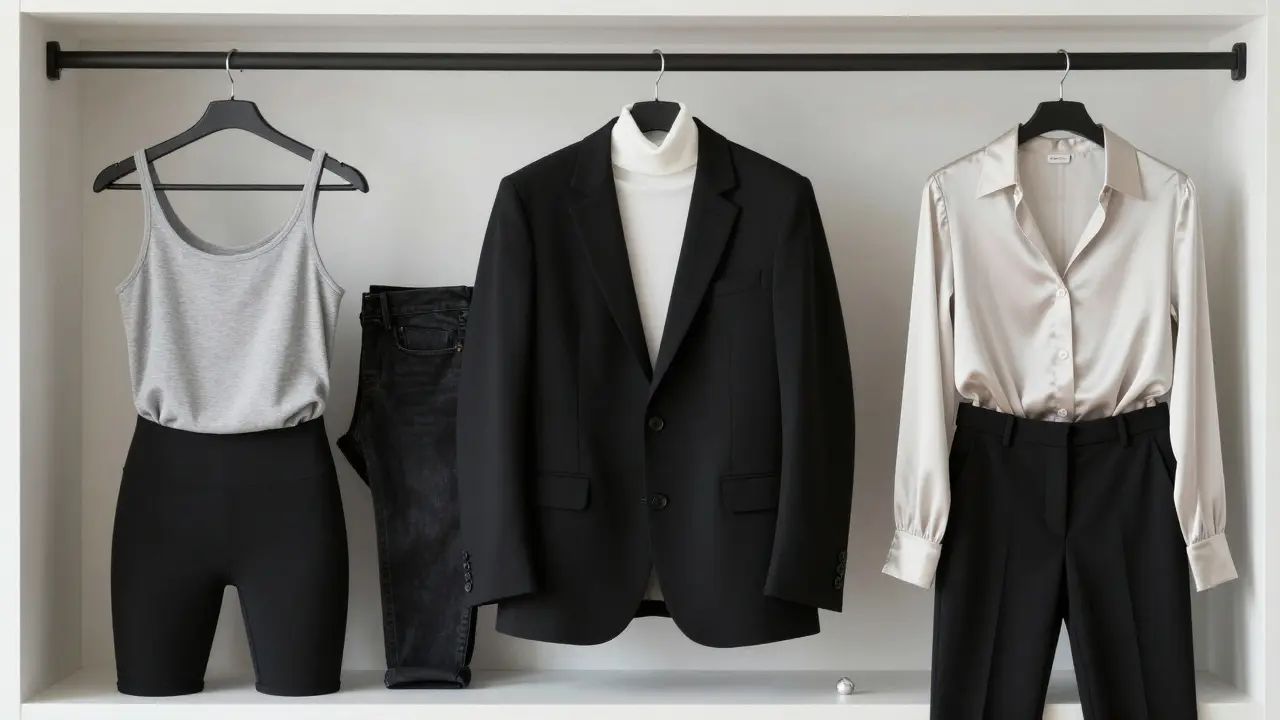
- Anchor: Oversized black blazer with structured shoulders. Outfit: Gray tank top, black bike shorts, white sneakers, silver pendant.
- Anchor: Floral silk blouse with ruffled sleeves. Outfit: High-waisted black jeans, brown ankle boots, minimalist watch, no jewelry.
You’ll notice something: no matching sets. No trends. Just intention.
What to Avoid
This strategy isn’t magic. It fails when you treat it like a rule instead of a tool.
Don’t force your anchor into every outfit. That’s not style-that’s rigidity. If your anchor is a red coat, you don’t have to wear it every day. Let it shine when it fits the moment.
Avoid over-accessorizing. If your anchor is loud, let it be the star. Don’t add a patterned scarf, statement necklace, and printed bag. That’s visual noise. It confuses the eye.
And don’t buy anchors based on what’s trending. That’s how you end up with a closet full of things you never wear. Anchor pieces should feel timeless. They should outlast a season.
How This Fits Into a Capsule Wardrobe
If you’ve ever tried building a capsule wardrobe and failed, this is why. Most guides tell you to buy 30 pieces and call it a day. But if those 30 pieces don’t talk to each other, you still end up with clutter.
The statement anchor strategy fixes that. Instead of a rigid number, you build around one hero item. Then you fill in the gaps with pieces that support it. You might have 15 core items total-but now they all work together.
Think of it like a jazz band. The anchor is the lead instrument. The neutrals are the rhythm section. The accessories are the subtle cymbal taps. Together, they create harmony. Without the anchor? It’s just noise.
Seasonal Swaps and Longevity
Your anchor doesn’t need to change every season. In fact, it shouldn’t. The beauty of this system is that one anchor can carry you through multiple seasons with minor tweaks.
Winter? Add a turtleneck under your blazer. Swap boots for ankle socks. Spring? Layer it over a tank. Fall? Pair it with a wool scarf. Summer? Wear it alone.
Invest in quality. A well-made anchor piece lasts five years. A cheap trend piece lasts five months. The math is simple: one $200 anchor worn 100 times costs $2 per wear. Ten $50 items worn twice each cost $25 per wear. The anchor wins.
Real-World Testing
Try this for two weeks. Pick one anchor. Wear it at least three times. Build three different outfits around it. Notice how often you get asked, “Where’d you get that?”
People notice intention. They notice confidence. They notice when you look like you know who you are. That’s what this strategy gives you-not just clothes, but presence.
And here’s the best part: once you get comfortable with one anchor, you can add another. Maybe a second anchor for work. Or one for weekends. But always, always start with one.
Final Thought
Your wardrobe doesn’t need more stuff. It needs more meaning. The statement anchor strategy isn’t about fashion. It’s about clarity. It’s about removing the noise so you can hear yourself. When you wear something that feels true to you, you don’t just look good-you feel grounded. And in a world that’s always shouting, that’s the most powerful thing you can wear.
Can I use more than one statement anchor at a time?
It’s possible, but not recommended for beginners. Wearing two bold pieces at once-like a patterned blazer and printed pants-creates visual competition. It confuses the eye and dilutes your impact. Once you’re confident building around one anchor, you can experiment with a second, but always make sure one remains dominant. Think of it like a symphony: one soloist, not two.
What if my statement anchor is something I got for free or thrifted?
That’s ideal. The value of an anchor isn’t in its price tag-it’s in how it makes you feel. Many of the most iconic style moments come from thrifted finds. A vintage coat, a one-of-a-kind dress, a pair of shoes with character. These pieces often have more personality than new items. Don’t underestimate what you already own. Sometimes, the best anchor is hiding in the back of your closet.
How do I know if my anchor is too loud?
Ask yourself: Does it make you feel powerful, or does it make you feel self-conscious? If you’re constantly adjusting it, covering it up, or avoiding mirrors when you wear it-it’s not the right anchor. A true statement piece should feel like an extension of you, not a costume. If you need to explain why you’re wearing it, it’s not working. Trust your gut. If you feel like you’re trying too hard, dial it back.
Can I apply this to workwear?
Absolutely. Workwear doesn’t have to be boring. A structured blazer in an unexpected color, a silk blouse with a unique neckline, or even tailored trousers with a bold stripe can be your anchor. The key is subtlety in context. A deep burgundy blazer with a white button-down and black pants looks polished, not loud. You’re not trying to stand out in a crowd-you’re trying to stand out for the right reasons: confidence, clarity, competence.
What if I don’t have any standout pieces in my closet?
Start small. You don’t need to buy a new coat. Look at your current items with fresh eyes. Maybe it’s your favorite pair of jeans-the ones with the perfect fit. Or your go-to white tee that’s soft from years of washing. Maybe it’s a simple leather belt that holds everything together. Sometimes, the anchor isn’t flashy-it’s foundational. Build around that. Then, when you’re ready, add one intentional piece that speaks to you. Quality over quantity. Always.


Write a comment