

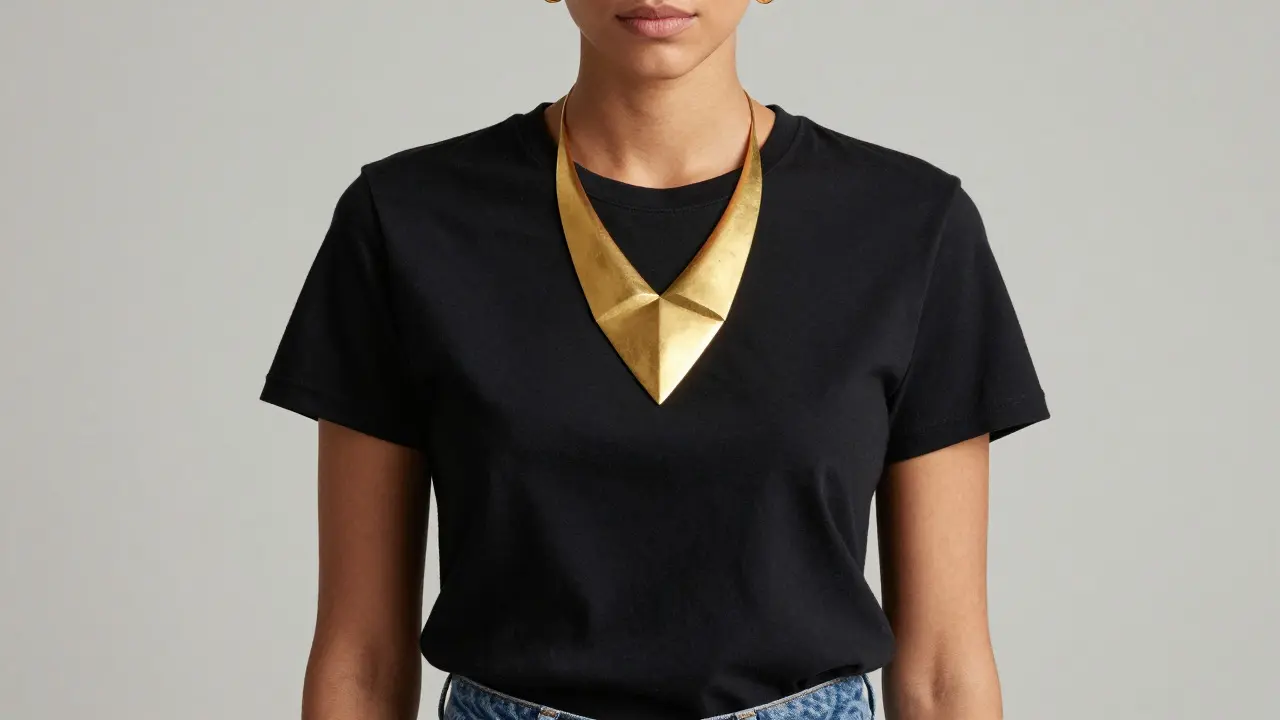
Walk into a room wearing three chunky necklaces, two heavy cuff bracelets, and oversized earrings, and you’ll likely get the same reaction: visual noise. The problem isn’t that the pieces are ugly; it’s that they’re fighting for attention. Statement jewelry is accessory pieces designed to be the primary visual anchor of an outfit, characterized by bold scale, unique shape, or vibrant color. When used correctly, these items transform a simple black tee and jeans into a curated look. When misused, they clutter your silhouette. The goal here is simple: identify which piece deserves the spotlight and ensure everything else plays a supporting role.
Identifying the True Focal Point
Before you start layering, you need to decide where your eyes should land first. Most people default to the neckline because it’s closest to the face, but this isn’t a hard rule. A statement necklace works best when your top has a solid color and a simple neckline like a crew neck, boat neck, or V-neck. If you’re wearing a patterned blouse or a textured knit, a large pendant might get lost in the chaos or compete with the fabric design.
Consider the “V” zone. This is the area from your chin down to your sternum. It’s the natural resting place for the human eye. If you want a necklace to serve as the focal point, it needs to occupy this space without being obscured. For example, a wide choker sits too high and can feel restrictive, while a long lariat might dangle below the chest line, losing its impact. A mid-length chain (18-20 inches) usually hits the sweet spot for most body types, framing the collarbone effectively.
The One-Focal-Point Rule
Here is the golden rule of accessory styling: one outfit, one hero piece. You can wear multiple accessories, but only one should demand attention. Let’s break down how this applies to different scenarios:
- Necklace Focus: If you’re wearing a bold bib necklace or a large pendant, keep your ears minimal. Small studs or delicate hoops work well. Avoid drop earrings that swing near the necklace, as they create visual tangles. Keep wrists bare or limit yourself to a single slim watch or bracelet.
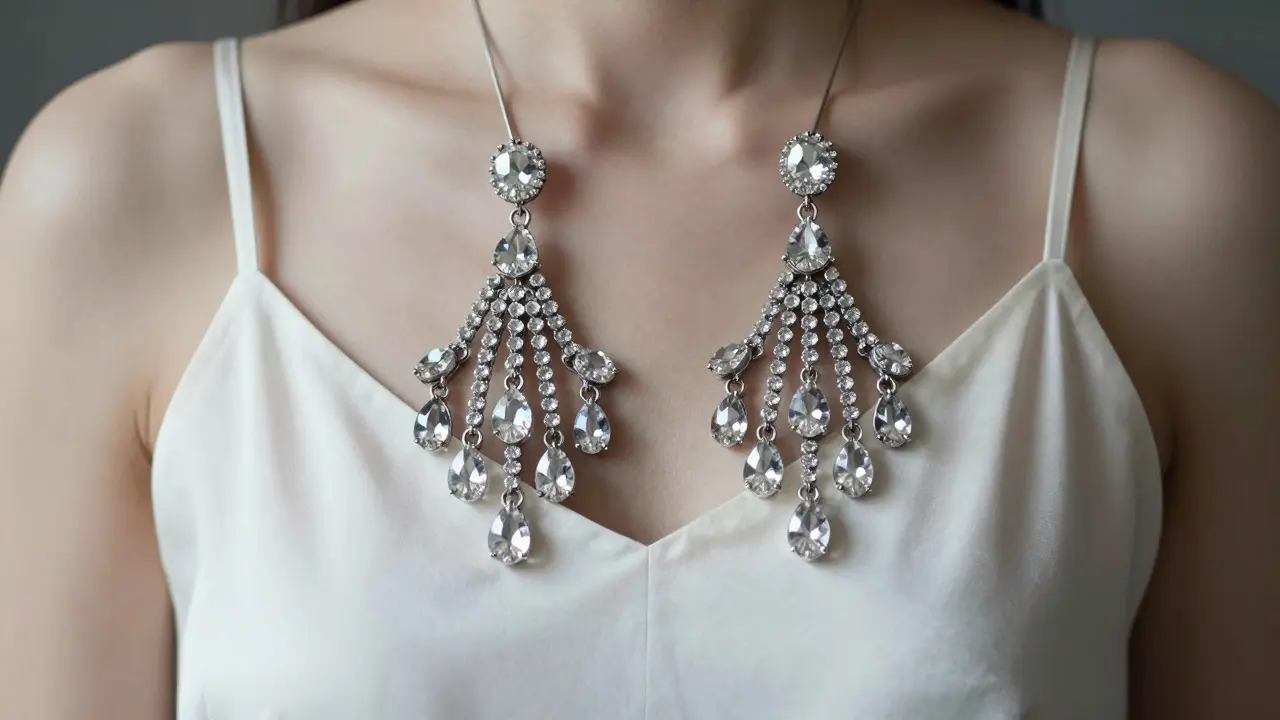
- Earring Focus: Chandelier earrings or large geometric hoops are powerful on their own. Pair them with a simple top that doesn’t have a high neckline. A scoop neck or off-the-shoulder style allows the earrings to breathe. Skip the necklace entirely or use a very thin chain that disappears against the skin.
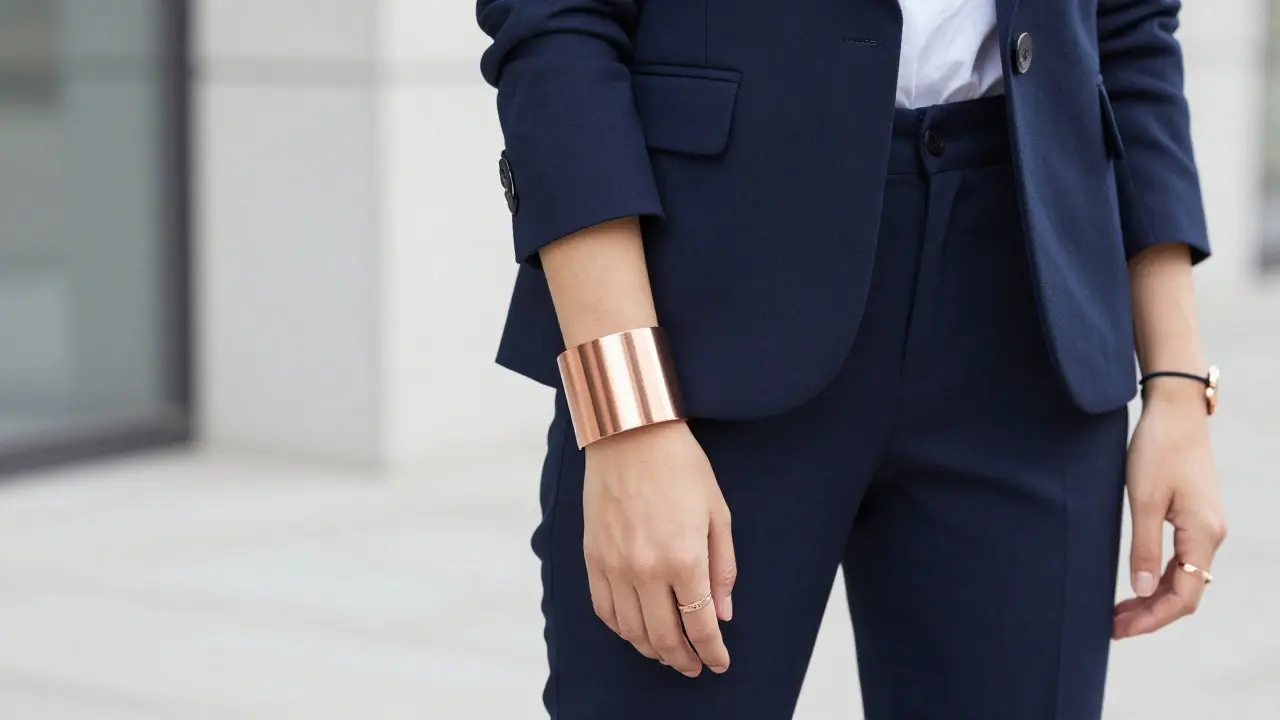
- Bracelet Focus: Stacking multiple bangles or wearing a single wide cuff can be striking. This works best when sleeves are rolled up or pushed back. If you’re wearing a sleeveless dress, a stack of metallic bracelets adds movement to the arm. In this case, keep the neckline clean and the earrings small.
Balancing Scale and Proportion
It’s not just about picking one item; it’s about matching the weight of the jewelry to the weight of the clothing. Think of your outfit as a canvas. If the canvas is heavy (like a thick wool coat or a structured blazer), light jewelry will look fragile and out of place. Conversely, if the canvas is delicate (like a silk camisole or a linen shirt), heavy metal can overwhelm the look.
Use the concept of visual weight. Gold and silver have different optical weights; gold feels warmer and heavier, while silver feels cooler and sharper. Mixing metals is acceptable in modern styling, but try to keep the tone consistent within the focal piece. If your statement necklace is gold, ensure any secondary pieces (like a ring or watch) are also gold or at least share a similar finish. This creates cohesion without needing every single item to match perfectly.
Color Coordination and Contrast
Color is the fastest way to make or break a jewelry choice. Neutral jewelry (gold, silver, rose gold, black) is versatile because it complements almost any palette. However, colored gemstones or enamel pieces require more thought. If your outfit is monochromatic (e.g., all beige or all navy), a pop of color in your jewelry-like a turquoise stone or a red enamel earring-can act as a brilliant accent. This is often more effective than trying to match the exact shade of your clothes.
On the other hand, if your outfit already features bright colors or a busy print, stick to neutral metal tones. Adding a colorful stone to a floral dress can result in a clash that feels accidental rather than intentional. When in doubt, let the jewelry provide contrast. If you’re wearing dark, moody colors, bright gold or white pearls add necessary light. If you’re wearing pastels, darker metals or deep-toned stones ground the look.
Common Mistakes to Avoid
Even experienced stylists make these errors. Here are the most frequent pitfalls when balancing statement pieces:
- Over-layering Chains: While layering is trendy, mixing three different lengths and styles of chains can look messy. Stick to two maximum layers if going for a layered look, and ensure the focal pendant remains distinct.
- Ignoring Neckline Shape: A square necklace looks awkward on a round neckline, and a round pendant can flatten a V-neck. Match the shape of the jewelry to the shape of the opening for harmony.
- Mismatched Finishes: Wearing brushed matte gold with polished shiny silver can look disjointed. Try to keep the finish (matte, polished, hammered) consistent across your chosen focal piece and any accompanying accessories.
- Forgetting the Face Shape: While less critical than outfit balance, huge angular earrings can exaggerate sharp jawlines, while soft, curved earrings can soften angular features. Consider how the jewelry frames your face, not just your body.
Practical Tips for Daily Wear
You don’t need a designer collection to pull off statement jewelry. Thrift stores and vintage shops are goldmines for unique pieces that won’t be seen on everyone else. When buying second-hand, check the clasps and hooks carefully. A beautiful earring is useless if the hinge is loose. Also, consider comfort. Heavy earrings can cause ear fatigue after a few hours, so save those for evening events. For daily wear, opt for pieces that are substantial in appearance but lightweight in construction. Resin, glass, and hollow metal designs offer big visual impact without the physical burden.
Finally, practice in front of a mirror. Step back and look at your whole silhouette. Does one part of the jewelry stand out clearly? If you’re unsure, remove one item. Often, less is more. The confidence you exude by wearing fewer, better-chosen pieces will always outweigh the attempt to show off everything you own.
Can I mix gold and silver jewelry?
Yes, mixing metals is a modern styling norm. The key is to keep the balance even. If your statement piece is gold, choose a silver watch or ring to complement it. Avoid making one metal dominate completely unless you are aiming for a specific monochromatic effect. The goal is harmony, not strict matching.
What is the best type of statement jewelry for petite frames?
Petite individuals often benefit from medium-scale statement pieces rather than extra-large ones. Oversized jewelry can overwhelm a smaller frame. Opt for bold earrings or a single prominent pendant necklace. These pieces draw attention upward and create vertical lines, which can elongate the torso visually.
How do I style statement jewelry with a patterned outfit?
Keep the jewelry minimal. Since the pattern is already providing visual interest, adding a large statement piece can create competition. Choose small, neutral studs or a delicate chain. If you must wear a larger piece, pick one that incorporates a color found in the pattern to tie the look together.
Is it okay to wear a statement necklace with a high-neck top?
Generally, no. High necklines leave little room for a necklace to sit comfortably or visibly. The jewelry may bunch up or disappear under the fabric. Instead, focus on earrings or bracelets when wearing turtlenecks or high-collared shirts. If you insist on a necklace, choose a long lariat style that drapes over the neckline, though this is risky and requires careful fitting.
How many rings can I wear with a statement bracelet?
There is no strict limit, but balance is key. If you are wearing a wide cuff bracelet on one wrist, keep the other wrist relatively clear or add a thin band. On the hands, you can stack rings, but avoid covering every finger with bulky bands. Leave at least one or two fingers bare to allow the eye to rest. The bracelet should remain the dominant element on the arms.