

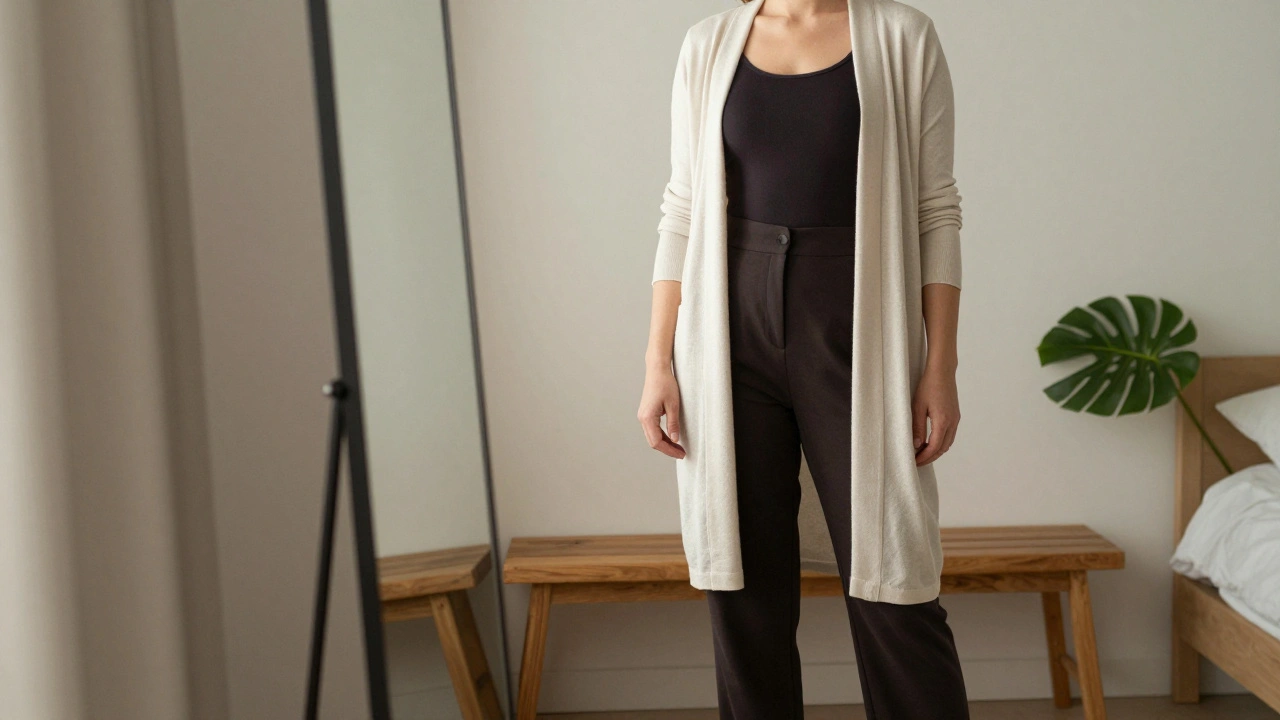
Most people think layering is just about staying warm. But if you’re trying to look taller, slimmer, or more balanced in your clothes, layering is a secret weapon. It’s not about piling on sweaters or throwing on a jacket over a coat. It’s about using fabric, length, and texture to reshape how your body looks in the mirror. The right layers can turn an outfit that feels too tight, too boxy, or too short into something that fits your shape like it was made for you.
Why Layering Works Better Than One-Piece Outfits
Think about a plain tunic dress. It might look fine on a hanger, but on your body? If you have wider hips and a narrower upper body, it can make your frame look top-heavy. If you’re tall and lean, it might swallow you whole. One-piece outfits don’t adapt. They don’t adjust. Layering does.
When you layer, you create vertical lines, break up bulk, and draw attention where you want it. A long cardigan over a fitted top pulls the eye down, making your torso look longer. A cropped jacket over a flowy blouse adds structure without adding volume to your midsection. It’s not magic-it’s geometry. Your body is a shape, and clothing is the tool to balance it.
Know Your Shape First
You can’t layer well if you don’t know what you’re working with. There are four main body shapes most people fall into: pear, apple, hourglass, and rectangle. Each needs a different layering strategy.
- Pear shape: Wider hips and thighs, narrower shoulders. You need to add volume on top and lengthen the lower half.
- Apple shape: Broader midsection, slimmer legs. You want to draw attention away from the waist and create a defined line below it.
- Hourglass: Balanced bust and hips with a defined waist. You want to emphasize that waist without hiding it.
- Rectangle: Minimal curve, straight silhouette. You need to create the illusion of curves where there aren’t any.
Don’t overthink this. Look in the mirror. Where do you carry weight? Where do you feel most confident? That’s your starting point.
Layering for Pear Shapes: Balance the Bottom
If your hips are your widest point, your goal is to add width above and length below. Start with a structured blazer or a longline cardigan that hits mid-thigh. That creates a visual anchor above your hips. Avoid short jackets that end right at your widest part-that cuts you in half and draws attention to the area you’re trying to minimize.
Underneath, wear a fitted top in a darker color. Then, layer a lightweight, open vest or duster over it. The key is contrast: a darker top, a lighter middle layer, and a long outer layer. This creates a gradient that pulls the eye down. Pair it with straight-leg pants or a long A-line skirt. The longer the bottom half, the more balanced you look.
Pro tip: If you’re wearing a patterned bottom, keep your top and layers solid. A busy print on top and bottom makes you look bigger everywhere.
Layering for Apple Shapes: Define the Waist, Not the Belly
For apple shapes, the goal is to avoid drawing attention to the midsection. That means no fitted sweaters, no cropped jackets, and no belts over your stomach. Instead, use long, flowing layers that skim your body.
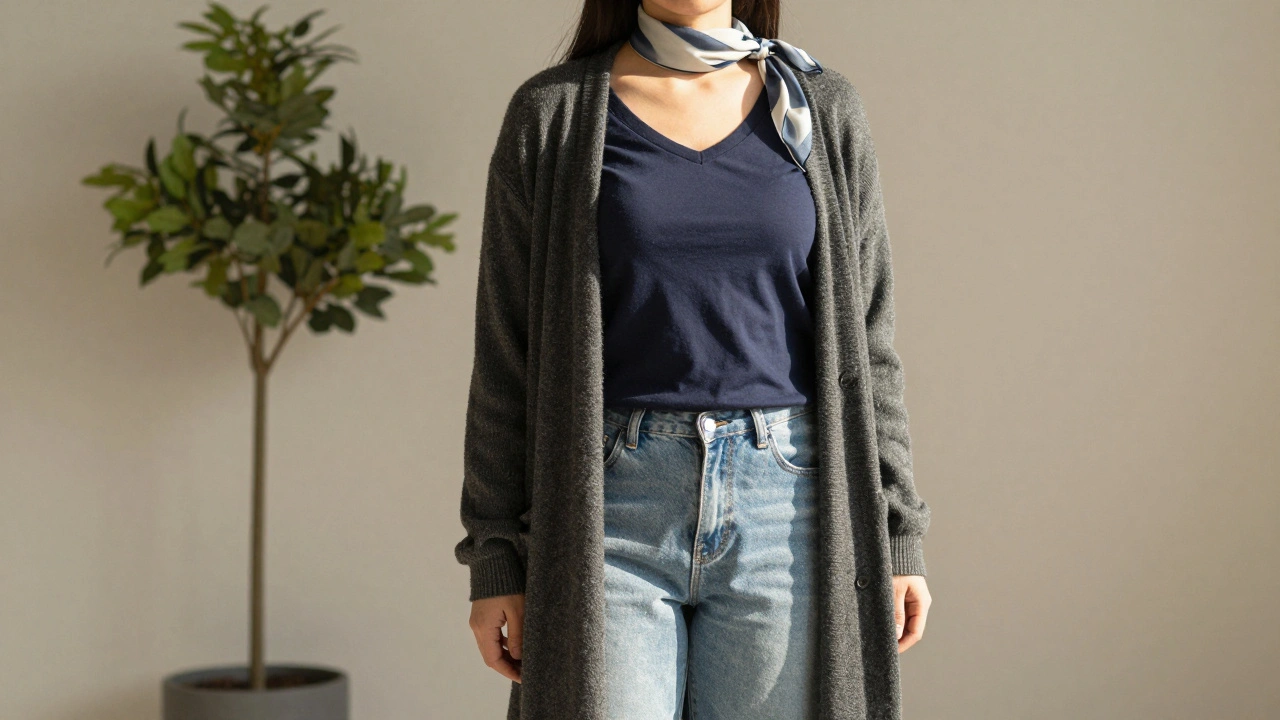
Start with a V-neck tee or a thin turtleneck. Layer a long, open cardigan over it that hits below your hips. The V-neck draws the eye upward toward your face and shoulders. The long cardigan creates a vertical line that hides your midsection without squeezing it. Add a lightweight scarf or a long pendant necklace to keep the eye moving upward.
For outerwear, choose trench coats or long dusters that hit at mid-calf. Avoid short coats that end at your waist-that’s the worst spot to cut off your silhouette. And never wear a belt around your middle. Instead, tuck a thin, long scarf into your cardigan and let it hang down. It mimics the line of a belt without the pressure.
Layering for Hourglass Shapes: Highlight, Don’t Hide
If you have curves, you don’t need to hide them. You need to highlight them. The trick is to keep your waist defined without crushing it.
Start with a fitted top or a wrap blouse. Layer a slightly looser cardigan or vest over it, but make sure it’s open in the front. Don’t button it. Let it drape naturally. The open front keeps your waist visible. Add a thin belt over the cardigan, but only if it sits right at your natural waist-not above, not below.
For outerwear, choose tailored jackets that nip in at the waist. Avoid boxy coats. A peacoat with a belt or a fitted wool coat works best. If you’re wearing a longer coat, make sure the hem hits just below your hips. Anything longer than that will bury your waistline.
Pro tip: If you’re wearing a dress, layer a cropped denim jacket over it. The contrast between the fitted dress and the slightly structured jacket makes your curves pop without adding bulk.
Layering for Rectangle Shapes: Create Curves Where There Are None
If you’re straight up and down, layering is your best friend. You want to add dimension-curves, volume, and shape-without looking like you’re wearing a tent.
Start with a fitted top. Then, layer a slightly oversized cardigan or a cropped vest over it. The key is asymmetry. Wear one layer longer than the other. For example, a long tunic under a short, boxy jacket creates the illusion of a waist. Or wear a long, flowy blouse under a shorter, structured blazer.
Use scarves and belts to break up your silhouette. A wide belt over a long cardigan creates a fake waistline. A long, draped scarf adds movement and curves to your frame. Avoid wearing everything the same length. Mix short, medium, and long layers to create visual interest.
Pro tip: Try a long vest over a fitted top and straight pants. The vest adds width to your shoulders, and the fitted top gives shape to your torso. It’s the easiest way to look curvier without padding or shapewear.
Texture and Fabric Matter More Than You Think
It’s not just about length. The texture of your layers changes how your body looks. A chunky knit sweater over a silky blouse creates contrast. A smooth wool coat over a textured turtleneck adds depth. But too much texture? It adds bulk.
Follow this rule: pair one textured piece with one smooth one. If your top is ribbed, your outer layer should be smooth. If your skirt has a ruffle, your jacket should be plain. Too many textures fight each other and make you look bigger.
Also, avoid stiff fabrics that stand away from your body. They create air pockets that add volume where you don’t want it. Go for fabrics that drape: rayon, silk, modal, lightweight wool. They follow your shape instead of fighting it.
Color Strategy: Use Light and Dark to Shape Your Body
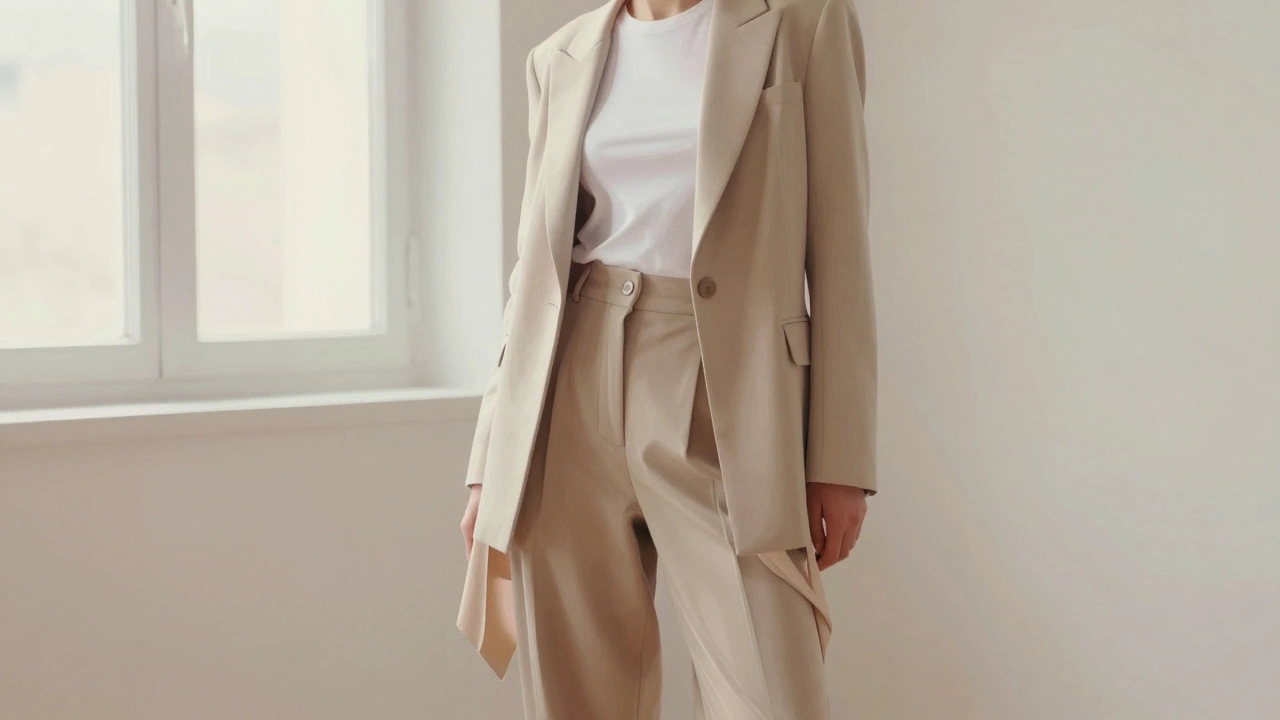
Color isn’t just about what looks good together. It’s about control. Dark colors recede. Light colors advance. Use that to your advantage.
For pear shapes: Dark on bottom, light on top. A black pant with a cream cardigan makes your upper body look bigger. For apple shapes: Dark on top, light on bottom. A navy tunic with light-wash jeans draws the eye down. For hourglass: Keep the waist in a neutral tone-beige, gray, or taupe. That makes your waist look defined without adding contrast. For rectangles: Use color blocking. Wear a dark top, light middle layer, and dark bottom. It creates the illusion of curves.
Never wear the same color from head to toe unless you’re tall and lean. Monochrome can make you look like a blob. Break it up with at least two tones.
Common Layering Mistakes (And How to Fix Them)
- Mistake: Wearing a short jacket over a long top. Fix: Always make your outer layer longer than your inner layer. Short on top, long on bottom creates a top-heavy look.
- Mistake: Layering three bulky pieces. Fix: Stick to two layers max. One fitted, one loose. Too much bulk = too much volume.
- Mistake: Wearing belts over the wrong area. Fix: Only belt at your natural waist. If you’re apple-shaped, don’t belt at all. If you’re rectangle, belt low on the hips to create a curve.
- Mistake: Ignoring sleeve length. Fix: Your inner layer sleeves should be slightly shorter than your outer layer. That way, you get a clean line from wrist to cuff.
What to Keep in Your Closet for Perfect Layering
You don’t need a million pieces. Just these five:
- A long, open cardigan (in neutral colors)
- A tailored, slightly cropped jacket
- A lightweight duster coat (floor-length or mid-thigh)
- A V-neck or scoop-neck top (in black, navy, white)
- A thin, long scarf (silk or modal)
That’s it. With these, you can build outfits for every body type. Mix and match. Change the colors. Swap the textures. You’ll never run out of options.
Final Thought: It’s About Confidence, Not Perfection
Layering isn’t about looking like a fashion magazine. It’s about feeling like you’re wearing clothes that work for you-not against you. The right layers don’t hide your body. They honor it. They show off your shape in a way that feels natural, comfortable, and powerful.
Try this: next time you get dressed, put on one layer that makes you feel taller, one that makes you feel balanced, and one that makes you feel like yourself. That’s the real goal.
Can I layer if I’m plus-size?
Yes, and layering is even more important. The key is using long, flowing pieces that skim your body instead of clinging to it. A long cardigan over a fitted top, paired with straight-leg pants, creates a clean silhouette. Avoid tight layers and bulky fabrics. Stick to lightweight materials that drape, and always let your outer layer be longer than your inner one.
What if I’m short and want to look taller?
Use vertical layering. Wear a long cardigan or duster that hits below your hips. Pair it with a fitted top and pants in the same color family. This creates one continuous vertical line. Avoid cropped jackets and high-waisted pants with short tops-they cut your body in half. Stick to monochrome or tonal outfits to elongate your frame.
Do I need to buy new clothes to layer properly?
No. Start with what you already own. Look for pieces that are long, open, and lightweight. A cardigan you thought was too big? Try wearing it over a fitted top. A coat that’s too long? It’s perfect for layering. The goal isn’t to shop more-it’s to see your existing clothes in a new way.
Can I layer in warm weather?
Absolutely. Use lightweight fabrics: linen, cotton, rayon. A thin, open kimono over a tank top, or a cropped, breathable vest over a tee, adds dimension without heat. Skip wool and thick knits. Focus on texture and drape, not warmth.
How do I layer without looking bulky?
Stick to two layers max. Make sure the inner layer is fitted and the outer layer is loose. Avoid bulky sweaters under coats. Use lightweight materials like silk, modal, or thin cotton. And always let the outer layer be longer than the inner one-this creates a slimming vertical line.


Write a comment