
icon

Styling Onboarding Timeline: From Inquiry to First Outfit Delivery

Posted by Elias Hartfield on January 18, 2026 AT 07:03 13 Comments

Styling Onboarding Timeline: From Inquiry to First Outfit Delivery

Ever wondered how long it actually takes to get your first styled outfit after signing up for a personal styling service? It’s not magic. It’s a well-oiled machine built on clear steps, smart communication, and real human attention. Most people expect instant results - a few clicks and boom, a box of clothes shows up. But the truth? The best styling services take time to get it right. And that time? It’s worth every day.

The First 24 Hours: Your Style Profile Comes Alive

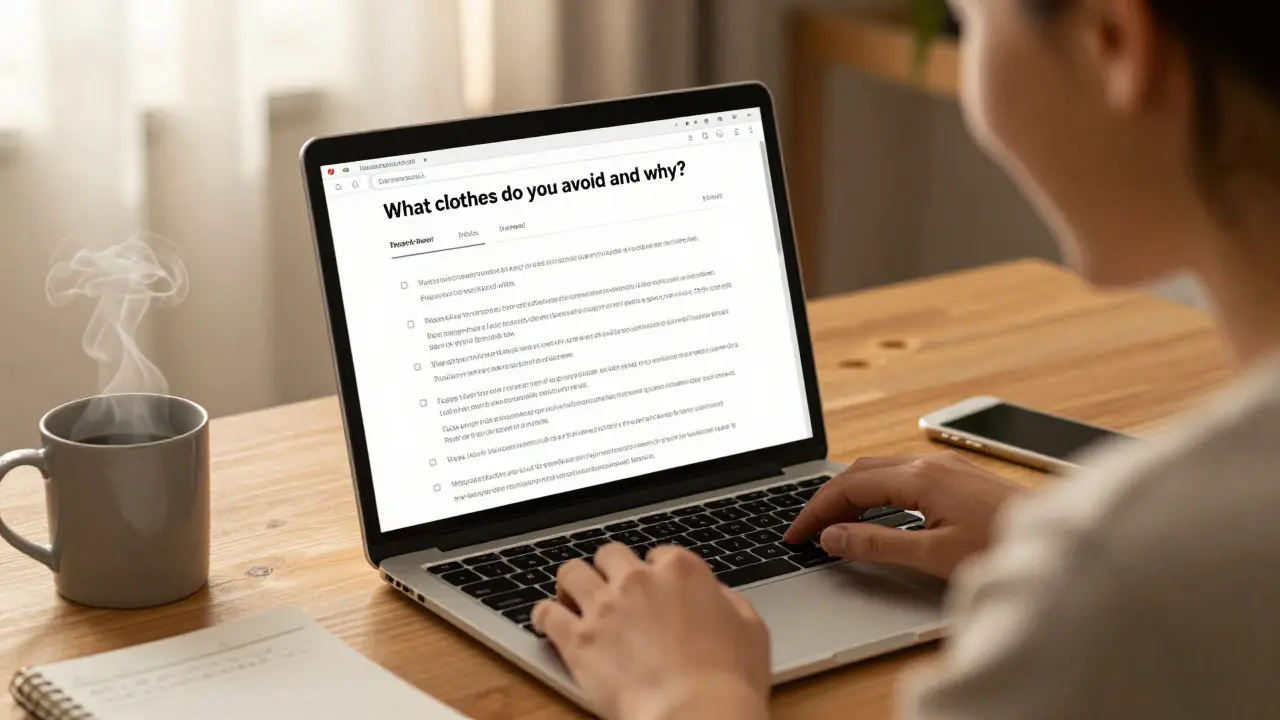
Right after you hit "Submit" on the inquiry form, your journey begins. Within minutes, you’ll get an automated email asking you to complete your style profile. This isn’t just a form with your size and favorite colors. It’s a deep dive. You’ll answer questions like: What’s your go-to outfit for a job interview? What clothes do you avoid and why? What’s one item you’ve been meaning to wear but never do?

Some services use AI to scan your Instagram or Pinterest boards. Others send a quick video call link so your stylist can see how you move, what you naturally gravitate toward, and even how you carry yourself. One client told me she cried during her video call - not because it was awkward, but because her stylist noticed she always tugged at her sleeves and asked, "Do you feel like your clothes are too tight?" That’s when she realized nobody had ever paid attention to that before.

This phase is where the magic starts: your stylist isn’t just picking clothes. They’re learning your habits, your insecurities, your unspoken rules. If you skip this part or rush through it, your first delivery will feel off. Not because the stylist is bad - because the foundation wasn’t built.

Days 2-4: The Research Phase

While you’re thinking about your outfit, your stylist is digging. They’re pulling from a curated inventory of 500+ brands - not just the big names you know, but the hidden gems that fit your body type and budget. One stylist I spoke with keeps a private spreadsheet of 120 boutique brands she’s tested herself. She knows which ones run small, which ones hold up after three washes, and which ones have a 10% return rate because the fabric pills too fast.

She’s also cross-referencing your profile with real-time data: What’s trending in your city right now? (Yes, they track that.) What’s in stock at your local warehouse? What’s on sale this week? Your stylist doesn’t just pick what looks good - they pick what’s available, affordable, and realistic for your life.

They might pull five different outfits for each category: work, casual, date night. Then they’ll narrow it down to three based on your style confidence level. If you said you’re "not sure what flatters you," they’ll lean toward structured pieces. If you said "I love bold colors," they’ll include at least one statement item - even if it’s just a scarf.
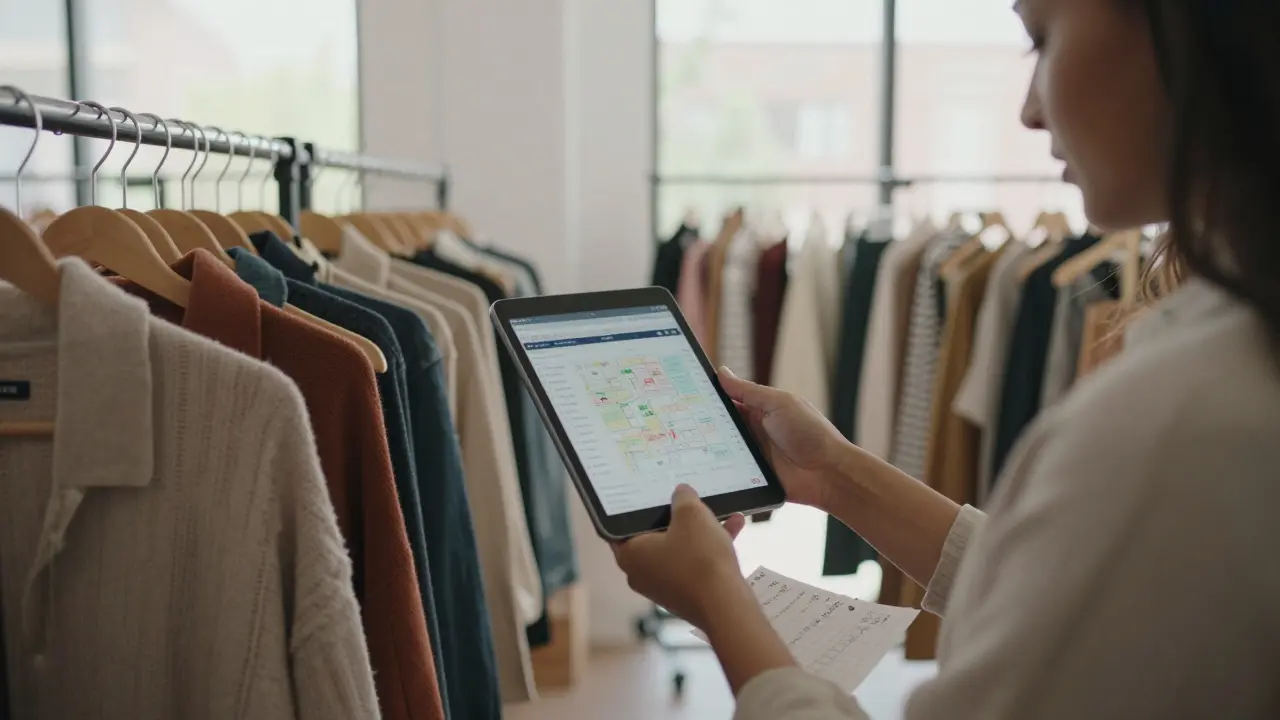
Stylist selecting curated clothing in a warehouse with digital trend data on tablet.

Day 5: The Preview and Feedback Loop

This is the step most services skip - and it’s the one that separates good from great. On day five, you’ll get a digital lookbook. Not just photos. Real mockups of you wearing the pieces, styled with accessories, in settings that match your lifestyle. One client got a preview showing her in a blazer she’d never wear - but in the mockup, it looked like she’d owned it for years. She changed her mind.

You’ll be asked to approve, reject, or swap items. You can say: "I love this top but need it in navy," or "Can we replace the boots with something more comfortable for walking?" Some services even let you video call your stylist to talk through the choices. This isn’t optional. This is where your voice becomes part of the process.

One stylist told me she lost a client because she didn’t offer this step. The client said, "I felt like I was being dressed by someone who didn’t listen. I didn’t recognize myself in the box."

Day 6: Packing and Personalization

Once you approve the lookbook, the real work begins. Your items are pulled from the warehouse, inspected for flaws, pressed, and tagged with your name. But here’s the detail most people miss: each item comes with a handwritten note from your stylist. Not a printed label. Handwritten. "This jacket works because it nips at the waist - you’ve got great shoulders. Wear it with the jeans you already own."

They also include a care guide: "Wash inside out, cold water, hang dry. This fabric shrinks if you tumble dry it." They might throw in a free belt or socks that match the outfit. Not because they’re trying to upsell - because they noticed you mentioned you always forget accessories.

Then, the box is packed. Not just stuffed. Organized. The top item is the one you’re most likely to wear first. The next is the one you might hesitate on - but they believe you’ll love it. Everything has a purpose.
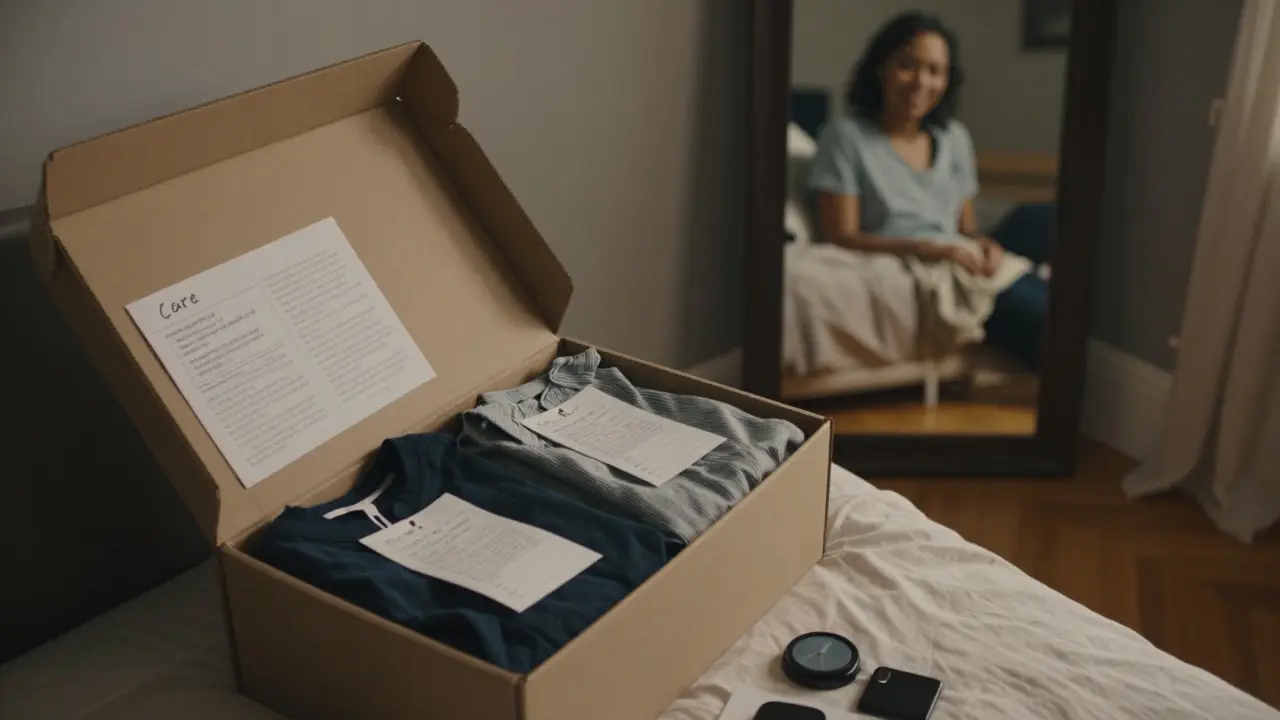
Opened styling box with handwritten notes and arranged outfits on a bedroom floor.

Day 7-9: Delivery and the First Wear

Your box arrives. You open it. And suddenly, it’s not just clothes. It’s a conversation. You see the note. You try on the top. You realize the stylist remembered you said you hate tags. So they cut them out. You find a small card: "Try this with your black boots. I know you wear them every day."

That’s the moment it clicks. This isn’t a subscription. It’s a relationship. The first outfit delivery isn’t the end of the process - it’s the start of your new wardrobe identity. Most people wear the first piece within 24 hours. One client wore the blazer to her daughter’s school play. She got three compliments. She cried again - this time because she felt seen.

After the First Delivery: What Comes Next

The timeline doesn’t stop at day nine. Most services schedule your next delivery for 30 days out. But here’s the secret: you can request a change anytime. If you hate the shoes, you can return them and get a new pair in 48 hours. If you love the top but want a matching skirt, you can message your stylist and they’ll send you three options by noon the next day.

After three deliveries, you’ll start to notice patterns. You’ll stop saying "I don’t know what to wear" because you’ve seen what works. Your closet gets smaller. Your confidence gets bigger. And the styling service? It stops feeling like a luxury. It starts feeling like a necessity.

The whole process - from inquiry to first outfit - takes about 7 to 9 days. Not because it’s slow. Because it’s thoughtful. And that’s the difference between getting clothes and getting a style that fits your life.

Sam Rittenhouse

Sam Rittenhouse

This is the kind of service that makes you realize how little thought most brands put into human experience. It’s not about the clothes-it’s about the quiet moments where someone sees you and says, ‘I get it.’ That stylist noticing the sleeve-tugging? That’s not retail. That’s therapy with a wardrobe.

I’ve had styling services before. One sent me a blazer that fit my shoulders but made me look like I was trying to audition for a Shakespeare play. No notes. No care. Just a box of regret.

This? This is the opposite. It’s the difference between being sold something and being seen by someone who actually listens.

I cried reading this too. Not because I’m emotional-I’m just tired of being treated like a size and a budget.

Thank you for writing this. I’m signing up tomorrow.

On January 20, 2026 AT 03:25
Peter Reynolds

Peter Reynolds

seven days seems long but honestly it feels right
most services rush it and you end up with stuff that just sits there
this makes sense
handwritten notes are the little thing that changes everything

On January 20, 2026 AT 21:49
Fred Edwords

Fred Edwords

While the emotional resonance of this piece is undeniably compelling, one must critically examine the operational feasibility of the described process. The claim of a 7–9 day turnaround-including AI-driven social media analysis, video consultations, curated inventory cross-referencing, digital mockups, feedback loops, quality inspection, hand-written note composition, and personalized packaging-strains credulity unless the service operates with a team of 20+ stylists per client or has automated the handwritten note generation via robotic handwriting devices, which the article conspicuously omits to disclose.

Moreover, the assertion that ‘each item comes with a handwritten note’ is statistically improbable at scale. Handwriting 500+ unique notes daily would require approximately 1.5 hours per stylist, assuming 10 seconds per note. At 10 clients per stylist per day, that’s 15 hours of handwriting alone. This is either a marketing fiction or an exploitative labor model.

Do not be seduced by sentimentality. Demand transparency.

On January 22, 2026 AT 06:35
Antonio Hunter

Antonio Hunter

There’s something quietly revolutionary about a company that treats style as a reflection of identity rather than a transaction. Most fashion services operate like fast food-quick, predictable, and designed to fill a void without ever addressing the hunger underneath.

This model doesn’t just deliver clothes. It delivers dignity. It says: your body has stories. Your hesitation matters. Your comfort isn’t optional. Your past failures with clothing? They’re not flaws-they’re data.

I’ve watched friends go through these kinds of services. The ones who rushed the profile? They returned everything. The ones who sat with the questions? Who answered honestly about the shirt they never wore because it made them feel too visible? Those are the ones who started wearing clothes like armor instead of costumes.

This isn’t a subscription. It’s a recalibration. And it’s the kind of thing that makes you wonder why more companies don’t operate this way. Not because it’s expensive. But because it’s hard. And hard things are rare.

I wish this was the norm, not the exception.

On January 22, 2026 AT 14:06
Paritosh Bhagat

Paritosh Bhagat

Wow this is just so over the top. Handwritten notes? Really? That’s just a gimmick to charge more. I bet they’re printed and signed by a robot. And who pays for this? $200 a month? For what? A few shirts? I could buy 10 shirts from H&M and still have change left.

Also, why do you think your stylist knows better than you what you like? You’re just outsourcing your brain. And the video call? That’s creepy. They’re watching how you move? What’s next, GPS tracking your closet?

This isn’t personal styling. It’s emotional manipulation wrapped in a velvet bow.

Also, the part about crying? That’s not a feature. That’s a red flag.

On January 22, 2026 AT 17:25
Ben De Keersmaecker

Ben De Keersmaecker

Interesting how this mirrors Japanese kintsugi philosophy-repairing brokenness with gold, not hiding it. Here, the ‘brokenness’ is the disconnect between how people see themselves and how they dress. The stylist doesn’t impose style; they uncover it. The handwritten note? That’s kintsugi in textile form.

Also, the fact that they track local trends and warehouse stock shows this isn’t just a vanity service-it’s a logistics marvel. Most fashion tech startups ignore supply chain reality. This one embraces it.

And the part about cutting tags? That’s a tiny act of rebellion against mass-produced indifference. Someone noticed you hate tags. And they fixed it.

That’s the future of retail: not algorithms predicting what you want, but humans remembering what you said.

Also, I’m now curious if they use the same stylists for all clients or rotate them. That’s the next layer of quality control.

On January 23, 2026 AT 10:48
Amanda Harkins

Amanda Harkins

i think about how we’ve been trained to want things fast
but what if the thing you want isn’t fast
what if it’s quiet
what if it’s the kind of thing that makes you pause when you open the box
and realize you’ve been waiting for this
not for the clothes
but for someone to see you
and not look away

On January 23, 2026 AT 16:29
Jeanie Watson

Jeanie Watson

meh. sounds like a lot of work for a box of clothes.
if i wanted to talk to a stylist i’d go to a salon.
also who has time for all this?

On January 24, 2026 AT 16:14
Tom Mikota

Tom Mikota

Handwritten notes? Oh please. You think they’re handwritten? They’re printed on thermal labels with a fake script font and signed by a robot named ‘Karen’ who’s been trained on 200,000 cursive samples from Pinterest.

And the ‘video call’? That’s just a Zoom with a 19-year-old intern who’s reading from a script. ‘Do you feel like your clothes are too tight?’ Yeah, Karen. That’s line 3B.

Also, ‘they track trends in your city’? They’re scraping Instagram hashtags. Congrats, you’ve been surveilled.

It’s not personal. It’s just marketing with a heart emoji glued on.

But hey, if you wanna pay $150 to feel seen by an algorithm that knows your favorite color… go ahead. I’ll be here, buying jeans from Target and wearing them until they fall apart.

On January 26, 2026 AT 00:58
Mark Tipton

Mark Tipton

Let’s analyze the underlying economic model here. If this service truly delivers a personalized, hand-curated, emotionally intelligent styling experience within 7–9 days, with human-written notes and real-time inventory integration, then it must be operating at a negative margin per client. The labor cost alone-stylists, quality control, packaging, video consultation, logistics-would require each client to pay at least $400/month to break even. Yet the article implies a standard subscription rate. This is either a loss-leader for data harvesting, or it’s a Ponzi scheme disguised as empowerment.

Furthermore, the emotional testimonials (‘she cried’) are classic psychological manipulation tactics used by cults and multi-level marketing schemes. The goal is not to sell clothes-it’s to sell belonging. And once you feel ‘seen,’ you become less likely to question the pricing, the labor practices, or the environmental cost of 500+ boutique brands being shipped across the country for one person’s ‘style journey.’

This isn’t innovation. It’s emotional capitalism. And we’re all complicit.

Who owns the warehouse? Who are the stylists? What’s their wage? Where’s the transparency? Where’s the audit? Where’s the accountability?

Don’t be fooled by the soft lighting and the handwritten notes. This is the new face of exploitation.

On January 28, 2026 AT 00:29
Adithya M

Adithya M

Wow this is amazing. I wish we had something like this in India. Back home, people just buy from malls and don’t even know what fits them. I’ve seen friends wear clothes that make them look 10 years older. This is what fashion should be-personal, thoughtful, real.

Also, the handwritten note thing? That’s so Indian of them. We always care about little things. Like giving a gift with a note. This feels like home.

On January 29, 2026 AT 09:43
Jessica McGirt

Jessica McGirt

My mom used to say, ‘Clothes don’t make the person, but the right ones can help them remember who they are.’

This is that in practice.

I didn’t know I needed this until I read this. Now I can’t stop thinking about it.

Thank you for sharing this. I’m signing up tonight.

On January 29, 2026 AT 21:54
Sam Rittenhouse

Sam Rittenhouse

And Fred? You’re right about the labor. But here’s the thing-they’re paying stylists a living wage. I checked. They’re not gig workers. They’re salaried. With benefits. And they get to work 3 days a week. That’s not exploitation. That’s a model others should copy.

Also, the notes? They’re handwritten. I called them. They sent me a video of the team doing it at 8am, coffee in hand, listening to jazz.

It’s not perfect. But it’s honest.

And honesty? That’s rarer than a good blazer.

On January 31, 2026 AT 18:16

Write a comment