


Imagine spending three hours with a stylist who charges $150 an hour. You walk away with a closet full of clothes that look great on the rack but feel wrong when you get home. Or worse, you hire someone for a one-off session, only to realize six months later your wardrobe is still a mess because you never learned how to maintain the new look. The problem isn't just the stylist's taste; it's the pricing structure. How you pay for styling services dictates what you actually get.
If you are a client trying to navigate these costs, or a stylist trying to set fair rates, understanding the mechanics behind hourly, package, and retainer structures is non-negotiable. These aren't just billing methods; they are different promises about value, time, and results. Let’s break down exactly how each model works, where it fails, and who it serves best in the current market.
The Hourly Rate: Flexibility vs. Uncertainty
The Hourly Rate is a pricing model where clients pay for the specific amount of time a stylist spends working on their project. This is the most common starting point for new stylists and casual clients. It feels simple: you buy two hours, you get two hours of expertise.
In practice, this model often leads to friction. Why? Because styling is not linear. Finding the right blazer might take ten minutes or two hours depending on inventory and fit. When you charge by the clock, both parties start watching the watch. The client worries about the ticking meter, and the stylist feels pressured to rush decisions to maximize efficiency.
| Aspect | Client Perspective | Stylist Perspective |
|---|---|---|
| Predictability | Low (final cost unknown until done) | Medium (income depends on speed) |
| Commitment | Low risk, easy to cancel | No guaranteed income |
| Best Use Case | One-time events or quick edits | Testing new clients or side gigs |
| Average Rate (2026) | $80 - $250 per hour | Varies by location and experience |
This model works best for specific, isolated tasks. Need help picking an outfit for a wedding next weekend? An hourly rate makes sense. Want to overhaul your entire professional wardrobe? You will likely end up paying more than necessary because the stylist has no incentive to be efficient. They might spend an extra hour browsing stores that don't have your size, padding the bill. For clients, always ask for a "not-to-exceed" cap if you choose this route.
Package Pricing: Defined Outcomes for Fixed Costs
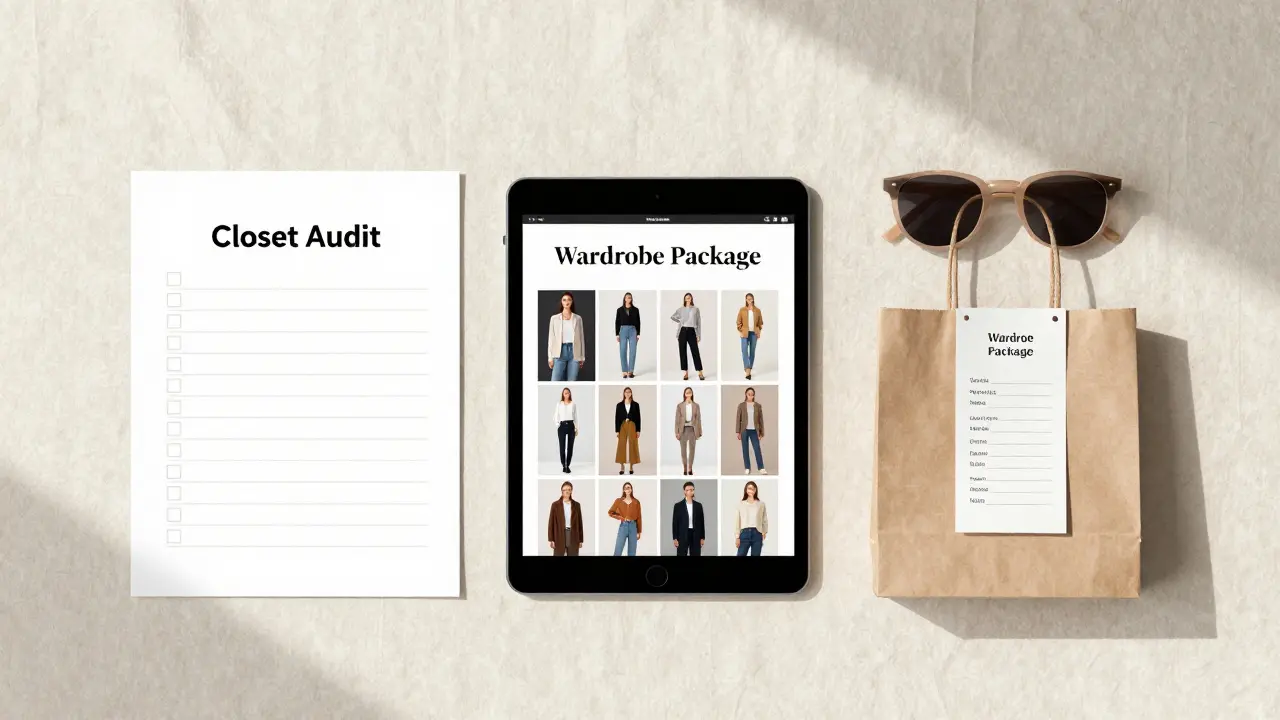
Wardrobe Packages are pre-defined bundles of styling services sold at a fixed price, covering specific deliverables like shopping trips, closet audits, and outfit planning. Unlike hourly rates, packages sell outcomes, not time. You aren't buying three hours; you're buying a "Complete Work Wardrobe Refresh."
This structure removes the anxiety of the ticking clock. The client knows exactly what they will pay, and the stylist knows exactly what they need to deliver. If the job takes longer, the stylist eats the cost. If it goes faster, they keep the profit margin. This aligns incentives better than hourly work.
However, scope creep is the enemy here. A package might include "three shopping trips," but what does that mean? Is it three hours in-store? Three days of research? Without clear definitions, disputes arise. Successful packages are highly specific. Instead of saying "wardrobe consultation," say "90-minute closet audit + 4-hour shopping trip + digital mood board delivery."
For clients, packages offer the best value if you have a clear goal. Are you preparing for a job interview? There is usually a "Career Ready" package for that. Are you transitioning from college to corporate life? Look for a "First Job Essentials" bundle. The key is matching the package contents to your actual needs, not just picking the cheapest option.
Retainer Models: Ongoing Style Partnerships
Styling Retainers are monthly subscription-based fees that provide continuous access to a stylist's advice, email support, and periodic check-ins. This is the premium tier of styling services. It transforms the relationship from transactional to relational. You aren't hiring a vendor; you're employing a part-time style advisor.
Retainers are ideal for busy professionals, executives, or public figures who lack the time to manage their image but need constant upkeep. The fee typically covers unlimited text/email consultations, quarterly closet reviews, and priority booking for special events. In 2026, retainers often range from $300 to $1,500 per month, depending on the stylist's reputation and the level of access provided.
The psychological benefit is significant. Clients stop seeing every purchase as a high-stakes decision. They know they can send a photo of a dress and get a yes/no answer within hours. This reduces decision fatigue and ensures consistency in personal branding. For stylists, retainers provide stable, predictable income, allowing them to plan their business growth rather than chasing one-off gigs.
But beware the "ghosting" effect. Some clients pay the retainer and then go silent for months, feeling guilty about using the service. Others overuse it, sending dozens of trivial questions daily. Clear boundaries in the contract are essential. Define response times (e.g., "within 24 hours on weekdays") and limit the number of major projects included (e.g., "one major event per quarter").
Choosing the Right Structure for Your Needs
How do you decide which model fits you? It comes down to three factors: budget clarity, frequency of need, and desired involvement.
- Budget Clarity: If you have a strict cap and cannot exceed it, avoid hourly rates. Choose a package with a fixed price.
- Frequency of Need: Do you need help once a year for holidays? Hourly or a single package works. Do you need help every week? A retainer saves money and stress in the long run.
- Desired Involvement: Do you want to learn how to style yourself? Hourly sessions allow for teaching and interaction. Do you want someone to do it all for you? A retainer or comprehensive package is better.
Many stylists now offer hybrid models. For example, a "Foundation Package" followed by a monthly retainer. This allows clients to build a base wardrobe first, then maintain it with ongoing support. As a consumer, look for flexibility. Rigid contracts can backfire if your life changes-like a sudden move or job change.

Red Flags in Styling Contracts
Regardless of the pricing model, certain terms should raise alarms. Always review the fine print before signing.
- Vague Deliverables: Phrases like "general advice" or "as needed" are too broad. Ensure every service is quantified.
- No Cancellation Policy: Life happens. A reasonable policy allows rescheduling with 24-48 hours notice without penalty.
- Hidden Fees: Who pays for shipping returns? Who pays for dry cleaning after fittings? These costs should be explicitly stated.
- Exclusivity Clauses: Some stylists demand you only wear brands they approve. Unless you are a high-profile celebrity, this is unreasonable and restricts your freedom.
Transparency builds trust. A good stylist will explain their pricing structure clearly and answer questions without hesitation. If they seem evasive, walk away.
The Future of Styling Economics
As the industry evolves, we are seeing a shift toward value-based pricing. Instead of charging for time or items, top-tier stylists charge for the impact they create. Did your new wardrobe help you land a promotion? Did it boost your confidence during a difficult life transition? These outcomes are hard to quantify but deeply valuable.
Digital tools are also changing the game. Virtual styling apps allow for lower-cost hourly interactions via video calls. AI-driven recommendations can handle basic outfit queries, freeing up human stylists to focus on complex, high-touch retainers. This democratization means more people can access professional styling, even on modest budgets.
Ultimately, the best pricing model is the one that aligns with your goals. Don't let the fear of cost prevent you from investing in your appearance. Your style is a form of communication. Paying for expert guidance ensures that message is clear, confident, and authentic.
What is the average hourly rate for a personal stylist in 2026?
In major metropolitan areas like New York or Los Angeles, hourly rates typically range from $100 to $250 per hour. In smaller cities or for newer stylists, rates may be lower, around $50 to $100 per hour. Always verify if travel time or shopping expenses are billed separately.
Is a retainer worth it for occasional styling needs?
Probably not. Retainers are designed for ongoing, frequent support. If you only need help a few times a year, an hourly rate or a one-time package will be more cost-effective. Retainers make financial sense only if you use the service regularly enough to justify the monthly commitment.
What should be included in a wardrobe package?
A comprehensive package should include a closet audit, body shape analysis, color palette selection, shopping trips, and outfit coordination. Look for specifics: how many hours of shopping, how many outfits created, and whether post-shopping support (like return assistance) is included.
Can I negotiate the price of a styling package?
Yes, especially if you are booking multiple sessions or referring friends. Many stylists offer discounts for upfront payment or bundled services. However, be cautious of significantly discounted rates, as they may indicate less experienced providers or hidden limitations in service quality.
Do stylists charge for online consultations?
Yes, virtual consultations are standard and often priced similarly to in-person hourly rates, sometimes slightly lower due to reduced overhead. Some stylists offer flat-rate digital packages for remote clients, including video calls and digital mood boards.