


Nothing kills a professional look faster than a wrinkled, misshapen suit. You spent good money on it. You put effort into wearing it right. But if you’re just tossing it on a hanger after work or cramming it into a cramped closet, you’re slowly ruining it. A well-made suit isn’t just clothing-it’s an investment. And like any investment, it needs proper care and smart storage to last.
Why Suit Care Matters More Than You Think
Most people think suits are durable. They’re not. Even high-quality wool blends, like those from Italy or England, are delicate when exposed to moisture, heat, and pressure. A suit that’s worn once a week and poorly stored can lose its shape in under six months. The shoulders slump. The lapels flatten. The creases become permanent. By the time you notice, it’s too late to fix without professional help-and that costs more than the care you should’ve done from day one.
Real talk: if your suit looks like it’s been through a washing machine (even if it hasn’t), you’re not just embarrassing yourself-you’re signaling carelessness. In business, perception matters. A sharp suit says you’re organized, detail-oriented, and respect your role. A sloppy one says the opposite.
How to Hang a Suit the Right Way
Not all hangers are created equal. Plastic or wire hangers? Don’t even think about it. They stretch out the shoulders and distort the structure. You need a wooden suit hanger with broad, gently sloped shoulders that match the natural line of your suit’s shoulder seam.
Here’s how to hang it right:
- Unbutton the jacket completely before hanging.
- Slide the hanger in from the back, making sure the shoulder pads sit flush against the hanger’s curve.
- Don’t hang it by the lapels-that pulls them out of shape.
- Use a trouser bar if your hanger has one, or hang pants separately with clips designed for suit trousers.
Pro tip: If you live in a humid climate like Seattle, use hangers with built-in cedar inserts. Cedar naturally repels moths and absorbs moisture without drying out the fabric.
Storage: The Do’s and Don’ts
Your closet isn’t just a place to dump clothes. It’s your suit’s home. Treat it like one.
- Do: Store suits in a cool, dry, dark place. Avoid attics, basements, or closets next to heaters. Temperature swings cause fabric to expand and contract, leading to fiber fatigue.
- Do: Use breathable garment bags-preferably cotton or canvas. Plastic dry-cleaning bags trap moisture and cause yellowing over time.
- Do: Rotate your suits. If you wear the same one every Monday, it’ll never fully recover. Let each suit rest at least 48 hours between wears.
- Don’t: Fold suits. Ever. Folding creates permanent creases in the fabric, especially along the lapels and pockets.
- Don’t: Overcrowd your closet. Suits need space to breathe. If you have to force one in, you’re damaging the lining and shape.
What to Do After Wearing Your Suit
You don’t need to dry-clean after every wear. In fact, dry cleaning too often strips the natural oils from wool and shortens the suit’s life.
Instead, follow this simple post-wear routine:
- Hang the suit immediately after taking it off. Don’t leave it on a chair or the bed.
- Use a soft-bristled clothes brush to remove lint, dust, and crumbs. Brush in one direction-along the nap of the fabric.
- If you notice sweat stains under the arms, spot-clean with a damp cloth and mild soap. Let it air dry flat.
- Let it rest for at least 24 hours before wearing again. This lets the fibers recover their shape.
For minor wrinkles, use a steamer. Hold it 6-8 inches away from the fabric. Steam vertically, don’t press down. Never use an iron directly on wool-it can scorch the fibers and leave shiny spots.
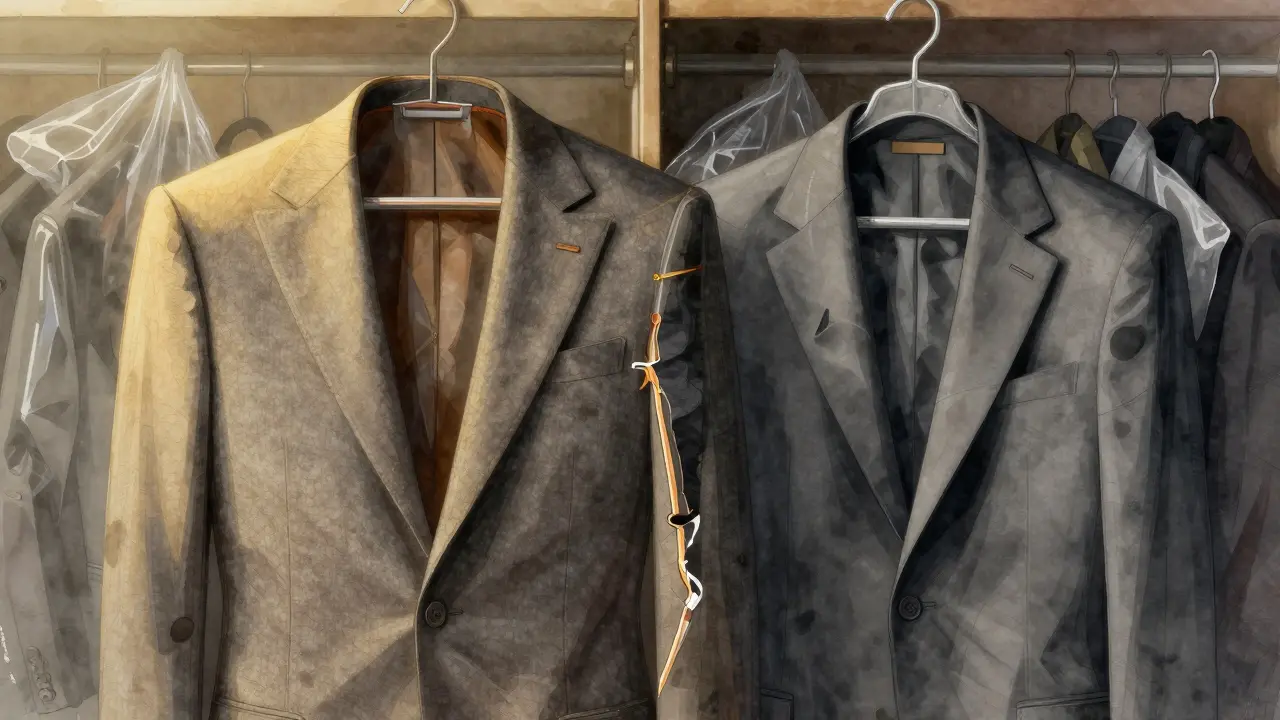
Seasonal Suit Storage
If you live in a place with distinct seasons, like Seattle, you’ll want to rotate your suits seasonally. Don’t just shove them into a box and forget them.
Before storing:
- Clean the suit thoroughly-either professionally or with a home brush and steamer.
- Place moth repellents like cedar blocks or lavender sachets inside the garment bag. Avoid mothballs-they leave a strong odor that’s hard to remove.
- Store in a climate-controlled area. If you’re storing in a basement or garage, use airtight plastic bins with silica gel packs to absorb moisture.
- Check on your suits every 6-8 weeks. Give them a quick brush and air them out for an hour.
When to Call a Professional
There are times when home care isn’t enough. If you notice any of these, it’s time to see a tailor:
- Buttons are loose or falling off
- Seams are starting to unravel
- The lining is peeling or wrinkling unnaturally
- The jacket has a permanent crease along the lapel
- The trousers have stretched out at the knees or seat
A good tailor can re-pad shoulders, re-stitch seams, and even reshape the entire silhouette. It’s not expensive-usually $50-$120 depending on the fix. And it’ll extend your suit’s life by years.
Common Suit Care Myths Debunked
Let’s clear up some myths that are probably ruining your suits right now:
- Myth: Dry cleaning keeps suits fresh. Truth: Dry cleaning removes natural oils and breaks down fibers over time. Only do it once or twice a year.
- Myth: All suits are made the same. Truth: A $300 off-the-rack suit and a $1,200 bespoke one have different construction. The better the suit, the more care it needs.
- Myth: Hanging a suit in the bathroom after a shower helps remove wrinkles. Truth: Steam from showers is too wet and can cause mildew. Use a proper steamer.
- Myth: You can store suits in vacuum bags to save space. Truth: Compression damages the padding and structure. Never compress wool.

What Happens If You Ignore Suit Care?
Let’s say you’ve been tossing your suit on the back of a chair, storing it in a plastic bag, and dry-cleaning it every two weeks. Here’s what you’re likely to see in 12-18 months:
- Shoulders look like they’re slouching forward
- Lapels won’t spring back after being pressed
- There’s a faint yellow stain under the arms
- Buttons are loose or missing
- The fabric feels stiff and brittle
At that point, you’re not just looking bad-you’re throwing money away. A $600 suit that’s been neglected might be worth $150 at best. A suit that’s been cared for? It’ll still look new after five years.
Quick Suit Care Checklist
Print this out. Tape it to your closet door. Follow it every time you take off your suit.
- ☐ Unbutton jacket
- ☐ Brush with suit brush
- ☐ Hang on wooden hanger
- ☐ Let rest 24+ hours
- ☐ Use garment bag for storage
- ☐ Rotate suits weekly
- ☐ Check for stains or loose threads monthly
How often should I dry clean my suit?
Only once or twice a year, unless it’s visibly stained. Over-cleaning damages wool fibers. Brushing and airing out between wears is far more effective and gentler.
Can I wash a suit in the washing machine?
Never. Even if the label says "machine washable," it’s misleading. Suit fabrics are constructed with interlinings and padding that will shrink, warp, or come apart. Hand washing is risky. Dry cleaning or professional steaming are your only safe options.
What’s the best way to remove wrinkles without a steamer?
Hang the suit in the bathroom while you take a hot shower. Let the steam loosen the wrinkles-don’t spray water on it. Wait 15-20 minutes, then hang it up to dry. This isn’t ideal, but it’s better than ironing. A handheld steamer is still the best tool.
Do I need to store my suit in a garment bag?
Yes-if you’re storing it long-term or in a dusty closet. Garment bags protect against dust, moths, and accidental snags. Just make sure it’s breathable cotton or canvas. Plastic traps moisture and causes mildew.
How do I tell if my suit is worth repairing?
If the fabric is still soft, the buttons are intact, and the structure holds its shape, it’s worth repairing. If the wool is thinning, the lining is falling apart, or the shoulders are permanently misshapen, it’s time to replace it. A tailor can help you decide.
Final Thought: Your Suit Is a Reflection of You
A suit isn’t just fabric and thread. It’s your armor in meetings, your confidence on presentations, your quiet statement of professionalism. Taking care of it isn’t vanity-it’s discipline. It shows you value your work, your time, and the impression you make. And in a world where first impressions stick, that’s worth more than any discount on a new suit.


Write a comment