


You might think of sunglasses as protective eyewear designed to shield eyes from harmful UV rays while adding a stylish element to any outfit simply as functional gear for sunny days. But anyone who has ever stepped out in the wrong pair knows they can make or break an entire look. The right frames don't just protect your vision; they frame your face, balance your features, and signal your personal aesthetic before you even say hello. Getting this right isn't about following rigid rules-it's about understanding how geometry, proportion, and material interact with your unique facial structure.
The Geometry of Your Face: Finding Your Shape
Before you pick a frame, you need to know what you're working with. Most people fall into one of five basic face shapes: the distinct structural categories defined by the proportions of forehead, cheekbones, jawline, and overall length. Identifying yours is easier than you think. Stand in front of a mirror, pull your hair back, and trace the outline of your face on the glass with a lipstick or dry-erase marker. Look at the result. Is it longer than it is wide? Are your angles sharp or soft?
- Oval: Your face is longer than it is wide, with a gently rounded jawline and a forehead that is slightly wider than your chin. This is the most versatile shape because the proportions are already balanced.
- Round: Your face has similar width and length, with full cheeks and a curved jawline. There are no sharp angles here.
- Square: You have a strong, angular jawline and a broad forehead. Your cheekbones and jaw are roughly the same width, creating a boxy appearance.
- Heart: Your forehead is the widest part of your face, tapering down to a narrow, pointed chin. You might also have high cheekbones.
- Oblong: Similar to oval but significantly longer, with a straighter cheek line and equal width across the forehead, cheekbones, and jaw.
Once you've identified your shape, the goal is simple: create contrast. If your face is round, you want angles. If it's angular, you want curves. This principle of opposition creates visual harmony and draws attention to your best features rather than exaggerating others.
Matching Frames to Face Shapes
Now that you know your shape, let's talk about specific frame styles. The market offers dozens of options, but not all of them work for every person. Here is how to match the geometry of your face with the geometry of the glasses.
| Face Shape | Best Frame Styles | Frames to Avoid | Why It Works |
|---|---|---|---|
| Oval | Almost any style, especially geometric or oversized | Overly large frames that overwhelm the face | Balanced proportions allow for experimentation without distortion |
| Round | Square, rectangular, cat-eye, wayfarer | Small round frames, rimless designs | Angular lines add definition and lengthen the appearance of the face |
| Square | Round, oval, cat-eye, aviator | Boxy square frames, thick browlines | Curved lines soften the strong jawline and angular cheekbones |
| Heart | Aviator, round, light-colored frames, bottom-heavy styles | Top-heavy frames, thick upper rims | Wider bottoms balance the narrower chin and draw attention downward |
| Oblong | Oversized, deep-set lenses, decorative temples | Narrow, small frames | Taller lenses shorten the appearance of the long face |
Notice the pattern? Round faces need squares. Square faces need circles. Heart shapes need weight at the bottom. Oblong faces need height. Oval faces get a free pass. These aren't hard laws, but they are reliable starting points. If you buy a pair that violates these principles, you'll likely find yourself constantly adjusting them or feeling like they "don't sit right."
Material Matters: Plastic vs. Metal
The material of your frames changes more than just the weight-they change the vibe. Acetate frames are durable plastic eyewear made from cellulose acetate, known for their vibrant colors, thickness, and retro appeal offer boldness and color. They are thicker, heavier, and often carry a vintage or statement-making energy. Think 1960s mod looks or modern streetwear. Acetate holds its shape well and resists warping, making it a practical choice for daily wear.
Metal frames are lightweight eyewear constructed from titanium, stainless steel, or aluminum, offering a sleek, minimalist, and professional aesthetic lean towards sophistication and minimalism. Titanium is incredibly lightweight and hypoallergenic, perfect for sensitive skin. Stainless steel offers durability and a classic look. Metal frames tend to be thinner and less intrusive, which works well if you have delicate features or want the focus to remain on your eyes rather than the glasses themselves.
If you have a smaller face, avoid thick acetate frames that will swallow your features. Opt for thin metal or semi-rimless designs. If you have a larger face, thin metal might look fragile. Go for substantial acetate or mixed-material frames that provide enough visual weight to balance your proportions.
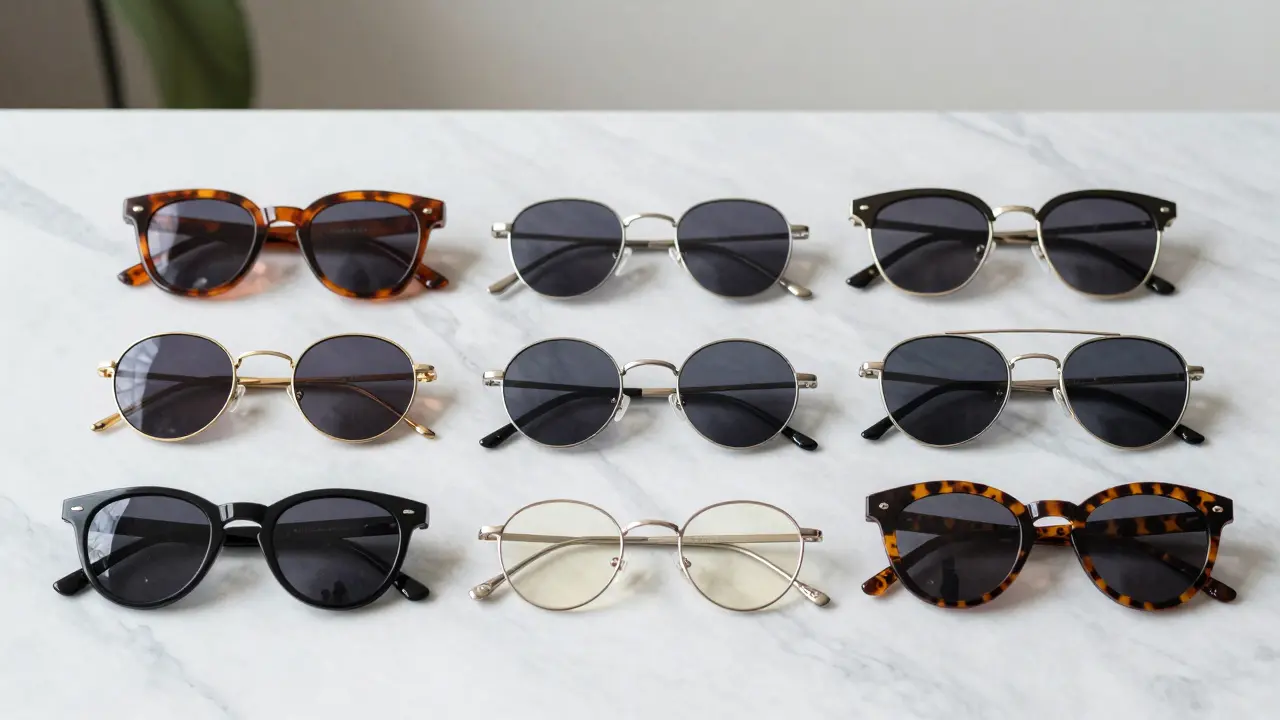
Color Theory: Skin Tone and Lens Shade
Your skin tone dictates which frame colors complement you best. This isn't just about looking good-it's about avoiding a washed-out appearance. Hold up different colored objects near your face in natural light. Do you look energized or tired?
- Fair/Cool Skin: Stick to cool tones like black, gray, silver, blue, and purple. Avoid warm oranges or yellows, which can clash with pink undertones.
- Olive/Warm Skin: Earth tones work beautifully-brown, tortoise shell, gold, bronze, and green. Cool grays might look dull against golden undertones.
- Deep/Dark Skin: You can pull off almost anything, but jewel tones (emerald, sapphire, amethyst) and bright whites pop exceptionally well. Metallic gold adds richness.
Lens color also plays a role. Brown and amber lenses enhance contrast and depth perception, making them great for driving. Gray lenses reduce brightness without distorting colors, ideal for general use. Green lenses offer a middle ground. For style, mirrored lenses add a futuristic edge, while gradient lenses transition from dark to light, allowing eye contact while shielding from overhead sun.
Personal Style Archetypes
Once you've matched the shape and material, consider your personal brand. Sunglasses are a quick shorthand for your personality. Are you the minimalist? The trendsetter? The classic professional?
The Minimalist chooses thin metal frames, neutral lens colors, and clean lines. No logos, no embellishments. Just precision. This works well in corporate environments or for those who prefer clothes to speak louder than accessories.
The Trendsetter embraces oversized shapes, bold colors, and unconventional materials. Think translucent frames, neon accents, or avant-garde geometries. This style demands confidence and pairs well with experimental fashion choices.
The Classic Professional sticks to timeless silhouettes like the Wayfarer or Aviator. Tortoise shell patterns and matte black finishes are staples. These frames age gracefully and never feel "out of date," making them a safe investment for years of wear.
The Retro Enthusiast looks backward for inspiration. Cat-eye frames for a 1950s Hollywood vibe, round John Lennon-style specs for the 70s, or thick browline frames for the 80s power look. This style requires commitment-you're not just wearing glasses; you're curating an era.

Practical Fit and Comfort Checks
A beautiful frame is useless if it hurts. Fit is non-negotiable. When trying on sunglasses, pay attention to three key areas: the bridge, the temples, and the fit around the eyes.
The bridge should rest comfortably on your nose without pinching or sliding down. If you have a low nasal bridge, look for adjustable nose pads (common on metal frames). If you have a high bridge, fixed plastic bridges usually work better.
The temples (arms) should fit snugly behind your ears without leaving red marks. They shouldn't be so tight that they cause headaches after an hour, nor so loose that they slip when you bend over. Many stores offer temple adjustments for free-use this service.
The eye fit matters too. Your pupils should align with the center of the lenses for optimal vision. If the lenses are too wide, they'll slide off your face. Too narrow, and they'll pinch your cheeks. Also, ensure there's enough space between the lens and your eyelashes-nothing worse than mascara smudging on the inside of your glasses.
Common Mistakes to Avoid
Even with the right knowledge, pitfalls exist. One common error is choosing frames based solely on celebrity influence. What works on a model with chiseled features may not work on you. Always prioritize your own face shape over trends.
Another mistake is ignoring UV protection for the sake of style. Cheap fashion sunglasses with tinted lenses but no UV coating are dangerous. Your pupils dilate in the dark tint, letting more harmful radiation hit your retina. Always look for "UV400" or "100% UV protection" labels, regardless of price.
Finally, don't neglect maintenance. Clean your lenses with microfiber cloths and proper spray-not your shirt tail, which scratches coatings. Store them in a hard case when not in use. A scratched lens ruins the best frame design.
How do I know my face shape if I'm unsure?
Use the mirror tracing method described earlier. If you still can't decide, take a selfie with your hair pulled back and ask friends for honest opinions. Alternatively, visit an optician who can professionally assess your facial proportions and recommend suitable styles.
Can I wear round sunglasses if I have a round face?
Generally, it's advised to avoid round frames with a round face as they emphasize circularity. However, if you love the look, choose slightly squared-off rounds or add angular elements elsewhere in your outfit to create balance. Confidence can override strict rules, but contrast usually yields a more flattering result.
Are expensive sunglasses worth the investment?
Higher-priced brands often offer superior craftsmanship, better materials (like genuine acetate or titanium), and advanced lens technologies (such as polarized or photochromic lenses). While budget options can look stylish, they may lack durability and precise fit. Invest in quality if you wear sunglasses daily.
What is the difference between polarized and non-polarized lenses?
Polarized lenses reduce glare from reflective surfaces like water, roads, and snow. They enhance comfort and clarity, making them ideal for driving or outdoor sports. Non-polarized lenses block UV rays but don't eliminate glare. Choose polarized if you spend significant time outdoors or drive frequently.
How should sunglasses fit on my face?
They should sit securely without slipping, rest evenly on the nose bridge, and not pinch the temples. Your eyebrows should be visible above the frame, and the lenses should align with your pupils. There should be no pressure points causing red marks or headaches after prolonged wear.