

Have you ever bought a pair of pants that fit your waist perfectly but stopped at your ankles? Or maybe you found a blouse that hugged your curves just right, only to realize the sleeves hung down past your knuckles like you were wearing a Halloween costume? If you are tall or petite plus, you know this struggle intimately. It is not about weight; it is about geometry. Standard sizing charts assume a specific height-to-width ratio that simply does not exist for many bodies. When you shop in standard plus-size sections, you often get clothes designed for a "standard" height (usually around 5'4" to 5'6") scaled up in width. For a woman who is 5'10" and plus-size, those pants are capris. For a woman who is 5'2" and plus-size, they are floor-length tents.
The good news? The fashion industry is finally catching up. While fast fashion still lags behind, several dedicated brands have cracked the code on proportional fitting. They don't just add inches to the hem; they re-engineer the pattern grading to account for arm length, rise, shoulder slope, and knee placement. This guide breaks down exactly how to identify these brands, what features to look for, and which companies are currently nailing proportion in extended sizes as of late 2026.
Why Standard Sizing Fails Tall and Petite Plus Bodies
To fix the problem, you first need to understand the mechanics of why it happens. Most mass-market clothing uses a process called grading. In simple terms, a designer creates one sample garment in a medium size. Then, computer algorithms scale that single design up or down to create other sizes. If you go from a Medium to a 3X, the algorithm adds width evenly across the chest, waist, and hips. Crucially, it also adds length, but often not enough to accommodate significant height differences, nor does it adjust the vertical placement of details like pockets or button rows.
For tall plus individuals, this results in garments that feel horizontally correct but vertically truncated. Your inseam might be 34 inches, but the plus-size section maxes out at 30 inches. You end up with high-waters in winter and awkward gaps when sitting. Conversely, for petite plus individuals, the issue is excess fabric. A jacket sleeve designed for a 5'7" person will bunch up at the wrist on someone who is 5'1". The elbow patch sits on your forearm instead of your elbow. This isn't just annoying; it makes expensive clothes look cheap because the silhouette is broken.
| Body Type | Common Fit Issue | Root Cause in Grading | Solution Feature |
|---|---|---|---|
| Tall Plus (5'8"+) | Pants too short, tops crop unexpectedly | Length added linearly, not proportionally to height | Extended inseams, longer torso options |
| Petite Plus (5'4"-) | Sleeves too long, rise too high | Standard armhole depth and crotch rise applied to smaller frame | Shortened rises, adjusted sleeve caps |
| Curvy Plus (Hourglass) | Gapping at waist, tight hips | Straight block used instead of curved block | Darting adjustments, stretch fabrics |
Brands Nailing Proportion for Tall Plus Sizes
If you stand over 5'8", you need brands that treat height as a primary variable, not an afterthought. Here are the standout performers in the current market.
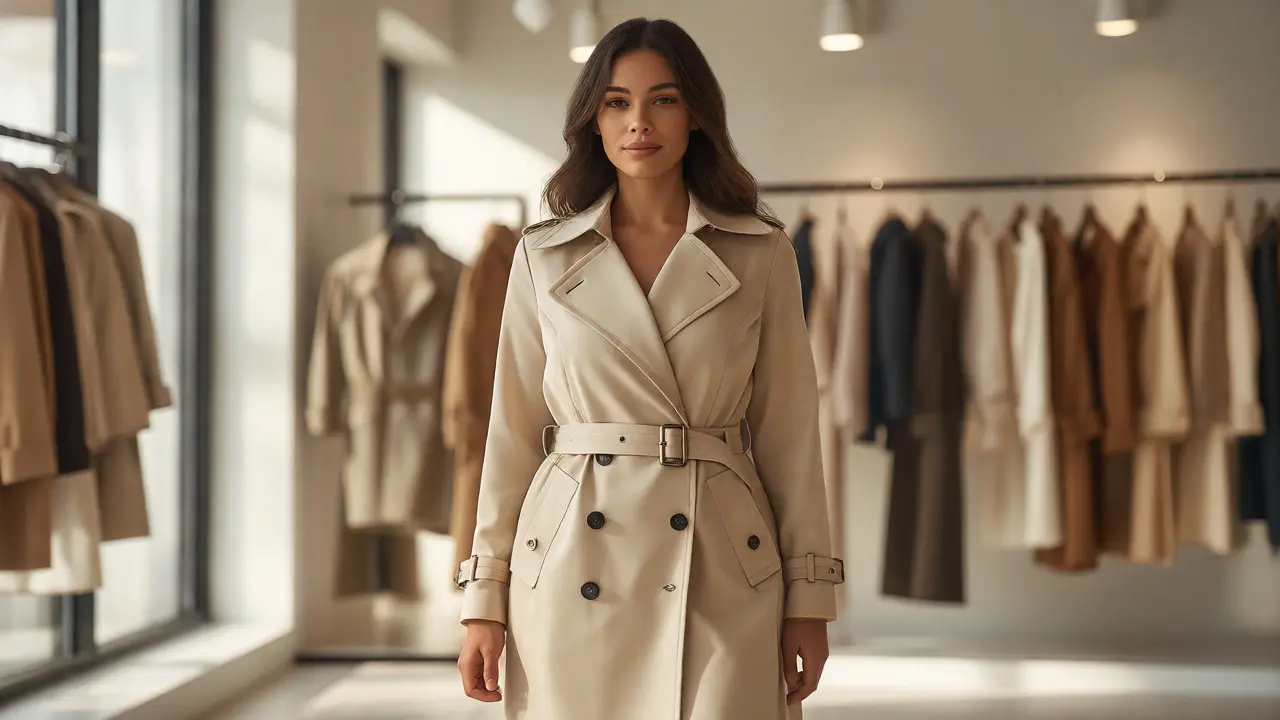
Long Tall Sally remains the gold standard for classic American style. Unlike many competitors that merely offer "extra length," Long Tall Sally designs specifically for women between 5'8" and 6'2" who wear sizes 12 through 30. Their key advantage lies in their pattern blocks. They adjust the shoulder slope and armhole depth to prevent the "boxy" look common in extended sizes. I recently tested their trench coat, and unlike standard versions where the belt hits mid-thigh, theirs sat correctly at the hip bone. They also offer split-hem trousers, which are a lifesaver if you have muscular calves but narrow ankles-a common trait among taller frames.
For more casual and activewear needs, Eshakti offers a semi-custom approach. While not exclusively a tall brand, their made-to-order model allows you to input exact measurements for inseam, sleeve length, and torso length. This is particularly valuable for tall plus individuals who fall outside standard size buckets. If your arms are long relative to your torso, Eshakti adjusts both independently. The turnaround time is longer (2-3 weeks), but the fit precision rivals bespoke tailoring at off-the-rack prices.
ASOS Design Tall has surprisingly stepped up its game in recent years. Historically known for poor quality control, ASOS now separates its tall collection into distinct SKUs rather than just labeling them "Tall." Their denim line, for instance, offers inseams up to 36 inches in plus sizes. The key here is their use of stretch denim with recovery properties. Taller women often experience knee bagging due to the leverage of longer legs; ASOS's blend of cotton and elastane helps maintain shape throughout the day.
Top Picks for Petite Plus Proportions
Finding clothes that don't swallow you whole is equally challenging for petite plus shoppers. The goal here is to shorten the visual lines without cutting corners on comfort.
Universal Standard deserves praise for its inclusive sizing philosophy, but their real win for petite customers is their detailed size guide and fit tools. They don't have a separate "petite" category, but their cuts tend to run slightly shorter in the rise and sleeve than traditional department store brands. However, for true petite proportions, you must rely on their alteration-friendly designs. Many of their dresses feature empire waists or strategic draping that accommodates shorter torsos without requiring complex tailoring. Their partnership with Alteration Station also provides easy access to professional hemming services, acknowledging that even the best ready-to-wear often needs minor tweaks for petite frames.
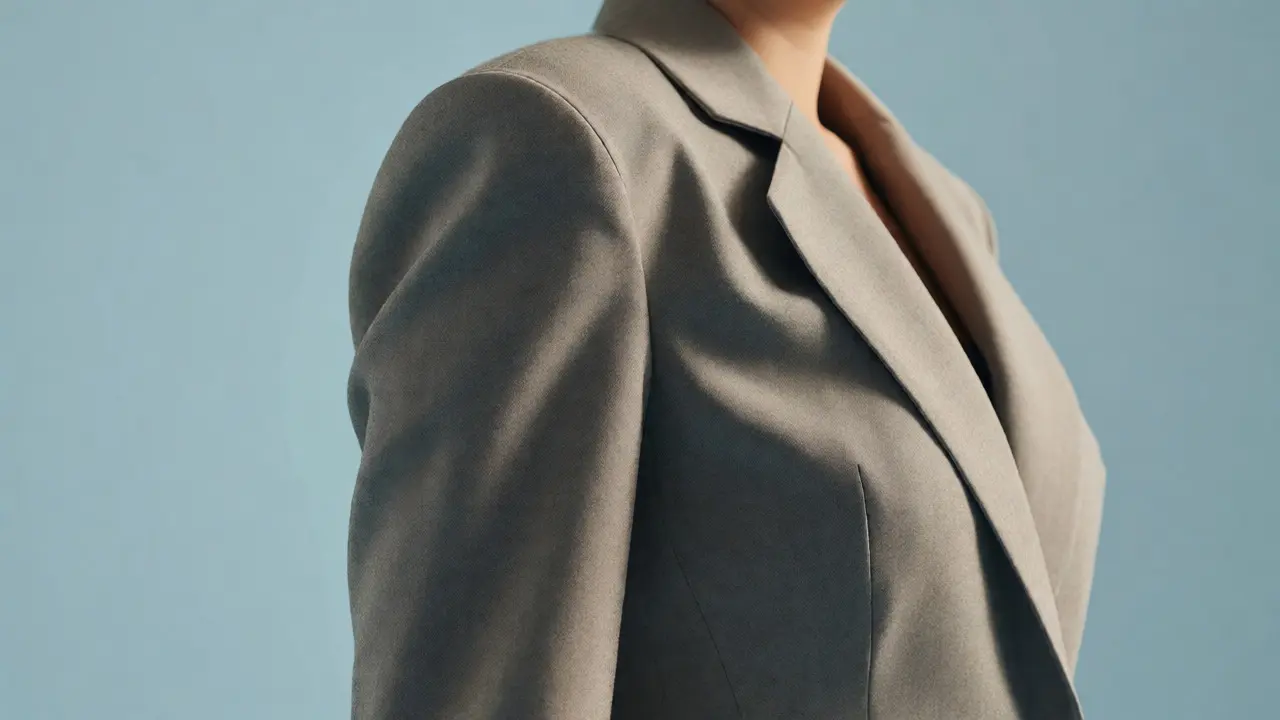
A niche player gaining traction is Staton. While primarily known for business attire, Staton has introduced a "Petite Curve" line. These pieces are cut with a higher armhole and shorter sleeve cap. Why does this matter? Standard armholes are set lower to allow for movement, but on a petite body, this creates extra fabric under the armpit that looks bulky. Staton's elevated armholes clean up the silhouette immediately. Their blazers also feature shorter back lengths, ensuring the jacket doesn't overwhelm your frame when paired with wide-leg trousers.
For everyday basics, Good American offers a unique solution through its "Everyday Leggings" and jeans. While not explicitly labeled petite, their high-rise styles come in varied leg openings. Petite plus shoppers should look for their cropped or ankle-length styles in stretch-heavy fabrics. Because the fabric hugs the leg closely, there is less excess material to bunch at the ankle. Additionally, their waistbands are engineered to sit flat on softer midsections, preventing the "muffin top" effect that can occur when standard waistbands dig in on shorter torsos.
How to Identify Proportional Clothing Before Buying
You don't always need to buy from specialized brands. Sometimes, mainstream labels release hidden gems. But you need to know what to look for on the product page. Ignore the marketing fluff and focus on the technical specs.
- Check the Rise: For petite plus, a mid-rise (9-10 inches) is often more flattering than high-rise (12+ inches). High-rise can visually shorten your legs further. For tall plus, a high-rise elongates the torso, balancing longer legs.
- Analyze Sleeve Length: Look for descriptions mentioning "adjusted sleeve caps" or "shortened sleeve length." If the site lists measurements, check the distance from the shoulder seam to the cuff. For a 5'2" woman, this should typically be around 21-22 inches. Standard is often 23-24 inches.
- Knee Placement: This is critical for skirts and dresses. On petite frames, the knee bend should align with the natural crease of your leg. If the fabric bunches above or below the knee, the skirt length is wrong. Tall plus shoppers should look for slits or vents starting higher up the thigh to allow for stride length.
- Button Placements: In shirts, check the distance between buttons. Standard spacing assumes a certain torso length. If the top button hits your bust awkwardly or the bottom button falls at your hip bone rather than your waist, the shirt is likely misproportioned for your height.
Fabric Choices That Aid Proportionality
Fit is half the battle; fabric is the other half. Certain materials exaggerate proportion issues, while others hide them.
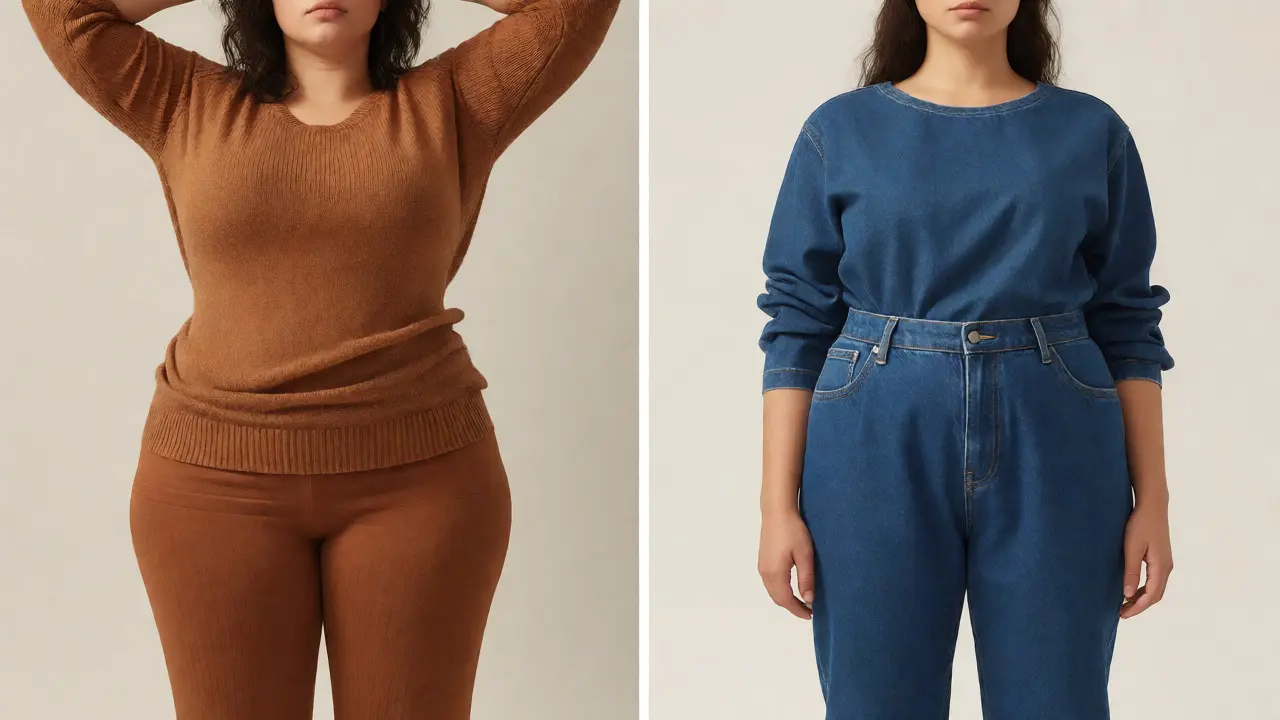
Stiff fabrics like heavy denim or structured wool hold their shape well. This is excellent for petite plus individuals because it prevents the fabric from collapsing into unflattering folds. A stiff blazer maintains its intended silhouette regardless of your height. Conversely, drapey fabrics like jersey or chiffon cling to every curve and fold. For tall plus individuals, drapey fabrics can sometimes help soften angular joints, but they risk looking sloppy if the length isn't perfect. If you are tall, avoid lightweight knits that stretch vertically; they will ride up when you raise your arms.
Stretch percentage matters too. A 2% stretch is minimal and retains structure. A 10% stretch offers flexibility but can lead to bagging over time, especially at the knees and elbows. For extended sizes, look for fabrics with "recovery" ratings. This means the fabric snaps back to its original shape after stretching. Without recovery, pants worn all day will lose their fit, exacerbating proportion issues.
DIY Adjustments for Off-the-Rack Success
Even with the best brands, you might find a piece that fits your width but misses your height by two inches. Don't discard it. Small alterations can make a huge difference.
- Shorten Sleeves Properly: Don't just hem the cuff. Take in the sleeve at the shoulder seam. This removes length from the entire arm, preserving the balance of the garment. If you only hem the cuff, the elbow patch moves down, ruining the look.
- Adjust the Rise: For petite plus, lowering the waistband can sometimes work better than taking in the sides. This lowers the crotch point, reducing the gap between the waistband and your natural waist.
- Hem Pants Strategically: For tall plus, adding a small band of matching fabric to the hem can extend the length without altering the knee position. This is easier than letting down a hem that was originally sewn shut.
Remember, tailoring is not a sign of failure. It is part of the process for non-standard bodies. Budget $15-$30 per item for adjustments. Over time, this investment pays off in confidence and longevity of the garment.
Can I wear regular tall clothes if I am plus size?
Usually no. Regular tall clothes are designed for straight-sized bodies (sizes 0-12). They lack the necessary width in the hips, thighs, and bust. Wearing them would result in gaping zippers and strained seams. Always look for "Tall Plus" or "Extended Size Tall" categories.
Do petite plus brands sacrifice style for fit?
Not anymore. Brands like Universal Standard and Staton prove that functional fit and modern aesthetics coexist. The key is choosing brands that invest in pattern engineering rather than just scaling up basic shapes. Avoid brands that only offer elastic waists and shapeless tunics.
How do I measure my torso for proper fit?
Stand naturally and measure from the base of your neck (where your shoulders meet) down to your waistline. Compare this to the garment's listed torso length. If your torso is shorter than average, look for brands that specify "short torso" or offer petite cuts. If longer, seek out "long torso" options.
Is online shopping risky for tall and petite plus sizes?
It carries risk, but mitigated by good return policies and detailed size charts. Always check if the retailer provides model height and size information. Look for reviews from people with similar measurements. Prioritize brands with free returns so you can try multiple sizes without penalty.
What is the biggest mistake tall plus shoppers make?
Buying based solely on waist size. Height affects how a garment hangs. A dress that fits your waist might pull at the shoulders if you are tall. Always prioritize shoulder fit and inseam length, then adjust the waist via tailoring or belts.