

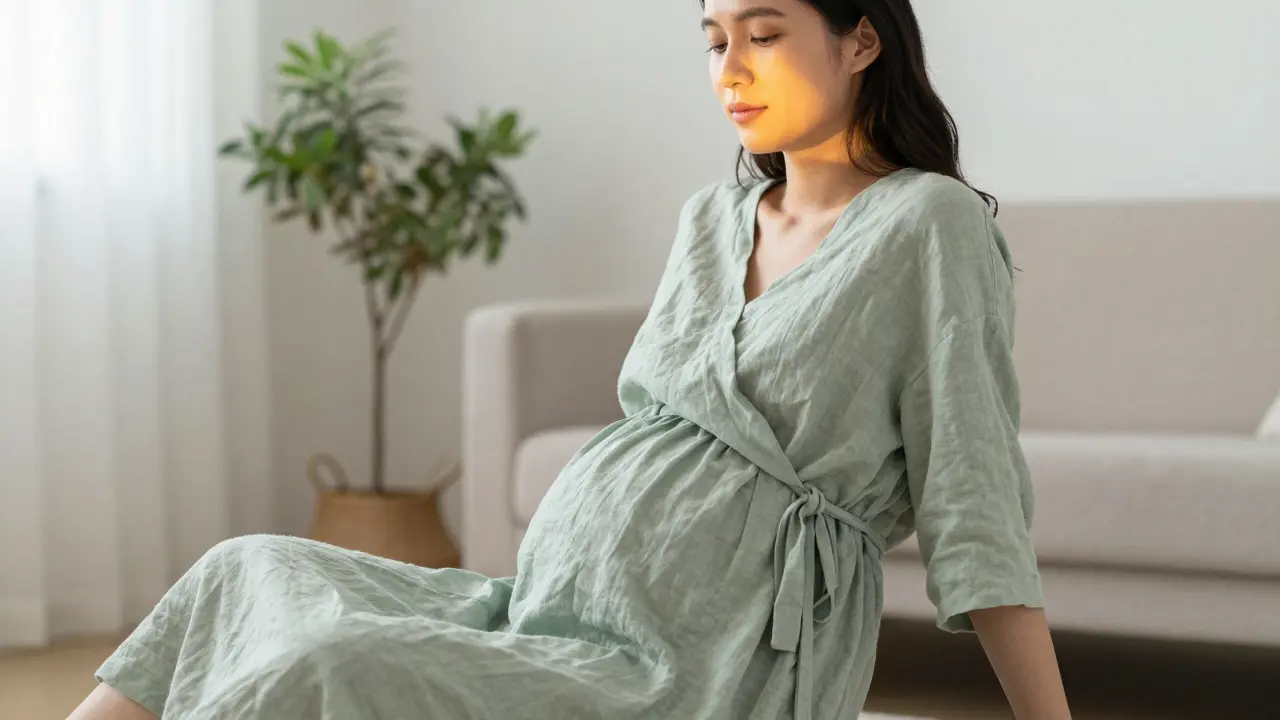
You know that sudden wave of heat that hits you out of nowhere? You’re sitting in a comfortably cool room, maybe even with the AC humming softly, and then-bam. Your face flushes, your heart races, and you feel like you’re wearing a wool sweater in July. If you are pregnant, this is not just a quirky habit or a bad day. It is biology doing its thing.
During pregnancy, your body undergoes a massive internal renovation. Blood volume increases by up to 50 percent, and your basal metabolic rate spikes as your body works overtime to support new life. This extra heat production often leads to what many call "pregnancy heat flashes" or night sweats. The traditional advice to "just dress lighter" falls short because weather changes, office thermostats, and social expectations don’t align with your fluctuating body temperature. That is where temperature-responsive layering comes in. It is not just about looking good; it is about engineering your outfit to adapt to your body’s unpredictable thermostat.
The Science Behind the Sweat
Before we talk about clothes, let’s look at why this happens. Understanding the mechanism helps you choose the right countermeasures. When you are pregnant, your core body temperature rises slightly. At the same time, hormonal shifts-specifically increased estrogen and progesterone-affect the hypothalamus, the part of your brain that regulates temperature. It becomes hypersensitive. A slight change in ambient temperature can trigger a cooling response: vasodilation (widening of blood vessels) and sweating.
This means your body is trying to cool down faster than usual. If you wear heavy, non-breathable fabrics, that heat gets trapped against your skin, creating a feedback loop of discomfort. The goal of smart layering is to break that loop by allowing air circulation and moisture wicking while maintaining coverage for modesty or professional settings.
Fabric Selection: The Foundation of Comfort
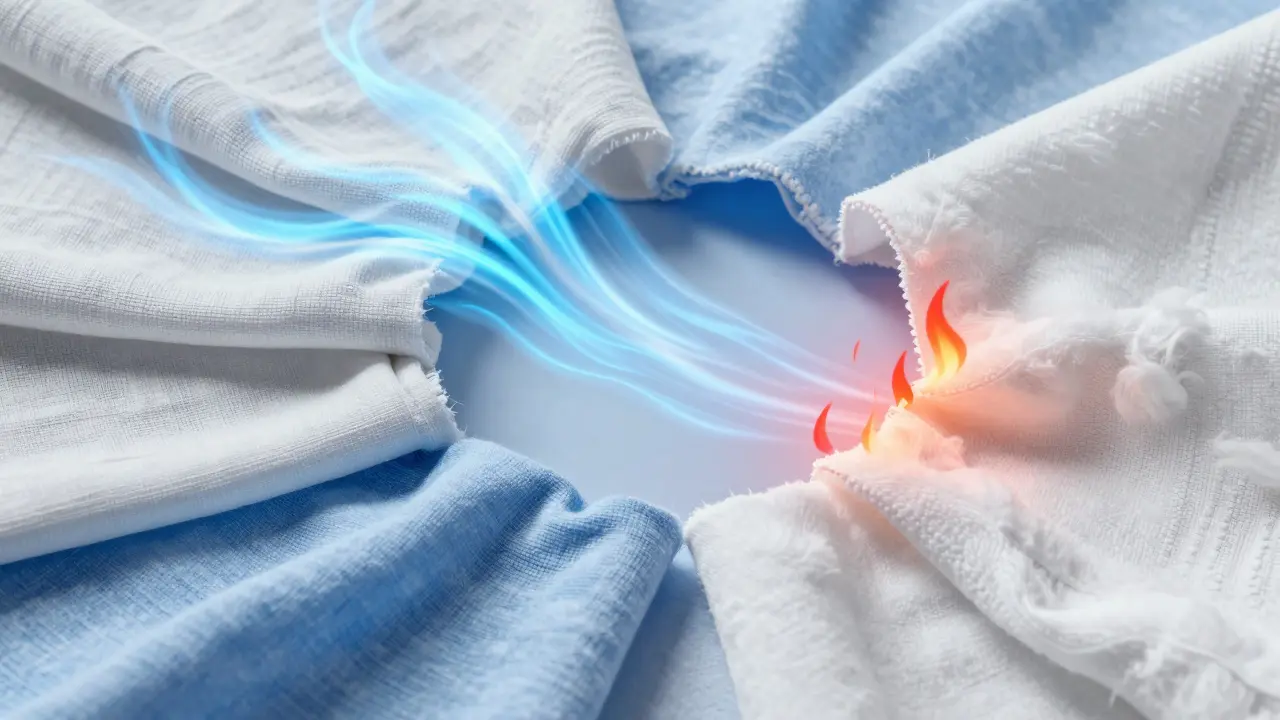
The most critical decision you make when dressing for heat flashes is the fabric itself. Not all materials are created equal when it comes to thermal regulation. You need fabrics that act as a second skin, moving moisture away from your body rather than holding it there.
- Cotton is a natural fiber known for its breathability and softness. While great for casual wear, standard cotton can absorb sweat and stay wet, which might feel clammy if you have a severe flash. Look for lightweight, loose-weave cottons.
- Bamboo Viscose is a semi-synthetic fabric made from bamboo pulp, offering superior moisture-wicking and temperature-regulating properties. It feels silky against the skin and dries quickly, making it a top contender for base layers.
- Linen is a natural fiber derived from the flax plant, characterized by its high breathability and quick-drying ability. Linen is excellent for hot days but wrinkles easily. It is perfect for outer layers or dresses where structure matters less than airflow.
- Tencel (Lyocell) is an eco-friendly fabric made from wood pulp, known for its smooth texture and excellent moisture management. It drapes beautifully and stays cool, making it ideal for workwear blouses or midi skirts.
Avoid synthetic blends like polyester or nylon for your base layers during peak heat months. These materials trap heat and do not breathe, essentially turning your shirt into a plastic bag. If you must wear synthetics due to workplace uniforms, ensure they are specifically labeled as "moisture-wicking" or "performance" fabrics designed for athletic use.
The Three-Layer System for Pregnant Bodies
Layering is not just about adding more clothes; it is about strategic removal. Think of your outfit as a system with three distinct zones: the base, the middle, and the shell. Each layer has a specific job.
- The Base Layer (Moisture Management): This touches your skin directly. It should be lightweight, breathable, and moisture-wicking. A simple bamboo tank top or a seamless cotton bralette works well. Avoid tight elastic bands around the waist or chest, as these can restrict circulation and add pressure points when you start sweating.
- The Middle Layer (Insulation/Aesthetics): This is your visible outfit-the blouse, the t-shirt, the knit cardigan. Choose pieces with loose cuts. Empire waists, wrap styles, and A-line silhouettes allow air to circulate around your growing belly. Wrap tops are particularly useful because you can loosen them instantly if a flash hits.
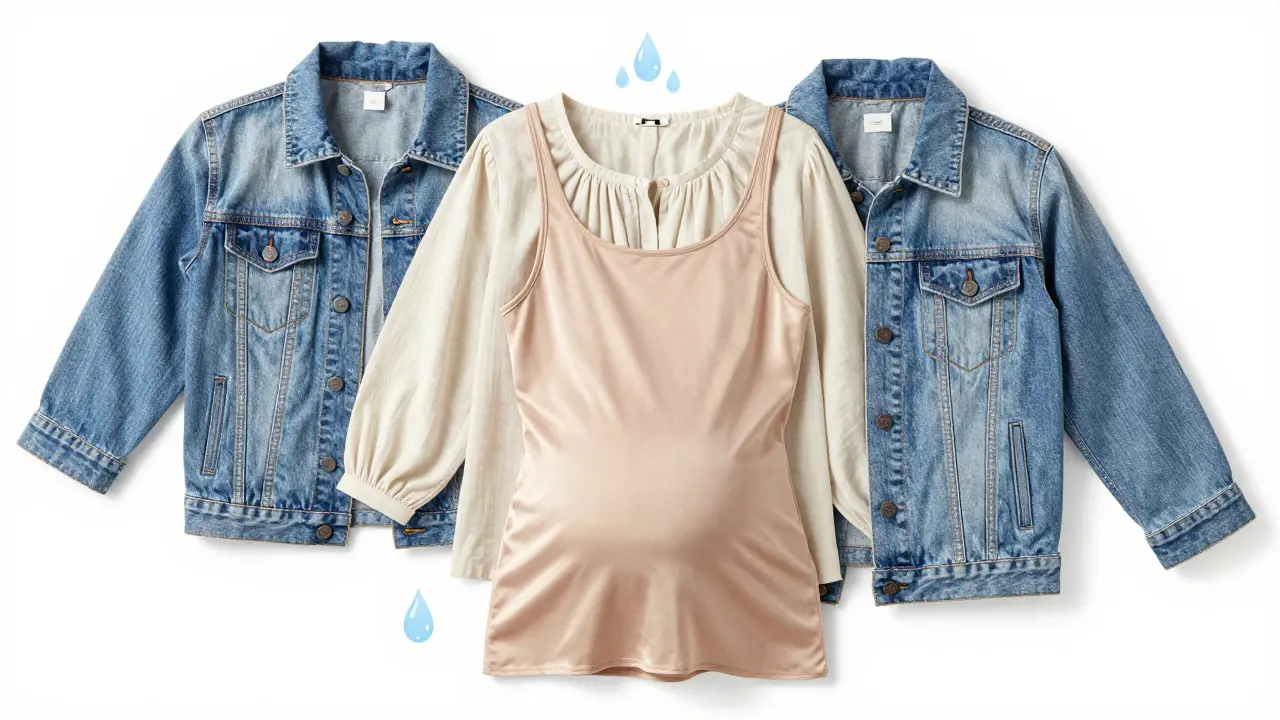
- The Shell Layer (Protection/Modesty): This is the piece you take off first. A light denim jacket, an unlined blazer, or a sheer kimono serves as a barrier against cold AC but is easy to remove. The key here is ease of access. Buttons, zippers, or open fronts are better than pullover styles that require taking off your entire arm to remove.
For example, imagine you are heading to a prenatal yoga class followed by a lunch meeting. Start with a moisture-wicking sports bra (base), add a loose linen tank (middle), and throw on a lightweight zip-up hoodie (shell). In the yoga studio, you keep the shell on initially but zip it open. As you warm up, you remove it entirely. At lunch, if the restaurant is chilly, you put the shell back on. If a heat flash strikes mid-conversation, you simply unzip or shrug it off without disrupting the flow of conversation.
Strategic Silhouettes and Cuts
How a garment fits is just as important as what it is made of. Tight clothing creates friction and traps heat. Loose clothing allows for convection currents-air moving across your skin carries heat away.
Look for these specific design features:
- Vents and Slits: Dresses with side slits or backs with keyhole cutouts allow heat to escape from the lower body. This is crucial because your center of gravity shifts, and your lower back can get surprisingly hot.
- Ruching and Smocking: These details provide stretch without tightness. They accommodate your changing shape without digging into your skin, reducing irritation when you sweat.
- Shorter Sleeves or Cap Sleeves: Exposing your arms helps regulate temperature. Armpits are major heat-release zones. Long sleeves can be rolled up, but cap sleeves offer immediate relief.
- High Necklines vs. Open Necks: While high necks protect from sun, open necks (V-necks, scoop necks) allow heat to rise and escape from your chest and neck area, which are common sites for flushing.
Color Psychology and Thermal Dynamics
It sounds trivial, but color matters. Dark colors absorb heat from sunlight and ambient light sources, while light colors reflect it. If you are spending time outdoors, stick to whites, pastels, and light grays. However, indoors, the difference is negligible. What matters more is opacity. Sheer fabrics in dark colors might still trap heat if they are dense. Always prioritize weave density over color alone.
Pattern choice also plays a role. Small, busy patterns can hide sweat marks better than solid light colors, which can become transparent when wet. If you are worried about visibility during a flash, opt for subtle prints or textured fabrics like eyelet lace or ribbed knits that distract the eye.
Accessories as Temperature Regulators
Don’t underestimate the power of accessories. A wide-brimmed hat protects your head from direct sunlight, reducing overall body heat gain. Sunglasses reduce squinting, which can inadvertently tense facial muscles and contribute to a feeling of warmth.
Jewelry should be minimal. Metal conducts heat. A heavy gold necklace resting against your collarbone can feel like a hot iron during a flash. Stick to lightweight chains or skip necklaces altogether. For hair, updos keep hair off your neck, preventing the "wool scarf" effect of sweaty hair sticking to your skin.
| Fabric Type | Breathability | Moisture Wicking | Drape/Comfort | Best Use Case |
|---|---|---|---|---|
| Cotton | High | Low (absorbs) | Good | Casual tees, underwear |
| Bamboo Viscose | Very High | High | Excellent | Base layers, sleepwear |
| Linen | Very High | Medium | Stiff/Crisp | Outer dresses, shirts |
| Tencel | High | High | Silky/Smooth | Work blouses, skirts |
| Polyester Blend | Low | Variable | Good | Avoid unless performance-grade |
Nighttime Strategies
Heat flashes often strike at night, disrupting sleep. Your bedroom environment needs to match your daytime strategy. Switch to bamboo or percale cotton sheets. Percale has a matte finish and feels cooler to the touch than sateen. Invest in a lightweight duvet cover rather than a heavy comforter. You can always add a blanket if you get cold, but you cannot remove layers from a thick quilt.
Sleepwear should follow the same layering logic. A silk or bamboo camisole and shorts set allows maximum airflow. Avoid pajama sets with tight waistbands. Consider sleeping without socks if your feet tend to overheat, as extremities play a key role in thermoregulation.
When to Seek Medical Advice
While heat flashes are normal, excessive sweating combined with other symptoms like rapid heartbeat, dizziness, or headaches could indicate underlying issues such as gestational diabetes or thyroid problems. Always consult your healthcare provider if you experience unusual severity in your symptoms. Fashion hacks help manage comfort, but they do not replace medical care.
Why do I get hot flashes during pregnancy?
Pregnancy increases your blood volume and metabolic rate, generating more body heat. Hormonal changes also affect your hypothalamus, making your body more sensitive to temperature changes and triggering cooling responses like sweating.
What is the best fabric for pregnancy heat flashes?
Bamboo viscose and Tencel are top choices due to their superior moisture-wicking and breathability. Lightweight cotton and linen are also excellent options for keeping cool and comfortable.
How should I layer my clothes for unpredictable temperatures?
Use a three-layer system: a moisture-wicking base layer (like a bamboo tank), a loose-fitting middle layer (like a wrap top), and an easy-to-remove shell layer (like a zip-up hoodie). This allows you to adjust quickly as your body temperature changes.
Are there specific clothing cuts that help with heat?
Yes. Look for loose silhouettes, empire waists, and A-line cuts that allow air circulation. Features like side slits, keyhole backs, and cap sleeves help release heat from key areas like the armpits and lower back.
Can I wear jeans during pregnancy if I get hot flashes?
Traditional denim can trap heat. Opt for lightweight, stretchy denim or switch to linen trousers or wide-leg pants made from breathable fabrics. Ensure the waistband is soft and adjustable to avoid constriction.
Does color really matter for staying cool?
Lighter colors reflect sunlight and heat, making them better for outdoor activities. Indoors, focus more on fabric weave and fit. However, light colors may show sweat marks more easily, so consider subtle patterns if that is a concern.
What should I wear to bed to prevent night sweats?
Choose breathable sleepwear like bamboo or silk camisoles and shorts. Use percale cotton sheets and a lightweight duvet cover. Avoid heavy blankets and tight waistbands to maximize airflow and comfort.