

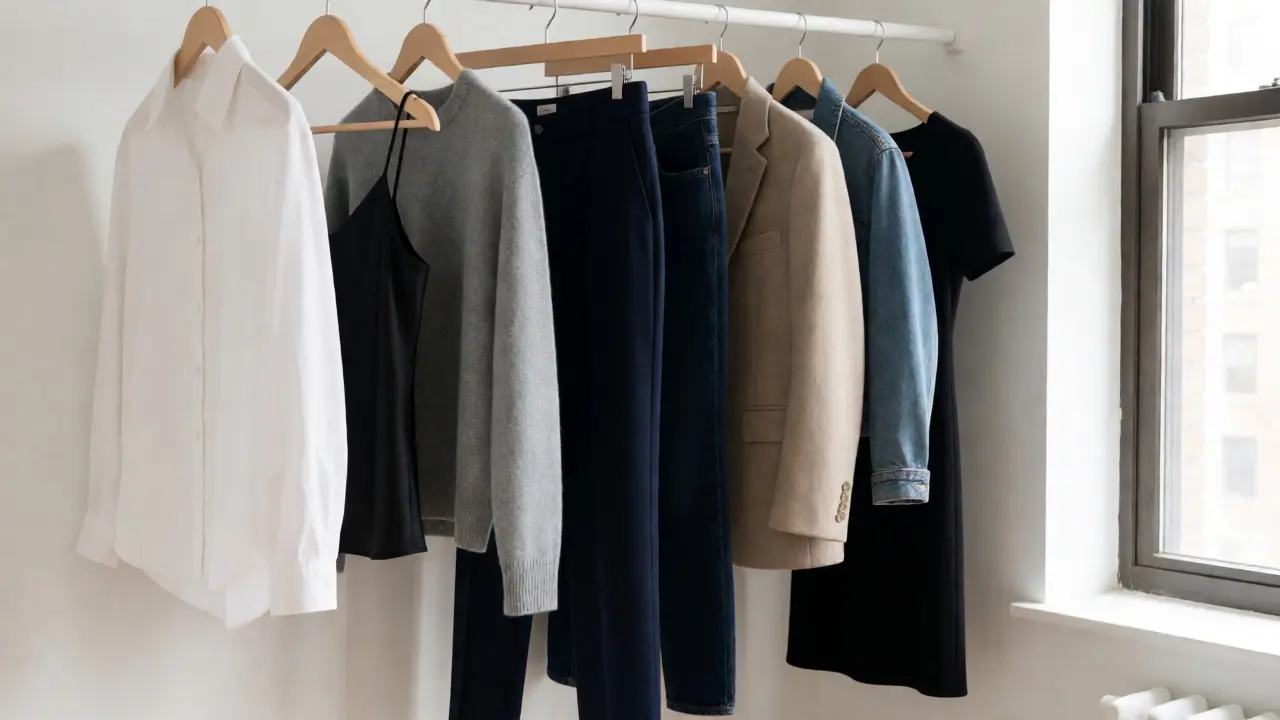
Imagine opening your closet and seeing only ten items. No overflowing hangers, no buried treasures in the back, just ten carefully chosen pieces that somehow manage to create seven distinct looks for the week ahead. This isn't a punishment; it's the 10x10 Wardrobe Challenge, a popular experiment in minimalist fashion where you build a full week of outfits using exactly ten clothing items. I tried this challenge last month during a particularly chaotic week in New York City, juggling client meetings, gallery openings, and a surprise weekend trip. The result? I spent less time getting dressed, more money saved on impulse buys, and surprisingly, felt more put-together than when my closet was bursting at the seams.
The core idea is simple but deceptively hard. You select ten pieces-typically excluding underwear, socks, and sleepwear-and mix them to create ten different outfits over ten days (or a week, if you repeat). It forces you to understand what actually works together, what fits your lifestyle, and what you wear out of habit versus genuine preference. If you've ever stared at a full closet saying "I have nothing to wear," this challenge is your cure.
Why Bother With Ten Pieces?
You might think ten items sounds restrictive, even miserable. But consider the average person wears about 20% of their clothes 80% of the time. The rest is dead weight, taking up space and mental energy. The Capsule Wardrobe concept, which the 10x10 challenge is a subset of, aims to eliminate decision fatigue by curating a versatile collection. By limiting yourself to ten items, you're not depriving yourself; you're editing ruthlessly to keep only the high-performers.
This approach aligns perfectly with Sustainable Fashion principles. Buying less, wearing more, and choosing quality over quantity reduces textile waste. In an era where fast fashion contributes significantly to landfill issues, mastering the art of re-wearing staples feels like a small but meaningful act of resistance. Plus, there's the financial benefit. When you know exactly what you need, you stop buying random items because they were on sale or looked good on the mannequin.
How to Select Your Ten Items
Choosing the right ten pieces is where most people stumble. Don't just grab your favorites. Look at your calendar for the upcoming week. Are you mostly at a desk? Do you have evening events? Will you be walking outside? Your selection must match your reality.
A solid starting framework usually includes:
- Tops (3-4 items): Think neutral bases like a white button-down, a black t-shirt, and a silk blouse. Add one textured piece, like a knit sweater, for visual interest.
- Bottoms (2-3 items): A pair of dark denim jeans, tailored trousers, and maybe a skirt if it suits your climate and comfort level.
- Dresses/Jumpsuits (1 item): One easy one-piece solution saves massive time on busy mornings.
- Layers (1-2 items): A blazer, cardigan, or structured jacket that can dress up or down depending on the context.
Crucially, these items must work together. If your favorite green shirt doesn't match any of your bottoms, it doesn't make the cut. Color coordination is key here. Stick to a cohesive palette-neutrals like black, white, navy, gray, and beige are easiest to mix. If you want color, pick one accent hue that complements all your neutrals.
Mixing and Matching: The Math of Minimalism
With ten items, you theoretically have dozens of combinations. Let's break down how to maximize variety without repeating identical looks. Take three tops and two bottoms. That's six basic combinations already. Add a layer, and suddenly you have twelve. Swap shoes or accessories, and you've got fifteen distinct vibes.
| Item Type | Specific Piece | Role in Outfit |
|---|---|---|
| Top 1 | Crisp White Button-Down | Formal base, tucks into pants/skirts |
| Top 2 | Black Silk Camisole | Layer under blazer, evening top |
| Top 3 | Gray Cashmere Sweater | Cozy casual, office warmth |
| Bottom 1 | Navy Tailored Trousers | Professional standard |
| Bottom 2 | Dark Wash Straight-Leg Jeans | Casual Friday, weekends |
| Layer 1 | Beige Wool Blazer | Structure, polish, meeting-ready |
| Layer 2 | Denim Jacket | Weekend casual, transitional weather |
| Dress | Little Black Dress (Mid-Length) | One-and-done evening or smart casual |
| Shoes | Leather Loafers | Comfortable professional footwear |
| Shoes | White Sneakers | Casual, active days |
In this setup, the white button-down pairs with both trousers and jeans. The camisole works under the blazer for a sharp look or alone with jeans for a relaxed vibe. The sweater goes with either bottom. The dress stands alone but can be layered with the blazer or denim jacket for cooler evenings. See how quickly the options multiply?
Overcoming the Repetition Fear
The biggest psychological hurdle is feeling like you're wearing the same thing every day. Here's the truth: nobody notices unless you point it out. We obsess over our own repetition far more than others do. However, you can mitigate this perception by changing accessories.
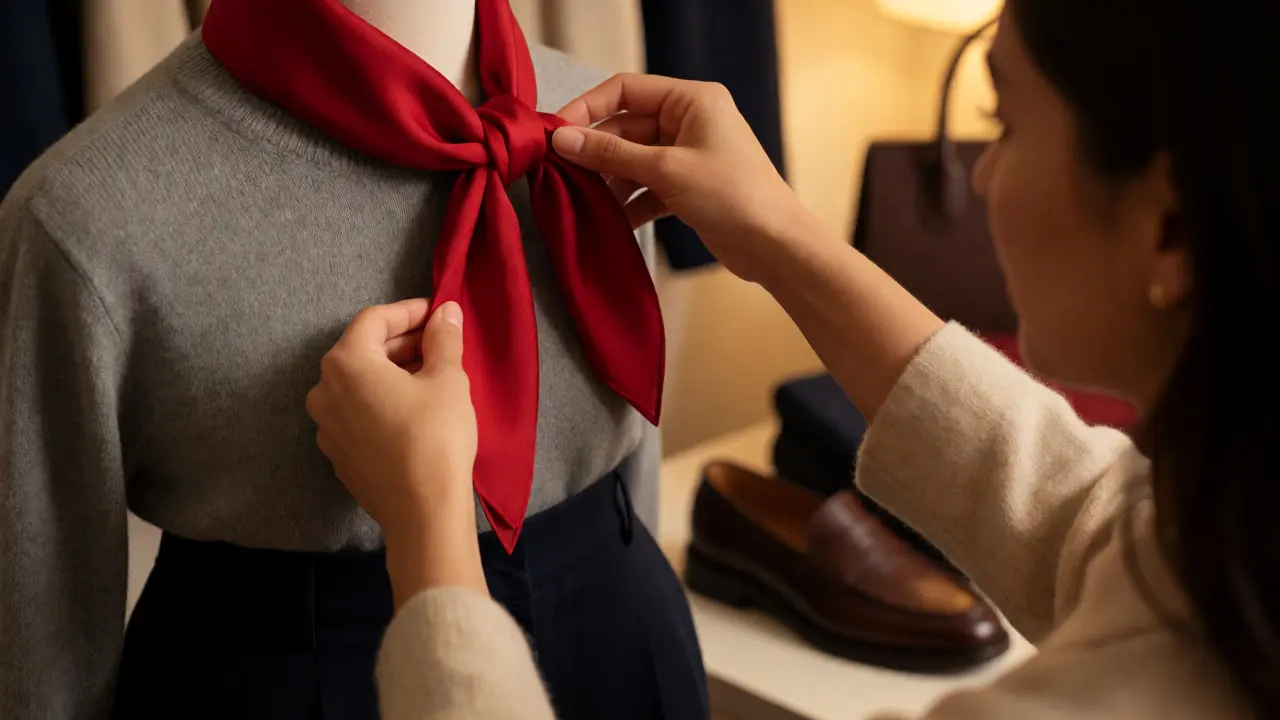
Accessories don't count toward your ten items. Use scarves, jewelry, belts, and bags to shift the tone. A red scarf turns a plain gray sweater outfit into a statement. A bold necklace elevates a simple tee and jeans combo. Shoes also change everything. Swapping loafers for sneakers transforms a professional look into a casual one instantly.
Another trick is styling variations. Roll up sleeves, tuck in shirts differently, or knot a sweater around your shoulders. These small tweaks signal a new outfit without requiring new clothes. It’s about presentation, not just possession.
Practical Tips for Success
If you're ready to try this, start small. Don't jump into a strict ten-day challenge immediately. Try a three-day mini-challenge first. Pick five items and see how many outfits you can make. This builds confidence and helps you identify gaps in your current wardrobe.
Prepare your outfits the night before. Lay them out. Check for stains or wrinkles. This prevents morning panic and ensures you stick to the plan. Also, keep a laundry rotation schedule. With fewer items, you'll need to wash things more frequently. Spot-clean as much as possible to extend the life of delicate fabrics.
Finally, track how you feel. Did you save time? Did you spend less money? Did you feel more confident? These metrics help you decide if this lifestyle is sustainable long-term. For many, the 10x10 challenge becomes a gateway to a permanent capsule wardrobe, simplifying life beyond just the week-long experiment.
Beyond the Challenge: Building a Long-Term Capsule
Once you've mastered the ten-piece limit, you might find you don't want to go back to having hundreds of items. The clarity gained from restricting choices often leads to a broader decluttering effort. You start asking better questions when shopping: Does this fit with what I already own? Is it versatile enough to justify its place in my closet?
Seasonality matters too. Your summer ten-pieces will differ from your winter ones. Plan transitions carefully. Invest in timeless basics that span seasons, like a good trench coat or high-quality jeans. Avoid trend-heavy pieces that won't integrate well with your core capsule.
Remember, the goal isn't deprivation. It's intentionality. Every item earns its spot. This mindset shift changes how you interact with fashion forever, making dressing less of a chore and more of a creative expression within clear boundaries.
Do shoes and accessories count toward the ten items?
Typically, no. Most versions of the challenge exclude underwear, socks, sleepwear, workout gear, and outerwear like heavy coats. Shoes and accessories are often treated separately or limited to two pairs of shoes to allow for variation. Clarify your rules beforehand to ensure consistency.
What if I sweat through a shirt in hot weather?
In hot climates, you may need to adjust your strategy. Choose breathable fabrics like linen, cotton, or moisture-wicking blends. You might swap a heavier sweater for a lightweight tank top. Alternatively, accept that you may need to wash items more frequently or carry a spare top if your schedule allows for midday changes.
Can I repeat outfits during the challenge?
Yes, absolutely. The goal is to create ten *different* outfit combinations, not necessarily ten unique garments worn once. Repeating a favorite combination is fine, especially if it makes you feel confident. The constraint is on the number of items, not the uniqueness of each day's look.
How do I handle unexpected social events?
Plan for versatility. Include at least one item that can transition from day to night, such as a dress or a nice blouse paired with tailored pants. Accessories become crucial here-a clutch and heels can elevate a daytime look quickly. If you anticipate a formal event, consider including a dedicated evening piece in your ten-item count.
Is this suitable for cold weather?
Yes, but focus on layering. Your ten items should include thermal-friendly fabrics like wool and cashmere. Outerwear like coats and jackets is usually excluded from the count, allowing you to stay warm while keeping the core outfit count low. Boots are often considered separate from the main clothing count in winter challenges.


Write a comment