


You know that feeling when you put on a shirt that feels like armor? Or maybe it’s the soft, oversized hoodie that makes you want to curl up and hide from the world. It’s not just about looking good in the mirror. There is real science behind why your favorite outfit changes how you think, feel, and act throughout the day. This phenomenon has a name: enclothed cognition. But let’s keep it simple. We’re talking about the power of clothes to hack your brain.
Most people think getting dressed is a mundane chore. You wake up, you pick something off the rack, you leave. But what if I told you that the fabric touching your skin sends signals to your nervous system? What if the color red actually makes you more assertive, or wearing a lab coat makes you pay closer attention to details? In New York City, where the pace is fast and the pressure is high, this isn’t just trivia-it’s a survival tool. If you can control your outfit, you can control your state of mind.
The Science Behind the Seam
Let’s break down what’s actually happening in your head when you get dressed. Researchers Hajo Adam and Adam Galinsky coined the term "enclothed cognition" in 2012. Their study showed that wearing a doctor’s white coat improved participants' ability to focus. But here’s the catch: they had to believe the coat was a doctor’s coat. If they thought it was a painter’s smock, the focus boost disappeared.
This tells us two things. First, the symbolic meaning of the clothing matters. Second, the physical experience of wearing it matters. When you wear your favorite jeans-the ones that fit perfectly and make you feel confident-you aren’t just covering your body. You are activating a mental association. Your brain links those specific pants with times you felt capable, attractive, or relaxed. Wearing them triggers those same feelings again. It’s a feedback loop between your wardrobe and your self-perception.
| Clothing Attribute | Symbolic Meaning | Behavioral Outcome |
|---|---|---|
| Formal Suit/Blazer | Authority, Competence | Increased abstract thinking, negotiation skills |
| Lab Coat | Attention to Detail | Improved focus on complex tasks |
| Comfortable Loungewear | Relaxation, Safety | Lower stress levels, creative flow |
| Bright Colors (Red/Yellow) | Energetic, Approachable | Higher social engagement, perceived warmth |
Why "Favorite" Matters More Than "New"
We often assume new clothes give us the biggest boost. The dopamine hit of an unboxing video is real. But for sustained daily impact, your favorites win every time. Why? Because familiarity breeds comfort, and comfort reduces cognitive load.
Think about decision fatigue. Steve Zuckerberg wears the same gray t-shirt every day to save mental energy. He doesn’t have to decide what looks good or if he’s comfortable. His brain knows exactly how that shirt fits and how it feels. When you wear a favorite item, you skip the anxiety check: "Do these look weird? Is this too tight? Will this stain easily?" That saved mental bandwidth can be used for solving problems at work or being present with friends.
Also, favorite clothes usually have positive memories attached. Maybe you wore that vintage jacket on your first date. Maybe you wore those boots when you got your promotion. These aren’t just fabrics; they are emotional anchors. Putting them on retrieves those positive states. It’s a form of non-verbal self-care.
Dressing for the Job You Want vs. The Day You Have
A common piece of advice is "dress for the job you want." While true, it ignores the nuance of daily energy management. Sometimes you need to dress for the task at hand, not just the career ladder.
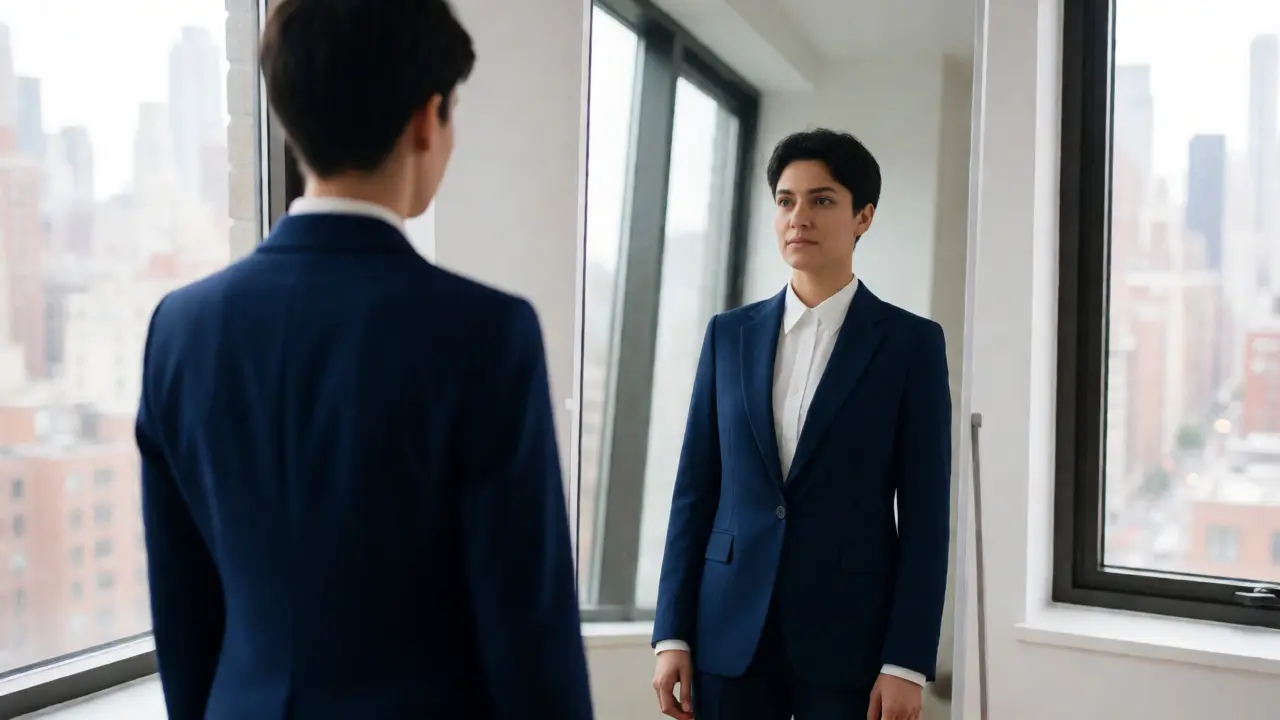
If you have a high-stakes presentation, wear structured pieces. A blazer or a crisp button-down signals authority to others, but more importantly, it signals competence to yourself. You stand taller. Your voice projects better. This is embodied cognition-your posture influences your mindset, and your clothes dictate your posture.
But what if you’re working on a creative project? Stiff collars might choke your creativity. Here, your favorite soft knit sweater or loose trousers might be the better strategic choice. They allow physical freedom, which translates to mental flexibility. Don’t force yourself into uncomfortable power suits if you’re brainstorming. Listen to what your body needs to perform best.
The Color Code: Using Hue to Shift Mood
Color psychology is often dismissed as fluff, but there’s substance here. Different wavelengths trigger different physiological responses. You don’t need to wear a rainbow to benefit, but you can use accents strategically.
- Blue: Calming and trustworthy. Great for emails requiring diplomacy or calming anxious days.
- Red: Increases heart rate and draws attention. Use sparingly if you need to be seen or assert dominance.
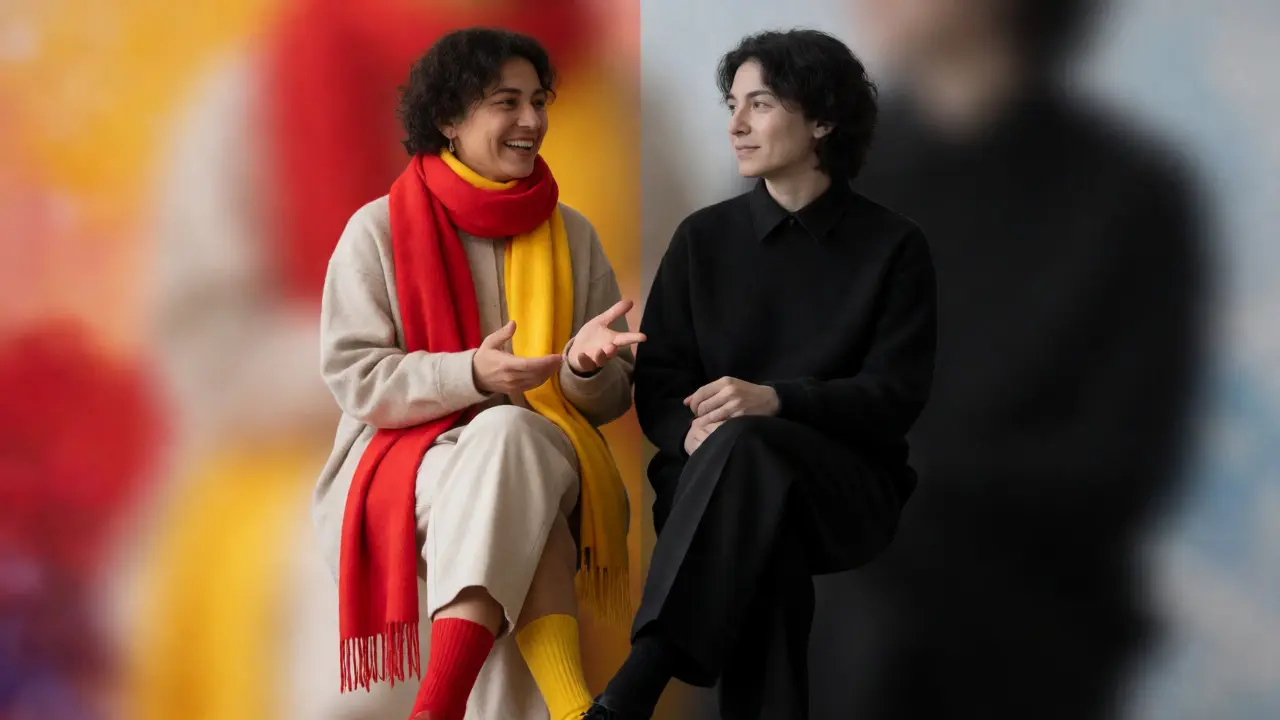
- Yellow: Associated with optimism and energy. A yellow scarf or socks can subtly lift a gloomy morning.
- Black: Sophisticated and protective. Many people wear black to feel shielded or professional, though it can sometimes signal distance.
In New York, we see a lot of black and gray. It’s practical. But try swapping one element for color. Notice how people react differently when you’re wearing a warm tone versus a cool one. You’ll likely find yourself smiling more, simply because the visual input affects your own perception of the environment.
Building a Confidence Capsule
You don’t need a massive closet to leverage the outfit effect. You need a curated set of "power pieces" that you genuinely love. Start by auditing your wardrobe. Pull out five items that always make you feel good. Ask yourself why. Is it the fit? The texture? The memory?
Then, identify gaps. Do you have enough tops that match those bottoms? Are you avoiding certain styles because they’re hard to care for? Remove friction. If you hate ironing shirts, buy wrinkle-resistant ones. If you hate zippers, choose pullovers. The goal is to remove any reason you might hesitate before putting on a great outfit.
Maintain these favorites. Wash them properly. Repair small tears immediately. Treating your clothes with respect reinforces their value to you. When you take care of the garment, you reinforce the idea that you are worth dressing well for.
Troubleshooting: When Clothes Feel Wrong
Sometimes, even your favorite outfit feels off. This usually happens due to context mismatch. You might feel underdressed at a formal event or overdressed at a casual brunch. This creates social anxiety, which cancels out the benefits of enclothed cognition.
To fix this, layer smartly. Keep a versatile jacket in your bag. Add or remove layers based on the vibe. Also, check your sensory comfort. An itchy tag or a tight waistband can ruin your focus. Always do a "sit test" before leaving home. Sit down, cross your legs, reach overhead. If it restricts movement, change it. Discomfort is a distraction, and distractions kill productivity.
Does wearing expensive clothes really make me feel more confident?
Not necessarily. Confidence comes from fit and personal resonance, not price tags. A $20 T-shirt that fits perfectly and makes you feel comfortable will often outperform a $500 designer shirt that feels stiff or ill-fitting. The key is that the clothing aligns with your self-image and provides physical comfort.
What is enclothed cognition?
Enclothed cognition is a psychological phenomenon that describes the systematic influence that clothes have on the wearer's psychological processes. It suggests that clothing affects the wearer's self-evaluation and behavior through both its symbolic meaning and the physical experience of wearing it.
Can wearing pajamas all day affect my productivity?
Yes, it can. Pajamas are associated with rest and sleep. Wearing them during work hours can blur the boundary between relaxation and activity, potentially lowering alertness. Changing into "day clothes," even if they are casual, helps signal to your brain that it is time to be productive.
How do colors specifically affect mood according to research?
Research indicates that colors can evoke specific emotional responses. Warm colors like red and orange tend to stimulate energy and excitement, while cool colors like blue and green promote calmness and trust. However, individual associations play a huge role; if you associate pink with a bad memory, it won't boost your mood regardless of general trends.
Is it okay to wear the same outfit every day?
Absolutely. This strategy, known as uniform dressing, reduces decision fatigue. By eliminating the choice of what to wear, you conserve mental energy for more important decisions. Many successful entrepreneurs and creatives adopt this approach to streamline their mornings and maintain consistent self-presentation.


Write a comment