

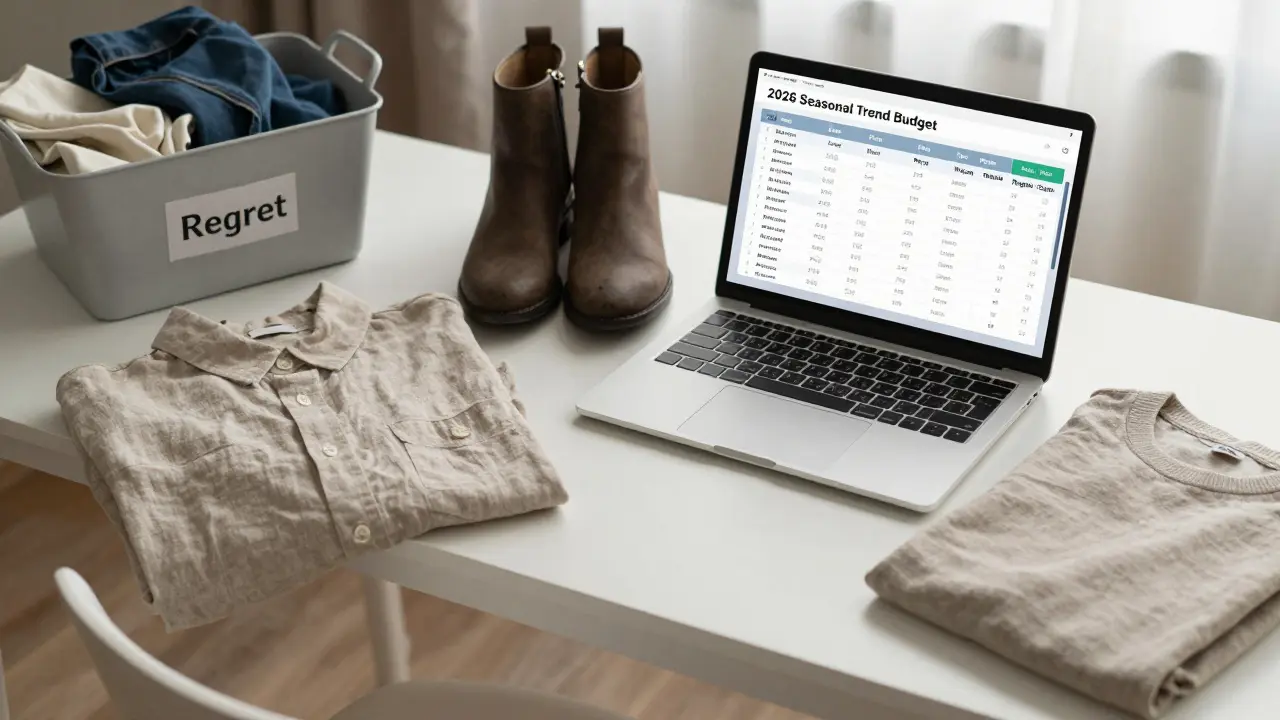
How many times have you bought something because it was trending-only to wear it once and feel guilty about the money you spent? You’re not alone. Every season, fashion brands roll out new looks, influencers post endless outfits, and suddenly you’re tempted to spend $300 on a jacket that’s supposed to be ‘the one’ this fall. But by January, it’s sitting in the back of your closet, collecting dust. What if you could enjoy the trends without the financial hangover? A simple trend budgeting spreadsheet can change that.
Why Your Fashion Budget Keeps Failing
Most people think budgeting for clothes means cutting back entirely. That’s not the goal. The goal is to spend smarter. If you’re buying 10 new pieces every season and only wearing 3 of them, you’re not being stylish-you’re being wasteful. A 2024 survey by the Fashion Revolution group found that the average American owns 34 unused clothing items. That’s $1,200+ sitting in drawers, just because someone told them it was ‘in.’ The real problem? No one tracks where their money goes. You know you spent $500 on spring clothes, but you can’t remember which items you actually wore. That’s where a spreadsheet comes in. It doesn’t need to be fancy. Just a clean table with columns for item, price, date bought, how often worn, and whether it matched your personal style. You’d be surprised how fast patterns show up.How to Build Your Trend Budgeting Spreadsheet
Start with a blank Google Sheet or Excel file. Name it something like ‘2026 Seasonal Trend Budget.’ Here’s what each column should do:- Item - What you bought (e.g., ‘wide-leg linen pants’)
- Price - How much you paid
- Date Purchased - Month and year
- Worn Count - Track this manually after each wear
- Style Match - Rate 1-5: Does this fit your usual vibe? (e.g., ‘I’m minimalist, this is too busy’)
- Trend Status - Was this a runway trend, influencer hype, or timeless?
- Regret Score - 1-10: Would you buy it again? (Be honest)
What Trends Are Actually Worth Buying
Not all trends are created equal. Some fade in weeks. Others become staples. Use this quick filter before you click ‘buy’:- Timeless + Twist - A classic shape with a modern detail. Think: trench coat with detachable collar. These last 3+ years.
- Color-Driven Trends - Pantone’s ‘2026 Color of the Year’ is ‘Soft Clay.’ Buy accessories in this shade (scarves, bags) instead of full outfits. Easier to retire when it fades.
- Utility Trends - Cargo pants, tool belts, zippered vests. These aren’t just looks-they’re functional. If you wear them to work, errands, or weekend hikes, they’re worth it.
- High-Price Hype - Avoid anything over $200 unless it’s a designer staple (like a Chanel flap bag). If it’s just a logo tee with a viral TikTok dance, skip it.
How to Use Your Spreadsheet After the Season Ends
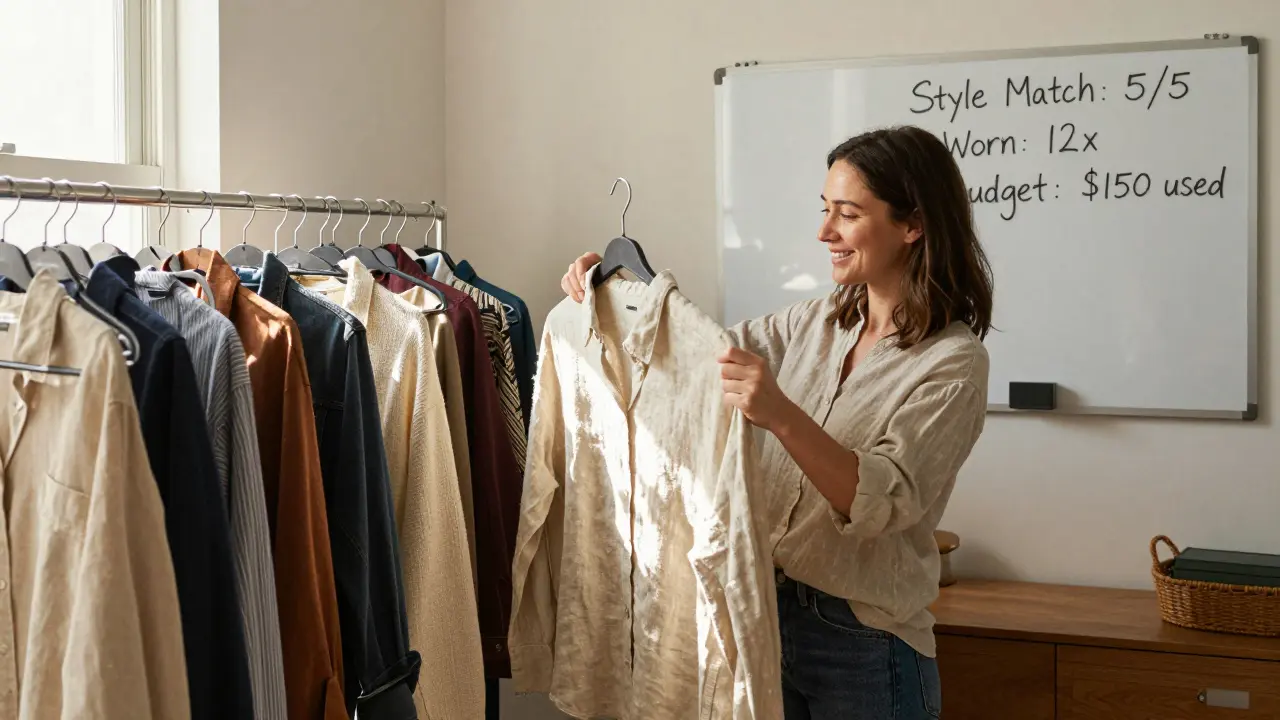
Don’t just save it. Review it. At the end of each season, ask yourself:- Which items got a Regret Score of 7 or higher? Get rid of them.
- Which items were worn 5+ times? Keep them. Add them to your ‘core’ list.
- Did you stick to your budget? If not, why? Was it FOMO? Sales? Influencer pressure?
- What colors or silhouettes showed up most in your ‘Style Match’ 4-5 ratings? That’s your real style.
Seasonal Budgeting: Spring, Summer, Fall, Winter
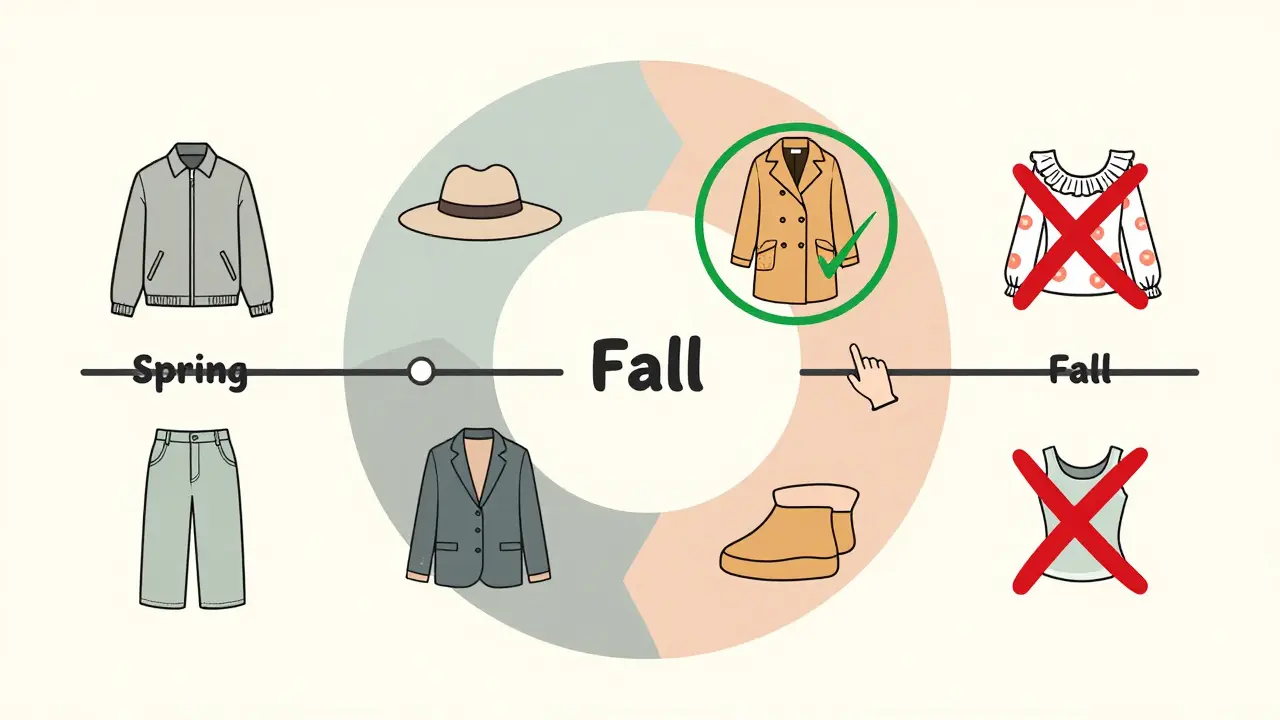
Plan ahead. Each season has different needs:- Spring - Focus on lightweight layers, pastels, and breathable fabrics. Skip heavy coats. You’ll regret them by May.
- Summer - Stick to 3-4 key pieces: tank tops, shorts, sandals, a sun dress. Avoid 10-piece swimsuit sets. One good one lasts.
- Fall - Invest in a good coat and boots. These are your anchors. Everything else should layer over them.
- Winter - Thermal layers matter more than flashy coats. Buy merino wool base layers. They’re cheap, last forever, and you’ll never regret them.
Real Results: One Woman’s 12-Month Journey
Maria, 34, works in marketing in Brooklyn. In January 2025, she spent $890 on clothes. She wore 11 items once. She felt broke and embarrassed. She started her trend budgeting spreadsheet in February. She set a $600 annual budget ($150 per season). By June, she’d spent $130 and owned 7 new items-all worn 4+ times. By December, she’d spent $570 total. She wore 90% of what she bought. She didn’t buy a single item because it was trending. She bought because it fit her, worked with her existing clothes, and made her feel confident. Her closet? Half the size. Her savings account? $1,200 richer. She didn’t stop loving fashion. She just stopped letting trends control her.What to Do When You Still Want to Splurge
Sometimes, you really want that $400 leather jacket. That’s okay. But don’t let it break your budget. Here’s how:- Wait 30 days. If you still want it, you probably do.
- Sell one item you never wear. Use that money to fund the purchase.
- Put it on a 3-month savings plan. Save $133/month. Then buy it with cash.
- Ask: ‘Will I still love this in 2 years?’ If not, walk away.
| Season | Priority Items | Avoid | Recommended Budget |
|---|---|---|---|
| Spring | Lightweight jackets, breathable pants, pastel accessories | Heavy coats, winter boots | $120-$180 |
| Summer | 1-2 dresses, 3 tops, sandals, sun hat | Multiple swimsuits, trendy crop tops | $100-$150 |
| Fall | Coat, ankle boots, neutral sweaters | Overly tight jeans, loud prints | $180-$220 |
| Winter | Thermal layers, wool coat, insulated boots | Thin boots, statement outerwear without function | $150-$200 |
Final Tip: Build Your Personal Style Compass
Your spreadsheet isn’t just a spending tracker. It’s a mirror. Over time, you’ll start to see patterns: You love structured shapes. You hate ruffles. You’re drawn to earth tones. You feel best in neutral palettes. That’s your style. And once you know it, trends don’t control you-you choose what fits. You don’t need to own everything that’s trending. You just need to own what feels like you.Do I need to use Google Sheets, or can I use Excel?
Either works. Google Sheets is better if you want to access it from your phone or share it with a friend. Excel is fine if you prefer offline use. The key isn’t the tool-it’s the habit of tracking.
How often should I update my spreadsheet?
Update it right after you buy something. Add the item, price, and date. Then every time you wear it, jot down a ‘+1’ in the Worn Count column. If you forget, do a quick review once a month. Ten minutes is enough.
What if I’m on a tight budget and can’t afford any new clothes?
That’s fine. Your spreadsheet can still help. Track what you already own. Use it to plan outfits. Notice which items you wear most. Then, when you do buy something, make it count. Sometimes, the best fashion move is not buying anything at all.
Can I use this for shoes and accessories too?
Absolutely. Shoes and bags often cost more than clothes and get worn less. Track them the same way. You might be shocked to find you’ve spent $600 on shoes you only wear twice a year.
Is this only for women?
No. Men’s fashion has trends too-especially with streetwear, sneakers, and outerwear. The same rules apply. Track what you buy, how often you wear it, and whether it fits your style. It works for everyone.


Write a comment