

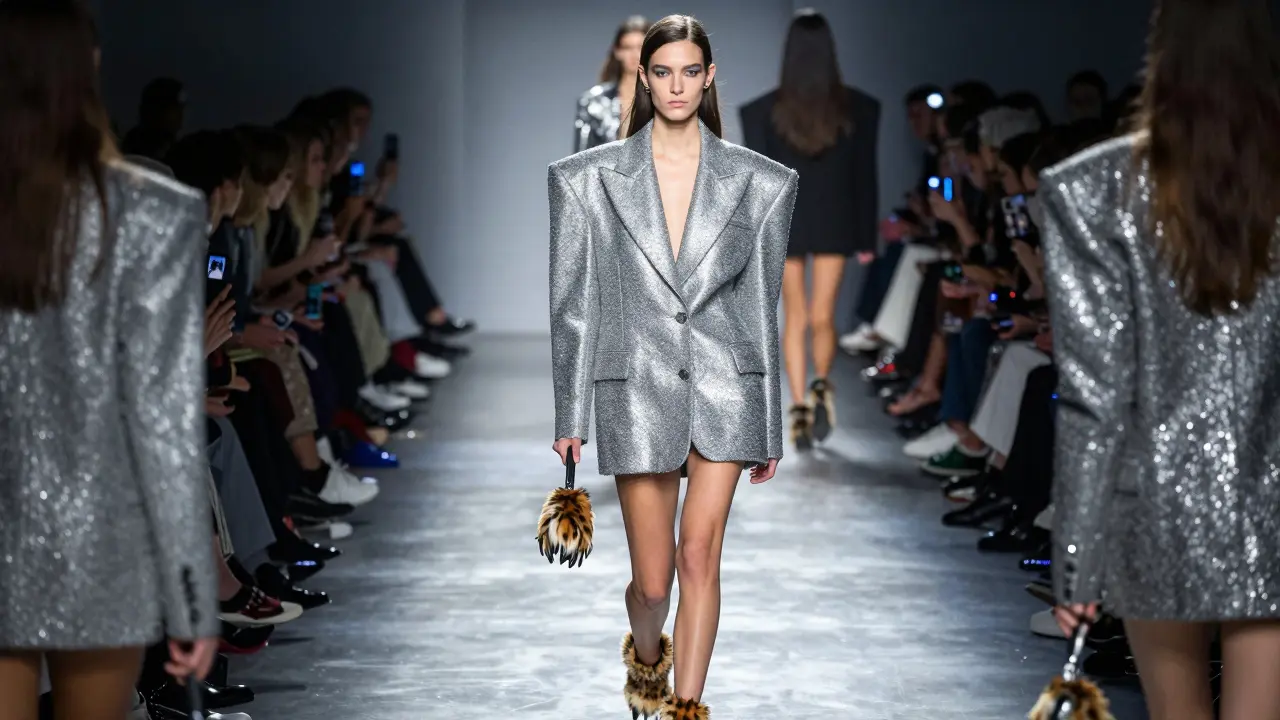
Ever wonder why that wild, oversized blazer you saw on Paris Fashion Week ended up in your local mall just six months later-and then vanished by next winter? It’s not magic. It’s the fashion trend cycle, a predictable rhythm that every trend follows: debut, rise, peak, decline, and death. Understanding this cycle isn’t just for designers or stylists. If you want to shop smarter, avoid wasting money on fleeting fads, or even build a wardrobe that lasts, you need to know how trends move through time.
The Runway Debut: Where Trends Are Born
The journey starts on the runway, usually 6 to 9 months before the season hits stores. Designers at houses like Balenciaga, Jacquemus, or even smaller independent labels present their visions. These aren’t clothes meant for everyday life-they’re statements. Think exaggerated shoulders, transparent fabrics, or shoes shaped like animal paws. They’re meant to shock, inspire, and set a tone.
At this stage, the pieces are expensive, limited, and often made with unconventional materials. A single jacket from a runway show might cost $3,000 or more. Only a few hundred people will ever wear it. But the photos? They go viral. Instagram reels, TikTok breakdowns, and fashion blogs spread the imagery like wildfire. That’s the spark.
This phase is about creativity, not commerce. Designers are testing boundaries. They’re not trying to sell you a coat-they’re trying to tell you what the future might look like. And sometimes, that future is weird. But weird can become wonderful-if the public catches on.
The Rise: From Elite to Everyday
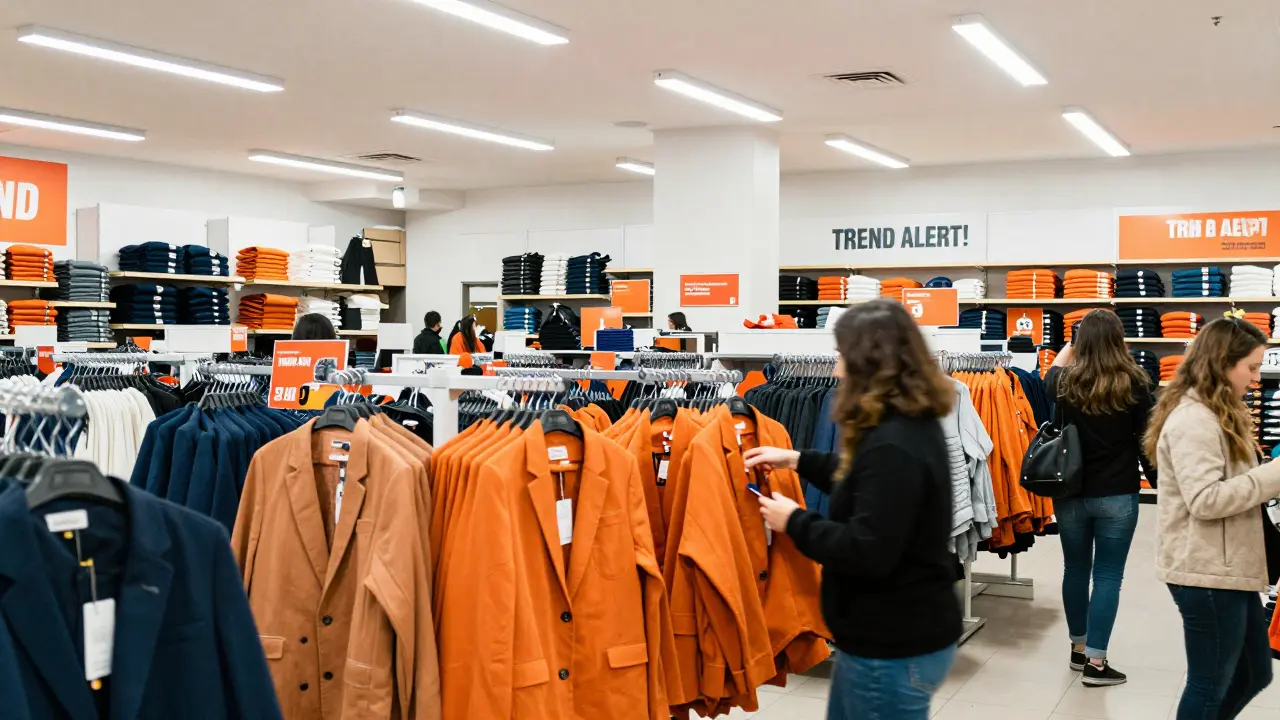
Within 3 to 6 months, the runway ideas start filtering down. Fast fashion brands like Zara, H&M, and Shein pick up the most wearable elements. They simplify the shapes, swap out silk for polyester, and lower the price to $30 or $50. Suddenly, that exaggerated shoulder isn’t just on a model in Paris-it’s on a teenager in Ohio.
This is the sweet spot. The trend is no longer exclusive. It’s accessible. Media outlets start calling it "the look of the season." Influencers post outfit ideas using the trend. Retailers stock it in multiples. Sales climb. You start seeing it everywhere: on your coworker, your cousin’s Instagram, even in grocery store ads.
Here’s the key: the trend is still fresh. People buy it because it feels new, exciting, and a little rebellious. It’s not just clothing-it’s identity. Wearing it says, "I’m in the know." That’s why sales explode. In 2024, Y2K-inspired low-rise jeans saw a 210% sales spike in the U.S. within 8 months of their runway return, according to retail analytics firm Edited.
The Peak: When Everyone Has It
Now the trend is everywhere. Not just in stores, but in ads, TV shows, and even school uniforms. You can’t scroll without seeing it. That once-niche bucket hat? Now it’s sold at Target. The chunky loafers? Your grandma bought a pair.
This is the moment of saturation. The trend has lost its edge. It’s no longer a statement-it’s background noise. People who bought it early are already tired of it. New buyers are picking it up because it’s cheap and easy, not because they love it.
At this point, the quality drops. Brands start cutting corners. Fabric gets thinner. Zippers break. Colors fade faster. You notice it when you buy the same style twice and the second one feels flimsy. That’s not a coincidence-it’s the sign the trend is peaking and about to turn.
By now, the trend has crossed into mainstream culture. It’s no longer tied to fashion insiders. It’s part of the air we breathe. And that’s when the decline begins.
The Decline: When It Stops Feeling Cool
One day, you realize no one’s talking about it anymore. The influencers have moved on. The stores have reduced the stock to one rack in the back. The price drops again-this time to clearance levels. You see the same item on a rack labeled "Last Chance! 70% Off."
This is the decline phase. The trend isn’t dead yet, but it’s losing relevance. People who bought it during the peak now feel embarrassed to wear it. They call it "so 2024." Social media starts mocking it. Memes pop up: "When you still wear the 2024 bucket hat to the grocery store."
Why does this happen? Because human taste is cyclical. We crave novelty. Once something becomes too common, it loses its power. The same thing happened with cargo pants in the early 2000s, athleisure in the late 2010s, and even neon colors in the 1990s.
There’s also a psychological shift. Early adopters move on to the next thing. The late adopters who waited for the price drop now feel like they missed the boat-because the boat has already sailed. The trend becomes associated with outdatedness, not aspiration.
The Decline: When It Stops Feeling Cool
One day, you realize no one’s talking about it anymore. The influencers have moved on. The stores have reduced the stock to one rack in the back. The price drops again-this time to clearance levels. You see the same item on a rack labeled "Last Chance! 70% Off."
This is the decline phase. The trend isn’t dead yet, but it’s losing relevance. People who bought it during the peak now feel embarrassed to wear it. They call it "so 2024." Social media starts mocking it. Memes pop up: "When you still wear the 2024 bucket hat to the grocery store."
Why does this happen? Because human taste is cyclical. We crave novelty. Once something becomes too common, it loses its power. The same thing happened with cargo pants in the early 2000s, athleisure in the late 2010s, and even neon colors in the 1990s.
There’s also a psychological shift. Early adopters move on to the next thing. The late adopters who waited for the price drop now feel like they missed the boat-because the boat has already sailed. The trend becomes associated with outdatedness, not aspiration.
The Death: What Happens to the Trend After It’s Gone?
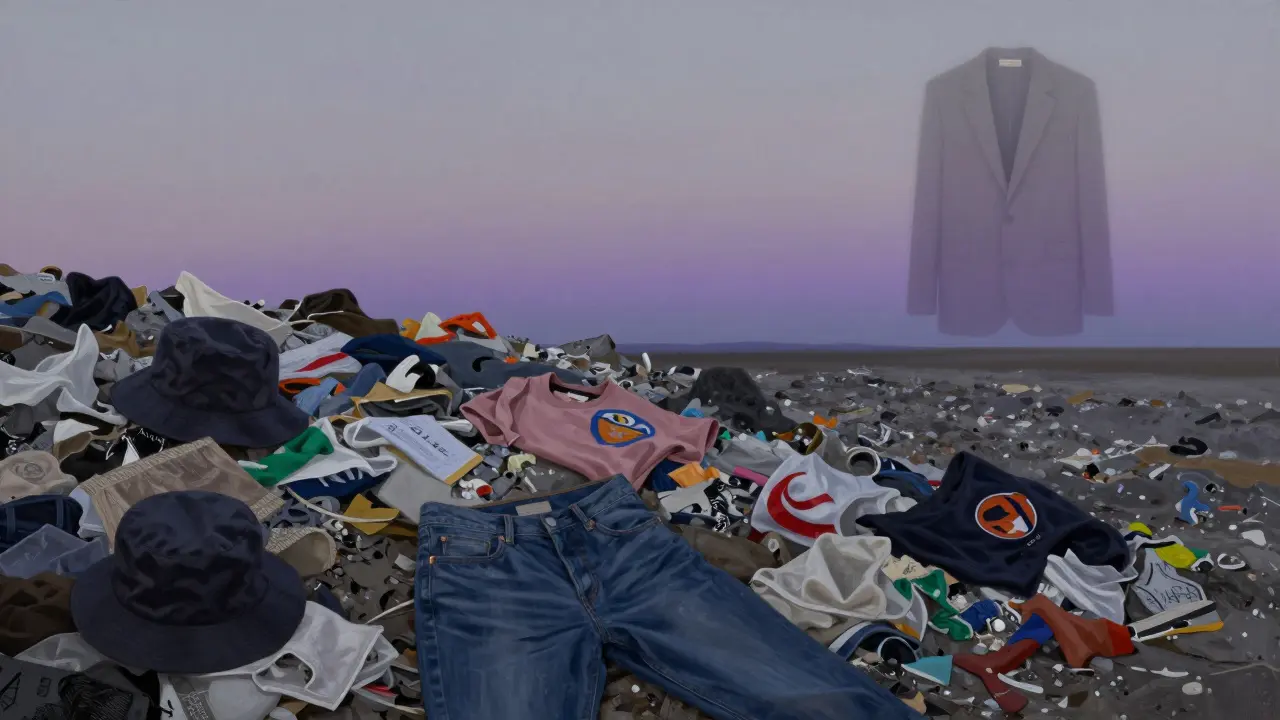
Most trends die quietly. They disappear from stores. They’re donated to thrift shops. They end up in landfills. In the U.S., over 11 million tons of textile waste are generated each year, according to the EPA. A lot of it is trend-driven clothing bought during the peak phase and tossed within a year.
But here’s the twist: trends don’t really die. They sleep.
Every fashion cycle lasts about 20 to 30 years before it comes back. The 1990s slip dress? Back in 2022. The 2000s low-rise jeans? Back in 2024. The 1970s flared pant? Already reappearing on runways in early 2025.
That’s the secret: fashion doesn’t move forward-it circles back. The difference? When it returns, it’s updated. The 2025 flared pant isn’t the same as the 1975 version. The fabric is sustainable. The cut is tailored. The color is muted. The silhouette is refined. The revival isn’t nostalgia-it’s evolution.
How to Use the Trend Cycle to Your Advantage
You don’t have to ride every wave. In fact, riding every wave will drain your wallet and your closet. Here’s how to use the cycle to build a smarter wardrobe:
- Wait 6 to 9 months after a trend hits the runway. Let the hype die down, then look for the refined, better-made versions.
- Avoid buying at peak. If everyone has it, it’s already losing value. Wait for the clearance rack.
- Invest in timeless pieces that outlast trends-like a well-cut blazer, dark wash jeans, or a neutral trench coat.
- Buy secondhand for trends you’re curious about. Thrift stores are full of last season’s "it" items at 80% off.
- Ask yourself: "Will I still wear this in 6 months?" If the answer is no, skip it.
The goal isn’t to avoid trends entirely. It’s to engage with them on your terms. Wear what excites you, but don’t let trends dictate your spending or your identity.
What’s Next? The Cycle Never Stops
Right now, in early 2026, the trends that peaked in 2024-oversized blazers, micro minis, and logo-heavy basics-are in decline. The next wave? Quiet luxury, tactile textures, and functional minimalism. Designers are focusing on craftsmanship, not spectacle. Fabrics like organic cotton, recycled wool, and TENCEL™ are replacing synthetic blends.
That doesn’t mean the old trends are gone forever. They’re just resting. In 2040, someone will dig out a 2025 oversized blazer, pair it with modern wide-leg trousers, and call it "vintage revival."
Understanding the trend cycle doesn’t make you a fashion expert. It makes you a smarter consumer. You stop chasing what’s hot and start building what lasts.
How long does a fashion trend usually last?
Most fashion trends follow a 2- to 3-year cycle: 6-9 months on the runway, 6-12 months rising in mainstream retail, 6-12 months at peak saturation, then decline. Some last longer if they’re revived-like denim or trench coats-but most fast-fashion trends fade within 18 months.
Why do trends come back after years?
Trends return because fashion is cyclical, not linear. Each generation reinterprets the past through their own lens. A 1990s slip dress returns in 2022 not as a copy, but as a refined version with better fit, sustainable fabric, and modern styling. Nostalgia drives interest, but evolution keeps it relevant.
Can you predict the next big trend?
You can’t predict the exact item, but you can spot patterns. Look at runway colors, materials, and silhouettes six months before a season. If you see lots of natural fibers, muted tones, and relaxed cuts, expect "quiet luxury" to dominate. Retailers like Edited and WGSN track these signals and share forecasts with brands.
Is it bad to buy trends?
Not at all-if you do it intentionally. Buying trends can be fun and expressive. The problem isn’t the trend itself, but buying too many, too fast, and at full price. The smart approach: pick one or two trends per season, buy them secondhand or on sale, and pair them with classic pieces you already own.
What’s the difference between a trend and a style?
A trend is temporary and mass-adopted-like platform sandals in 2024. A style is enduring and personal-like wearing all black, or always choosing tailored fits. Trends change with the season. Styles reflect who you are. You can wear a trend within your style, but your style should outlast any trend.
Next time you see a wild new look on Instagram, pause. Ask yourself: Is this the beginning, the peak, or the end? The answer tells you whether to wait, buy, or walk away.


Write a comment