

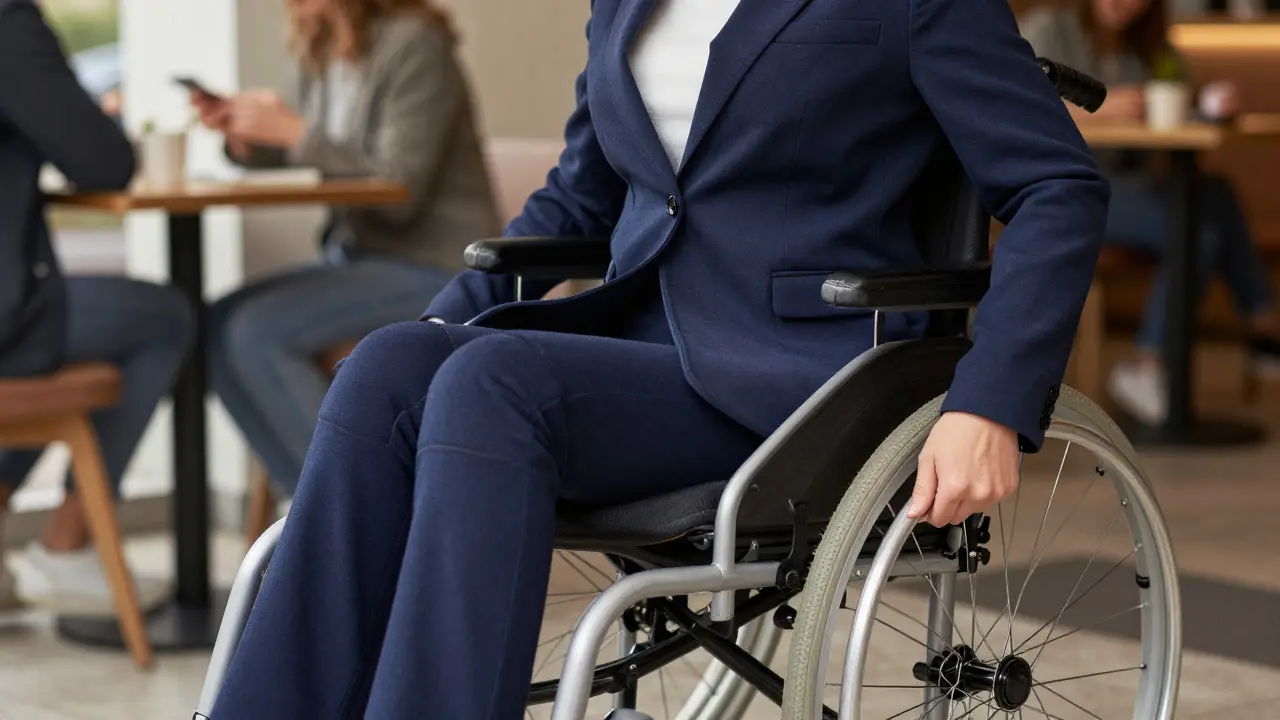
When you’re in a wheelchair, getting dressed isn’t just about looking good-it’s about moving, sitting, and living without constant discomfort. Too many clothes are designed for people who stand, walk, and shift positions naturally. That leaves people who use wheelchairs with limited options: clothes that dig into skin, bunch up at the back, or require impossible contortions to put on. But change is happening. Adaptive fashion isn’t a niche trend anymore-it’s a necessary evolution in how we think about style, function, and dignity.
Why Traditional Fashion Falls Short
Most clothing is built for a standing body. Zippers sit high on the back. Seams run straight down the thighs. Pants are cut for hips that don’t press into a seat for hours. When you’re seated all day, those design choices become problems. A standard pair of jeans can pinch the sacrum. A button-up shirt might ride up and expose skin when you lean back. Dresses with side zippers? Nearly impossible to reach from a seated position. These aren’t minor inconveniences-they’re daily sources of pain, embarrassment, and frustration.One study from the University of Michigan’s Disability Innovation Lab found that 78% of wheelchair users avoid wearing certain clothes because they cause discomfort or require too much assistance. That’s not just about fashion-it’s about autonomy. People want to look like themselves, not like they’re wearing medical gear.
The Magic of Strategic Seams
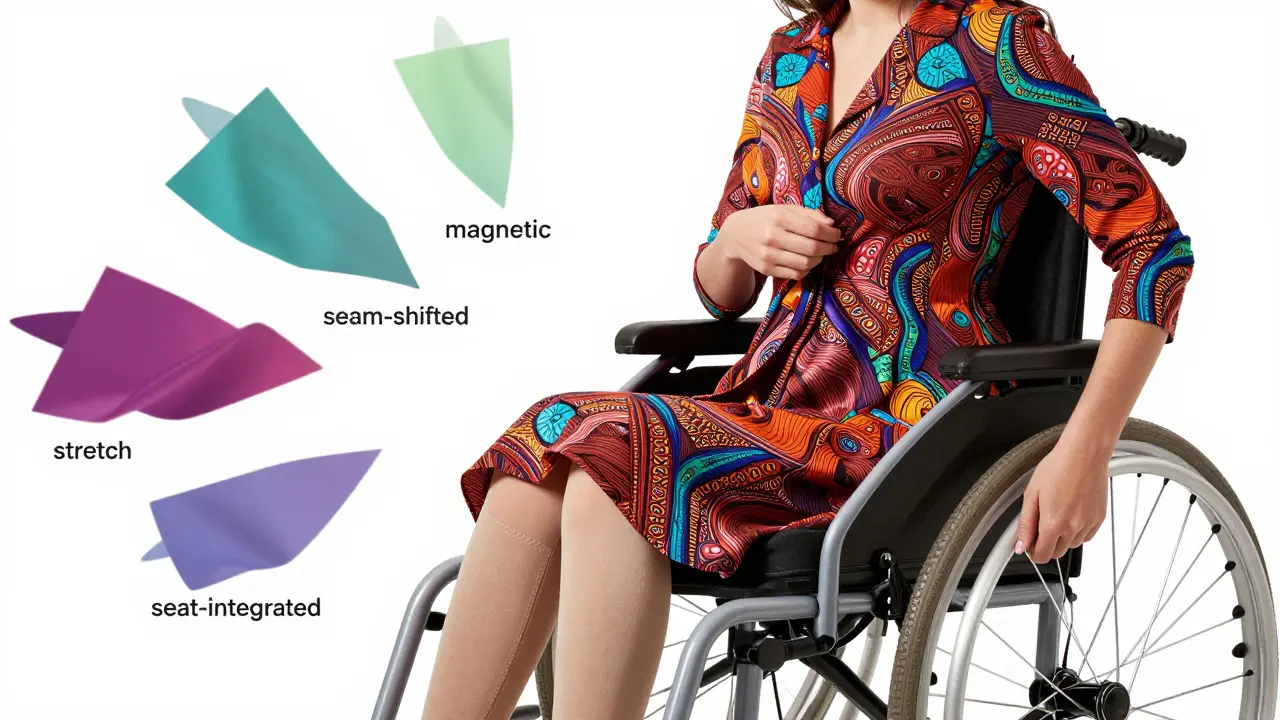
The best adaptive clothing doesn’t look different-it just works better. That starts with seams. Instead of running vertically down the leg, seams are shifted to the outer thigh or even the back of the knee. This prevents pressure points where the leg rests against the wheelchair cushion. Brands like Silvert’s and TomboyX use flatlock stitching that lies flush against the skin, reducing friction and chafing.Back zippers? Gone. Replaced with front or side zippers that open wide enough to slide over hips and thighs without needing to lift legs. Some pants now have hidden magnetic closures along the side seam, letting users fasten them with one hand while seated. A simple shift in seam placement can turn a frustrating dressing experience into something quick and independent.
Silhouettes That Work While Seated
A good silhouette isn’t just about shape-it’s about how fabric moves with your body. Long, flowy tunics that hit mid-thigh when standing can pool awkwardly around the lap when seated. Instead, look for pieces that fall just below the buttocks when you’re sitting. That’s the sweet spot: enough coverage to feel secure, without excess fabric bunching up.High-waisted pants and skirts with stretch panels behind the knees are becoming common in adaptive lines. These give room for the natural curve of the spine and thighs without pulling or riding up. Jackets with longer backs and curved hems follow the shape of the wheelchair backrest, so you don’t end up with a gap between your jacket and seat. Even dresses are being redesigned with hidden side slits and A-line cuts that flare from the hips, not the waist, to avoid squeezing the thighs.
Functional Details That Make a Difference
It’s the little things that add up. Magnetic buttons instead of buttons that require fine motor skills. Elastic waistbands with external drawcords for easy adjustment. Pockets placed low enough to reach from a seated position-no more digging into back pockets that are now at shoulder height. Shoes with wide openings and Velcro straps, not laces, are standard now in adaptive footwear.Some designers are even building in removable padding for wheelchair cushions inside clothing. A thin, washable layer sewn into the seat of pants or skirts can reduce pressure sores and eliminate the need for bulky, visible cushions. It’s not about hiding disability-it’s about integrating support seamlessly into design.
Materials That Breathe and Stretch
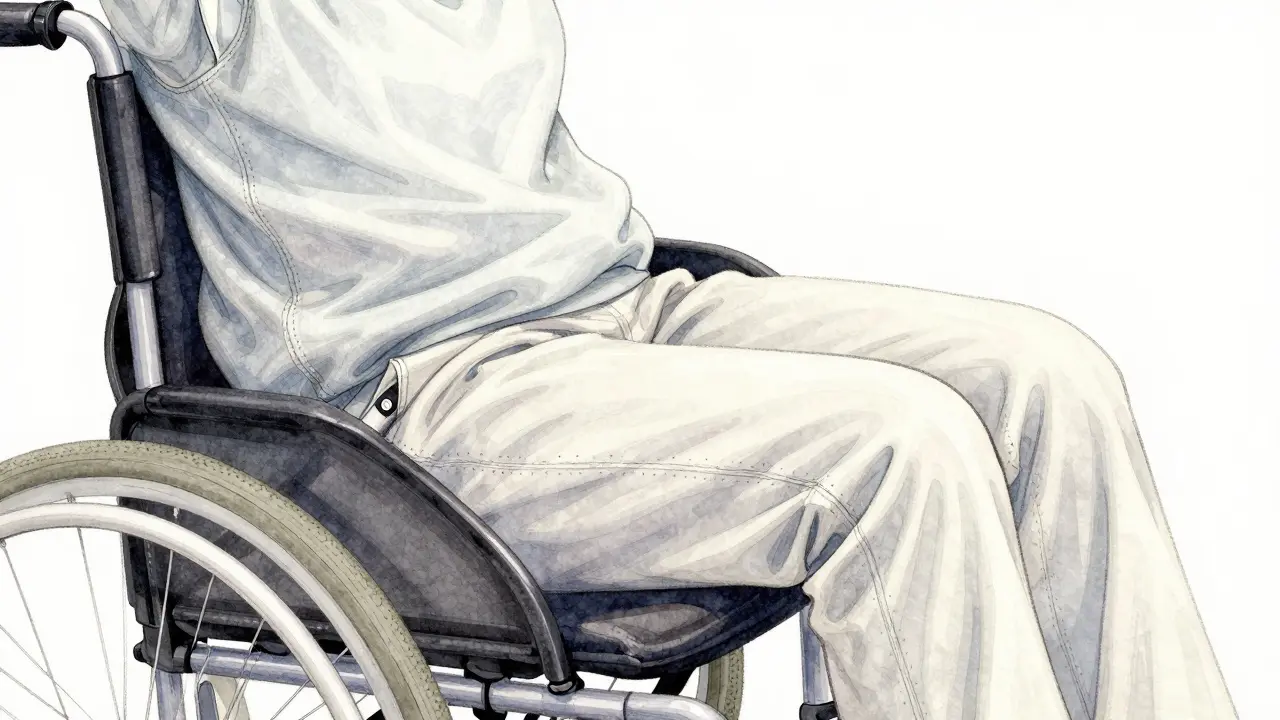
Fabric choice matters just as much as cut. Cotton blends that don’t wrinkle easily, moisture-wicking synthetics, and four-way stretch fabrics are now the norm. Avoid stiff denim, heavy wool, or non-stretch synthetics that don’t move with you. Brands like Eileen Fisher and Adaptive Apparel Co. use recycled polyester blends that are soft, durable, and machine-washable-no dry cleaning required.One user shared that after switching from a traditional cotton shirt to a bamboo-spandex blend with a drop-shoulder cut, she stopped needing help getting dressed in the morning. "It’s not magic," she said. "It’s just fabric that remembers I’m sitting down."
Style Doesn’t Mean Sacrifice
Adaptive fashion isn’t about bland, medical-looking outfits. It’s about color, texture, pattern, and fit-just like any other fashion. Designers like Christy Rupp and the brand Specialisterne are creating tailored blazers, statement coats, and high-waisted wide-leg pants that look like they belong in a runway show. One woman told a reporter she wore a tailored navy blazer with a hidden magnetic front closure to her daughter’s graduation. "I looked like I spent a fortune. I felt like I did. And no one knew I needed help putting it on."When adaptive clothing looks like fashion, not therapy, it changes how people see themselves-and how others see them. It’s not about being "inspiring." It’s about being seen.
What to Look For When Shopping
Not every brand labels itself as "adaptive," but many include features that work for wheelchair users. Here’s what to check for:- Front or side zippers that open fully
- Stretch fabric with at least 20% spandex or elastane
- Seams placed away from pressure points (outer thigh, back of knee)
- Waistbands that are adjustable without buttons or hooks
- Lengths designed for seated posture (hip to mid-thigh)
- Magnetic closures or Velcro instead of small buttons
- Pockets within arm’s reach when seated
Try on clothes while sitting. If you can’t, ask a salesperson to help you simulate sitting by folding one leg up. Pay attention to how the fabric pulls, bunches, or gaps. If it feels tight behind the knees or rides up your back, skip it.
Brands Leading the Way
A few companies are making adaptive fashion accessible without premium prices:| Brand | Key Feature | Price Range | Best For |
|---|---|---|---|
| TomboyX | Seamless underwear and pants with front closures | $25-$65 | Everyday basics |
| Adaptive Apparel Co. | Tailored jackets with hidden magnetic fronts | $80-$180 | Professional wear |
| Silvert’s | Wide-leg pants with side zippers and stretch panels | $50-$120 | Comfort and mobility |
| Eileen Fisher | Soft, draping silhouettes with elastic waists | $100-$300 | Minimalist style |
| Specialisterne | Runway-inspired coats and dresses with hidden support | $150-$400 | Special occasions |
Many of these brands offer free returns and virtual fitting tools. Don’t be afraid to order multiple sizes-you might need to adjust for how fabric drapes when seated.
What’s Still Missing
Progress is real, but gaps remain. Finding adaptive activewear is still hard. There’s almost nothing for plus-size wheelchair users. Outerwear with deep hoods and insulated layers designed for seated posture? Rare. And most mainstream retailers still treat adaptive features as an afterthought-tacked onto the end of a catalog, not integrated into the main collection.There’s also a lack of representation. When you see fashion ads, you rarely see someone in a wheelchair wearing stylish clothes unless it’s a charity campaign. Real inclusion means seeing adaptive fashion in regular magazines, on runways, and in street-style photos-not just in "awareness" posts.
How to Support the Movement
You don’t need to be a wheelchair user to help. Here’s how you can make a difference:- Buy from adaptive brands-even if you don’t need them. Demand drives supply.
- Ask retailers: "Do you have clothing designed for seated wear?" If they say no, say why it matters.
- Share photos of adaptive fashion on social media. Tag brands. Use #AdaptiveFashion.
- Don’t assume someone needs help. If they’re wearing a magnetic-button shirt, don’t comment on it. Let them own their style.
Change doesn’t come from pity. It comes from recognition. From seeing adaptive clothing not as a compromise, but as innovation.
Can regular clothes be modified to be wheelchair-friendly?
Yes. Simple tweaks like replacing buttons with magnets, adding stretch panels to the back of pants, or shortening the inseam can make a big difference. Tailors who specialize in adaptive clothing can help, or you can learn basic sewing techniques online. Many YouTube tutorials show how to convert jeans or shirts in under an hour.
Are adaptive clothes more expensive than regular ones?
Some are, but not all. Brands like TomboyX and Silvert’s offer affordable options under $75. The higher prices often come from small-batch production, specialized materials, and custom fits-not because they’re "special." As more brands enter the market, prices are dropping. Look for sales, secondhand adaptive pieces, or rental services like Rent the Runway’s adaptive line.
Do adaptive clothes only come in neutral colors?
No. Brands like Specialisterne and Adaptive Apparel Co. offer bold prints, jewel tones, and metallic finishes. Fashion is about expression, and adaptive clothing is no different. The myth that adaptive wear has to look "medical" is outdated. You can wear red, patterns, sequins, and asymmetrical cuts-just like anyone else.
Why don’t major retailers like Zara or H&M make adaptive clothing?
Many don’t yet see the market as large enough. But that’s changing. In 2024, H&M launched a limited adaptive line after feedback from disability advocates. The challenge is scale: designing for diverse body types and mobility needs requires research most fast-fashion brands skip. But as consumer demand grows, so will their investment. Supporting adaptive brands sends a clear message: this isn’t a niche-it’s a market.
Is adaptive fashion only for people who use wheelchairs?
No. Adaptive design helps anyone with limited mobility-people recovering from surgery, those with arthritis, or anyone who finds traditional clothing hard to manage. Features like front zippers and stretch fabric benefit older adults, new parents, and people with chronic pain. Inclusive design isn’t exclusive-it’s universal.