

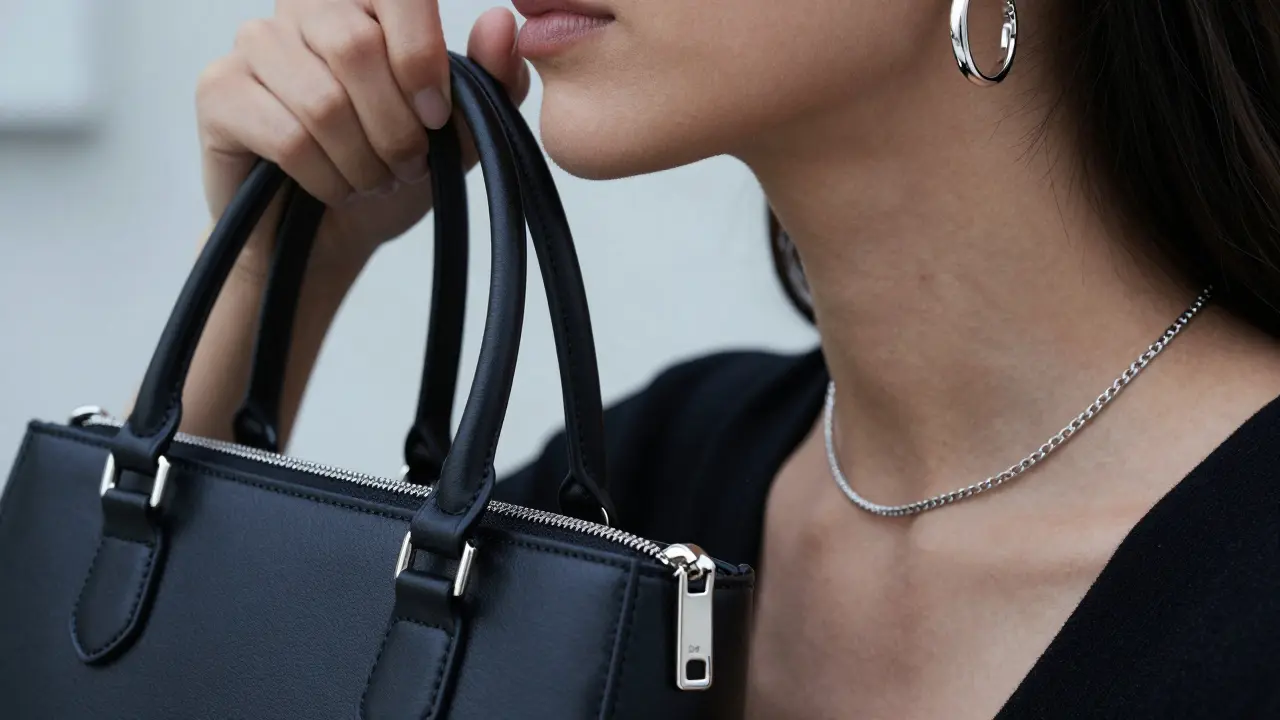
You’ve spent twenty minutes picking the perfect outfit. You’ve layered your necklaces just right. Then you grab your bag, and suddenly, the silver buckle clashes with your gold hoops. It’s a tiny detail, but it ruins the whole vibe. We’ve all been there. The question isn’t just about what you wear; it’s about how those pieces talk to each other.
Matching bag hardware to your jewelry is one of those unspoken style codes that separates a casual look from a polished one. But here’s the secret: you don’t always have to match perfectly. Sometimes, mixing metals is the move. Today, we’re breaking down exactly when to stick to the rules and when to break them so your accessories work together instead of fighting for attention.
The Golden Rule: When to Match Metals
Let’s start with the basics. If you want a clean, cohesive look, matching your bag’s zipper pulls, clasps, and feet to your jewelry is the safest bet. This creates a visual loop that guides the eye smoothly around your outfit without hitting any jarring stops.
Silver-toned hardware pairs naturally with white gold, platinum, sterling silver, or diamond jewelry. Think cool tones. If your bag has gunmetal or chrome accents, lean into icy, sharp jewelry pieces. A sleek leather tote with silver zippers looks incredible with a simple silver chain necklace and stud earrings. It feels modern, crisp, and intentional.
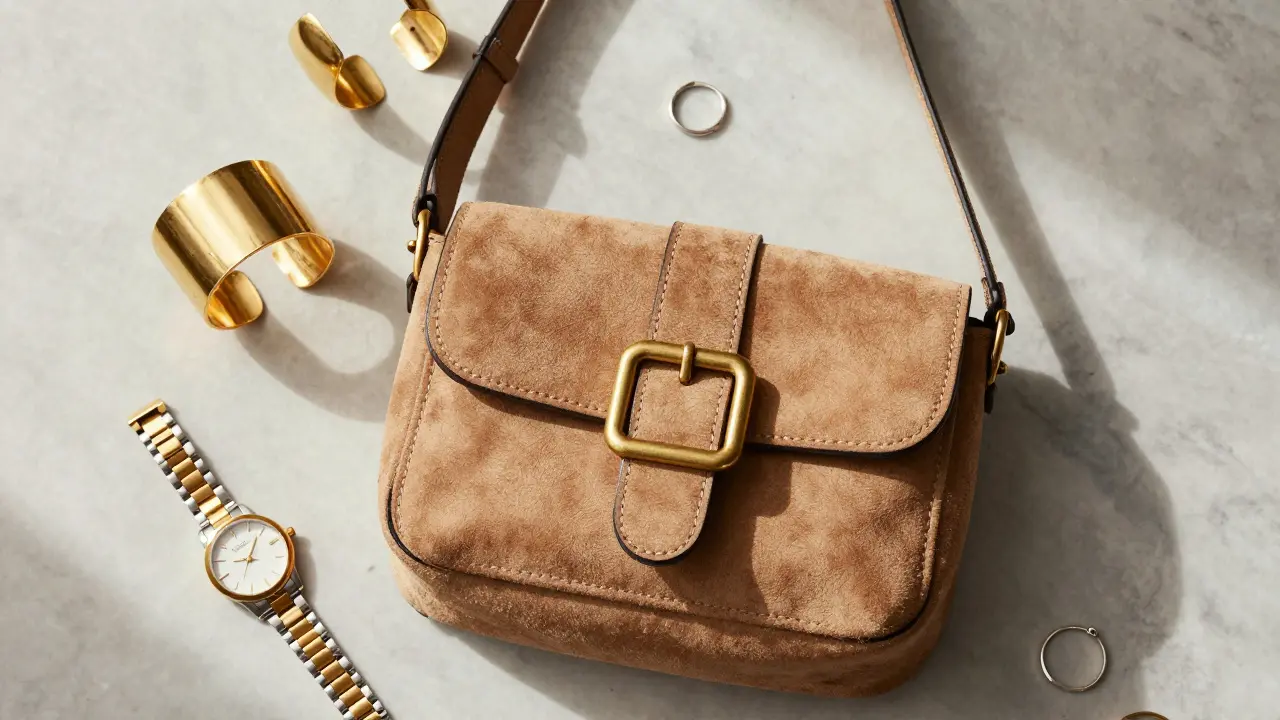
On the flip side, Gold-toned hardware calls for yellow gold, rose gold, or warm-toned gemstones like citrine or amber. This combination radiates warmth and luxury. A tan suede crossbody with brass buckles? Pair it with chunky gold cuffs and layered chains. The key is consistency in temperature-keep everything on the warm spectrum.
Why does this work? Because our brains process color harmony easily. When the metals align, the outfit feels "finished." It signals effort without looking like you tried too hard. For professional settings or formal events, sticking to matched metals is usually the best strategy. It reads as sophisticated and controlled.
The Art of Mixing Metals: Breaking the Rules
Now, let’s talk about the fun part. Matching isn’t mandatory anymore. In fact, rigidly matching every piece can sometimes look dated or overly stiff. Mixing metals adds dimension and personality to your look. But there’s a right way and a wrong way to do it.
The biggest mistake people make is mixing randomly. If you throw on a silver bag, gold rings, and bronze bracelets without a plan, it looks messy. Instead, use the dominant metal rule. Let one metal take the lead (usually the largest item, like your bag or shoes) and use the second metal as an accent.
- Anchor with your bag: If your bag has heavy gold hardware, let that be the star. Add small touches of silver, like a delicate watch band or thin hoop earrings, to create contrast.
- Bridge with neutrals: Leather straps, canvas bags, or black nylon often hide the metal tone slightly. These are your free passes. A black backpack with mixed-metal zippers allows you to wear whatever jewelry you want because the bag itself doesn’t commit to a single color.
- Use transitional pieces: Watches are great bridges. A two-tone watch (gold and silver) literally connects the two worlds. Wear it with a gold bag and silver jewelry, and the watch makes the transition feel natural.
Mixing works best when the textures differ. Shiny gold hardware against matte silver jewelry creates interest. If both are highly reflective, they might compete. Keep one element understated to let the other shine.
Hardware Types Matter More Than You Think
Not all bag hardware is created equal. The finish and shape of the metal change how it interacts with your jewelry. Understanding these nuances helps you style smarter.
| Hardware Finish | Vibe | Best Jewelry Pairing |
|---|---|---|
| High-Shine Polished | Luxurious, Formal | Delicate, refined pieces (thin chains, studs) |
| Brushed/Matte | Casual, Modern | Chunkier, textured jewelry (hoops, bangles) |
| Antique/Vintage | Romantic, Boho | Inherited pieces, mixed metals, organic shapes |
| Gunmetal/Dark | Edgy, Minimalist | Sterling silver, black enamel, geometric designs |
If your bag has antique brass hardware, it has green patina and uneven coloring. Trying to match it with brand-new, shiny yellow gold will look off. Instead, pair it with vintage-style jewelry that has similar aging. The goal is tonal harmony, not exact color matching.
Conversely, high-shine polished hardware demands attention. It reflects light sharply. If you pair it with dull, oxidized silver, the bag will overpower your jewelry. Balance the shine levels. Shiny bag? Shiny jewelry. Matte bag? Textured or matte jewelry.
Seasonal Shifts: Changing Your Metal Game
Your environment plays a huge role in how metals read. Light changes throughout the year, and so should your accessory strategy. Summer sunlight is harsh and bright, while winter light is soft and diffuse.
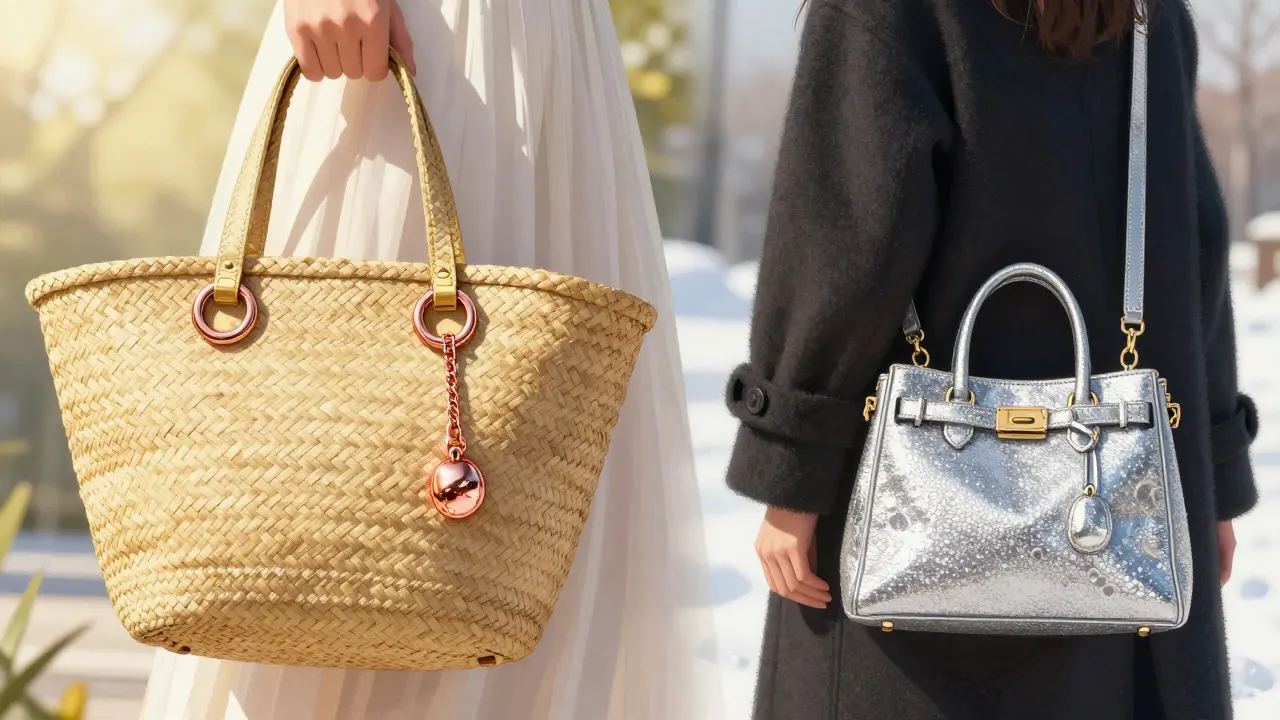
In summer, gold and rose gold pop beautifully against skin tones and bright clothing. They reflect the sun and add warmth. A straw tote with gold rings fits the season perfectly. Silver can look cold in direct sunlight unless balanced with white or blue clothing.
In winter, silver and platinum stand out against dark coats and muted colors. They catch the limited light and add sparkle. Gold can get lost under wool scarves and heavy layers unless it’s bold and chunky. Consider switching your primary metal focus with the seasons. Rotate your bag collection so the hardware complements the prevailing light.
Spring and fall are transition periods. This is where mixing metals shines. You can layer lighter gold pieces over heavier silver ones as temperatures fluctuate. Use these months to experiment with combinations before committing to a seasonal staple.
Practical Tips for Everyday Styling
Styling shouldn’t take extra time. Here are quick heuristics to help you decide in seconds.
- The Shoe Check: If you’re unsure about your bag and jewelry, look at your shoes. If your shoes have metallic accents, match your jewelry to those, not necessarily the bag. Shoes ground the outfit; the bag floats above. Aligning jewelry with shoes creates a stronger base.
- The Skin Tone Test: Do you look better in gold or silver? Stick to that metal for your jewelry regardless of the bag. Your face is the focal point. If your bag clashes slightly, it’s less noticeable than mismatched jewelry washing out your complexion.
- The Clutch Hack: Carry a small clutch with neutral hardware (like clear acrylic or plain leather) when wearing statement jewelry. The bag disappears, letting your necklace or earrings be the hero.
- Color Blocking: If your bag is brightly colored (red, blue, green), the hardware tone matters less. The color dominates. Wear whatever jewelry makes you happy. The metal becomes secondary to the hue.
Don’t stress over perfection. Fashion is personal. If you love wearing a silver bag with gold hoops, keep doing it. Confidence sells the look more than technical correctness.
Common Mistakes to Avoid
Even seasoned stylists slip up. Watch out for these pitfalls.
- Ignoring Strap Color: A black leather strap with gold hardware needs different treatment than a brown leather strap with gold hardware. Brown leather leans warmer, making gold easier to mix. Black leather is neutral but stark, requiring sharper contrasts.
- Overloading One Area: Don’t stack five bracelets if your bag clasp is already ornate. Pick one focal point. If the bag is detailed, keep jewelry minimal. If the bag is simple, go bold with jewelry.
- Forgetting Texture: Smooth metals reflect differently than hammered ones. A smooth gold bag clasp next to a rough-hewn silver bracelet can look disjointed. Match finishes as much as colors.
Remember, these aren’t laws. They’re guidelines to help you navigate choices quickly. Once you understand the principles, you can bend them creatively.
Can I mix gold and silver jewelry with a multi-metal bag?
Absolutely. Bags with mixed hardware (like some designer brands) are designed for versatility. Use the dominant metal on the bag as your guide, then freely mix your jewelry. Just ensure the ratio feels balanced-don’t let one metal completely overwhelm the other.
What if my bag has no visible hardware?
You’re free to choose! Bags made entirely of fabric, canvas, or seamless leather without zippers or clasps act as neutral canvases. Focus on coordinating your jewelry with your shoes, belt, or clothing details instead.
Does the color of the bag affect metal choice?
Yes. Warm-colored bags (brown, tan, red, orange) generally pair better with gold. Cool-colored bags (black, navy, gray, purple) often suit silver. Neutral bags (beige, white, black) offer flexibility. However, bold colors can override this rule, allowing for creative mixing.
Is it okay to wear pearls with mixed metals?
Pearls are incredibly versatile. White pearls complement both gold and silver equally well. They add softness and elegance, bridging gaps between contrasting metals. A pearl necklace with a gold clasp works beautifully with silver earrings and a mixed-metal bag.
How do I handle tarnished or vintage bag hardware?
Embrace the character. Tarnished or patinated hardware has history. Pair it with vintage-inspired jewelry, oxidized silver, or pieces with intricate detailing. Avoid shiny, modern minimalist jewelry, which may clash with the aged aesthetic of the bag.