


Every year, Americans throw away 80 pounds of clothing per person. Most of it ends up in landfills or gets incinerated. Meanwhile, the fashion industry still churns out new pieces at breakneck speed, using up water, chemicals, and energy like it’s endless. But what if the clothes you no longer wear could just… keep going? That’s the promise of circular marketplaces-places where your old jeans become someone else’s favorite pair, and your unworn coat gets a second life instead of a one-way ticket to the dump.
What Exactly Is a Circular Marketplace?
A circular marketplace isn’t just another online thrift store. It’s a system designed to keep clothes in use for as long as possible, then recover materials when they’re truly done. Think of it like a loop: you buy something, wear it, return it or resell it, and it gets reused, repaired, or recycled. The goal? Zero waste. No linear path from factory to landfill. Just a cycle that keeps spinning.Brands like Patagonia, Eileen Fisher, and REI have built their own buy-back programs. You send back your worn-out gear, and they give you store credit. They clean, repair, or resell it. If it’s beyond repair, they break it down into fibers and turn it into new fabric. This isn’t charity-it’s business, but with a different kind of bottom line.
How Resale Platforms Are Changing the Game
You’ve probably seen ThredUp, Poshmark, or Depop. These aren’t just apps for selling your old stuff. They’re the backbone of a new retail economy. In 2024, the global secondhand fashion market hit $275 billion. It’s projected to double by 2029. Why? Because people are tired of fast fashion’s price tag-and its hidden cost.Here’s how it works in practice: You find a dress you love on Poshmark. You pay $45. Three months later, you’re over it. You snap a few photos, write a quick description, and list it for $35. Someone else in Ohio buys it. The dress has now been worn twice, saved 2,700 liters of water (that’s what it takes to make one cotton dress), and avoided 7 kilograms of CO2 emissions. That’s the real savings.
Platforms like The RealReal and Vestiaire Collective go even further. They authenticate luxury items, verify condition, and handle shipping. A $600 Gucci bag you bought on clearance can be resold for $400-still a steal, and still keeping it out of a landfill. These platforms don’t just move clothes. They build trust in secondhand.
Buy-Back Programs: When Brands Take Responsibility
Some brands are stepping up in ways that surprise even loyal customers. Eileen Fisher’s Renew program takes back any Eileen Fisher garment-any condition, any age. You get a $20 gift card for every item. They’ve collected over 2 million pieces since 2009. Most get reworn. Some get dyed, cut, or stitched into new designs. A few become insulation for homes.Patagonia’s Worn Wear program does something similar. You trade in used Patagonia gear and get credit toward new items. They’ve repaired over 100,000 garments since 2013. One customer sent in a 15-year-old fleece. Patagonia stitched a new zipper, replaced the hood, and sent it back. The customer wore it another five years.
These programs aren’t marketing gimmicks. They’re supply chain shifts. By reclaiming materials, brands reduce reliance on virgin polyester and cotton. That cuts costs over time and makes them less vulnerable to price spikes in raw materials.
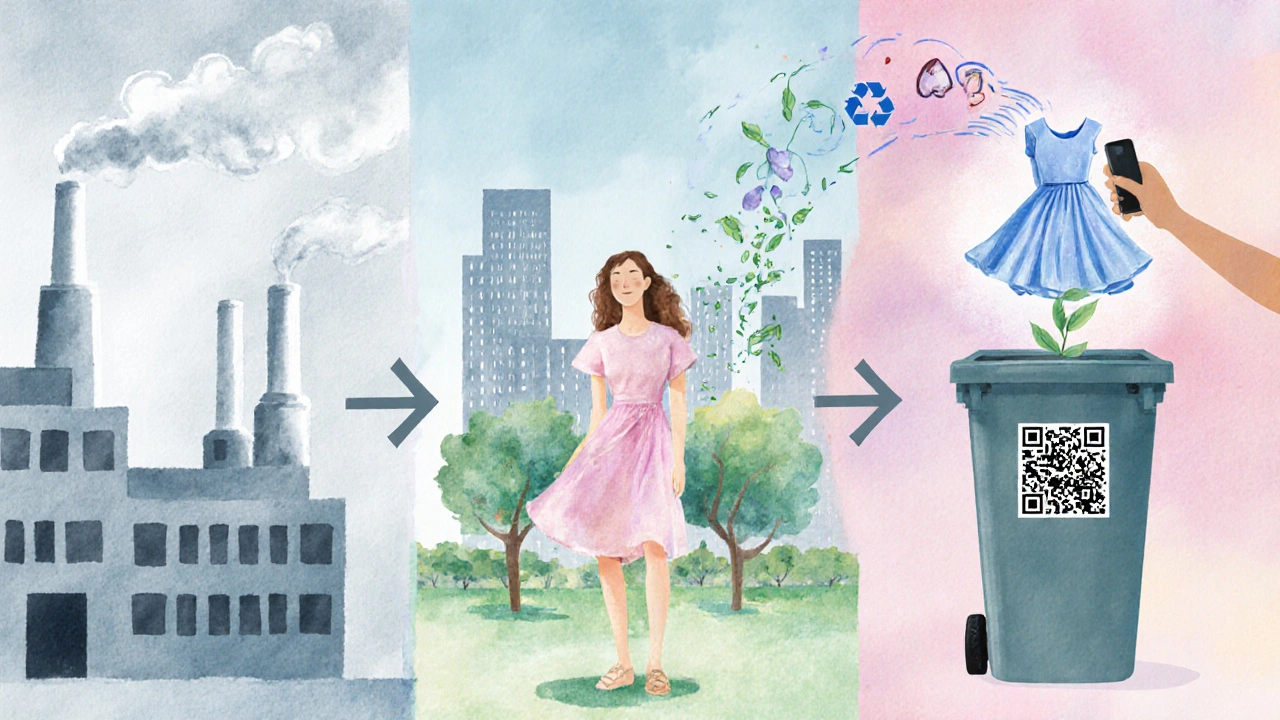
Why This Matters More Than You Think
The fashion industry is the second-largest polluter in the world-after oil. It uses 1.5 trillion liters of water annually. That’s enough to fill 600 million Olympic swimming pools. Synthetic fabrics like polyester shed microplastics every time you wash them. Those end up in oceans, fish, and eventually, your dinner plate.Circular marketplaces directly attack these problems. When you resell a shirt, you’re not just decluttering. You’re reducing demand for new production. For every 100 garments resold, roughly 70 new ones are avoided. That’s 70 fewer factories running, 70 fewer trucks shipping, 70 fewer tons of chemicals dumped.
And it’s not just environmental. It’s economic. People in low-income neighborhoods are accessing higher-quality clothing at lower prices. A $120 jacket from a buy-back program costs $40. That’s not charity-it’s access. Circular systems make fashion more equitable, not just greener.
What Happens to Clothes That Can’t Be Resold?
Not everything can be reworn. Stained, torn, or overly worn items still need a path. That’s where textile recycling comes in. Companies like Renewcell and Evrnu turn cotton and viscose into new fiber-called Circulose and NuCycl-without using water or toxic chemicals. These fibers are already being used by H&M, Zara, and Levi’s in new collections.But here’s the catch: Recycling alone isn’t enough. Most textiles are blends-polyester-cotton, nylon-spandex. These are nearly impossible to separate. That’s why brands are moving toward mono-material designs: 100% cotton, 100% wool, 100% recycled polyester. It’s not perfect, but it’s a step forward.
Some brands now label their clothes with QR codes that track their lifecycle. Scan it, and you see where the garment came from, how many times it’s been worn, and how to return it. This isn’t sci-fi. It’s happening now. Levi’s launched its SecondHand platform with blockchain tracking in 2023. It’s still small, but it’s growing.

How to Get Started-Whether You’re Buying or Selling
If you’re thinking of joining the loop, here’s how to do it right:- Start small. Pick one category-jeans, sweaters, outerwear. Sort through your closet. What haven’t you worn in a year?
- Choose your platform. For luxury items, use The RealReal or Vestiaire. For everyday wear, try ThredUp or Poshmark. For local sales, Facebook Marketplace works.
- Take good photos. Natural light. Flat lay or on a hanger. Show flaws honestly. Buyers trust transparency.
- Price smart. Look at similar items sold in the last 30 days. Don’t overprice. Secondhand buyers are price-sensitive.
- Try a buy-back program. If you own Patagonia, Eileen Fisher, or REI gear, check their websites. You might get $50-$150 in credit.
- Buy with intent. When you shop secondhand, ask: Will I wear this 30 times? If yes, it’s worth it. If no, leave it.
What’s Holding Us Back?
Despite all the progress, barriers remain. Many people still see secondhand as “dirty” or “cheap.” That’s changing fast, but stigma lingers. Others don’t know how to resell or think it’s too much work. And while platforms make it easier, shipping costs and return policies can be messy.Then there’s greenwashing. Some brands claim to be circular but only take back a tiny fraction of what they sell. Or they recycle 5% of materials and call it a win. Always check: What percentage of returned items actually get reused? What happens to the rest?
True circularity means 90%+ of materials stay in use. We’re not there yet. But we’re closer than we were five years ago.
The Future Is Already Here
In 2025, a new wave of circular marketplaces is emerging. Apps like Loop and ReFashion let you rent clothes for special events instead of buying. Others, like Threadcycle, use AI to predict which items will resell best-helping sellers price and list smarter.Some cities are getting involved, too. Seattle launched a pilot program in 2024 where residents can drop off unwanted clothing at recycling bins in parks and libraries. The city partners with local resale shops to sort and redistribute. No landfill. No cost to the user.
This isn’t about perfection. It’s about progress. Every garment kept out of a landfill is a win. Every pair of jeans passed on to someone who loves them? That’s a revolution.
Are buy-back programs worth it?
Yes-if you own brands that actually reuse or recycle the items. Patagonia, Eileen Fisher, and REI have proven systems. You get store credit, and your clothes stay in use. Avoid brands that just donate to thrift stores and call it a day. That’s not circular-it’s outsourcing.
Can I make money reselling clothes?
Absolutely. People make $500 to $5,000 a month reselling on Poshmark or Depop. The key is consistency and quality. Focus on timeless pieces-denim, wool coats, leather boots. Avoid fast fashion brands unless they’re in excellent condition. Take good photos, write honest descriptions, and respond quickly to messages.
Is secondhand clothing clean and safe?
Yes, if you buy from reputable platforms. ThredUp, The RealReal, and Vestiaire Collective wash and sanitize every item. Even on Poshmark or Facebook, most sellers wash clothes before shipping. If you’re nervous, wash anything you buy before wearing it. It’s a simple habit that eliminates any risk.
What’s the difference between resale and thrift stores?
Thrift stores rely on donations and sell items at low, fixed prices. Resale platforms let individuals sell directly, often at higher prices based on condition and brand. Resale platforms also offer authentication, better photos, and targeted marketing. You’re more likely to find designer or high-quality items on resale sites.
Do circular marketplaces really reduce waste?
Yes, and the numbers back it up. According to the Ellen MacArthur Foundation, extending the life of a garment by just nine months reduces its carbon footprint by 30%. If everyone in the U.S. resold just five items a year, we’d keep over 1.2 million tons of clothing out of landfills annually.
If you’ve ever tossed a shirt you never wore, or bought something new just because it was on sale, this is your chance to do better. Start with one item. Sell it. Buy something used. Watch how the loop begins.


Write a comment