

Conscious Wardrobe
When you build a conscious wardrobe, a collection of clothes chosen for their quality, ethics, and long-term use rather than trend cycles. Also known as a slow fashion wardrobe, it’s not about buying less—it’s about buying better. This means thinking about who made your clothes, how much water was used to produce them, and whether they’ll still fit your life in five years. It’s the quiet rebellion against the constant churn of fast fashion, where every shirt, pair of jeans, or coat carries a hidden cost you can no longer ignore.
A conscious wardrobe, a collection of clothes chosen for their quality, ethics, and long-term use rather than trend cycles. Also known as a slow fashion wardrobe, it’s not about buying less—it’s about buying better. This means thinking about who made your clothes, how much water was used to produce them, and whether they’ll still fit your life in five years. It’s the quiet rebellion against the constant churn of fast fashion, where every shirt, pair of jeans, or coat carries a hidden cost you can no longer ignore.
It’s not just about the clothes you keep—it’s about what you let go of. circular marketplaces, systems where used clothing is resold, traded, or returned to brands for reuse. Also known as resale fashion platforms, they turn your old sweaters into someone else’s new favorite piece, keeping textiles out of landfills. Brands offering buy-back programs, where you return worn items for store credit, helping close the loop on production. Also known as take-back schemes, they reward you for not tossing things out. And when you do need something new, you learn to spot the investment pieces, clothes built to last years, not seasons—like a well-tailored coat or durable leather boots. Also known as core wardrobe staples, they anchor your style without demanding constant replacement.
You don’t need a perfect wardrobe to start. You just need to start noticing. What do you reach for every week? What do you ignore? What’s been hanging in your closet for two years because it doesn’t fit right? A conscious wardrobe grows from honesty—not guilt. It’s the difference between buying five cheap blouses that shrink after two washes and one that feels like it was made just for you. It’s choosing fabric that breathes, seams that hold, and colors that still make you feel like yourself after five years.
People with a conscious wardrobe don’t chase trends. They adapt. They alter. They repurpose. They know that a hemline can be raised, a waist taken in, a scarf turned into a top. They’ve learned that style isn’t about what’s new—it’s about what still works. And when your body changes, your wardrobe changes with it—not because you bought new, but because you cared enough to adjust what you already had.
Below, you’ll find real stories from people who’ve done this. From how to calculate your wardrobe’s carbon footprint to turning old jeans into a tote bag, from mastering seasonal rotation to finding the perfect fit without spending a fortune. These aren’t theory pieces. They’re practical, tested, and built for real life. No perfection required. Just better choices.
How to Build a Wardrobe That Matches Your Environmental and Social Values
Posted by Eamon Lockridge on Dec, 4 2025
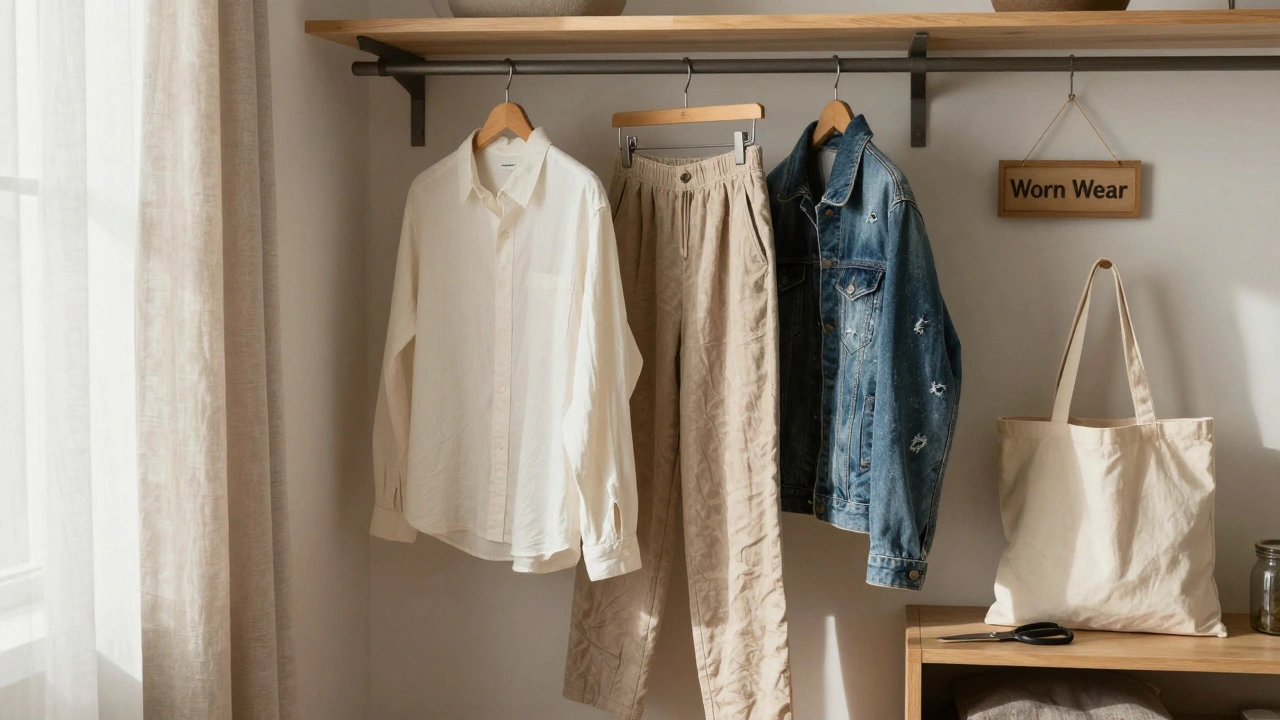
Learn how to build a wardrobe that reflects your environmental and social values-without sacrificing style. Discover practical steps to choose ethical clothing, avoid greenwashing, and make every purchase count.