

Values-Driven Style: Dress with Purpose, Not Just Trends
When you choose clothes based on values-driven style, a way of dressing that aligns your wardrobe with your personal ethics and long-term goals. Also known as conscious consumerism, it’s not about labels or price tags—it’s about asking: Who made this? How long will it last? And does it truly fit my life? This isn’t a trend. It’s a quiet revolution happening in closets from Brooklyn to Brisbane, where people are trading impulse buys for intentionality.
At its core, values-driven style, a way of dressing that aligns your wardrobe with your personal ethics and long-term goals. Also known as conscious consumerism, it’s not about labels or price tags—it’s about asking: Who made this? How long will it last? And does it truly fit my life? This isn’t a trend. It’s a quiet revolution happening in closets from Brooklyn to Brisbane, where people are trading impulse buys for intentionality.
It connects directly to sustainable fashion, a system that reduces environmental harm by extending garment life through repair, resale, and thoughtful design, which you’ll see in posts about circular marketplaces and wardrobe carbon audits. It’s also tied to intentional wardrobe, a curated collection of clothes chosen for durability, fit, and personal meaning rather than novelty, a theme that runs through articles on retiring trends gracefully and seasonal rotation. And it’s fueled by ethical clothing, garments made under fair labor conditions with transparent supply chains—something you’ll find explored in pieces about price point decisions and tailoring for plus sizes, where fit and fairness go hand in hand.
You won’t find here the hype of seasonal drops or influencer trends. Instead, you’ll find real strategies: how to spot quality when it’s not branded, how to make your favorite shirt last ten years, how to feel confident in clothes that don’t cost a fortune but still honor your values. Some posts show you how to use fabric draping to find your true colors—not because it’s trendy, but because it saves you from buying clothes that don’t suit you. Others reveal how team apparel builds belonging, not through matching logos, but through shared identity and respect.
This collection isn’t about perfection. It’s about progress. It’s for the person who stopped buying new jeans just because they were on sale. For the one who took a worn-out coat to a seamstress instead of tossing it. For the one who asked, Why am I wearing this? before pulling it on. You don’t need to overhaul your closet overnight. You just need to start asking better questions.
Below, you’ll find real stories, real fixes, and real ways to make your wardrobe reflect who you are—not what the market tells you to be. Whether you’re rethinking your desert wardrobe, learning how to stack rings without looking cluttered, or figuring out what to wear to an art opening, every post here is a step toward a wardrobe that feels right—not just fashionable.
How to Build a Wardrobe That Matches Your Environmental and Social Values
Posted by Eamon Lockridge on Dec, 4 2025
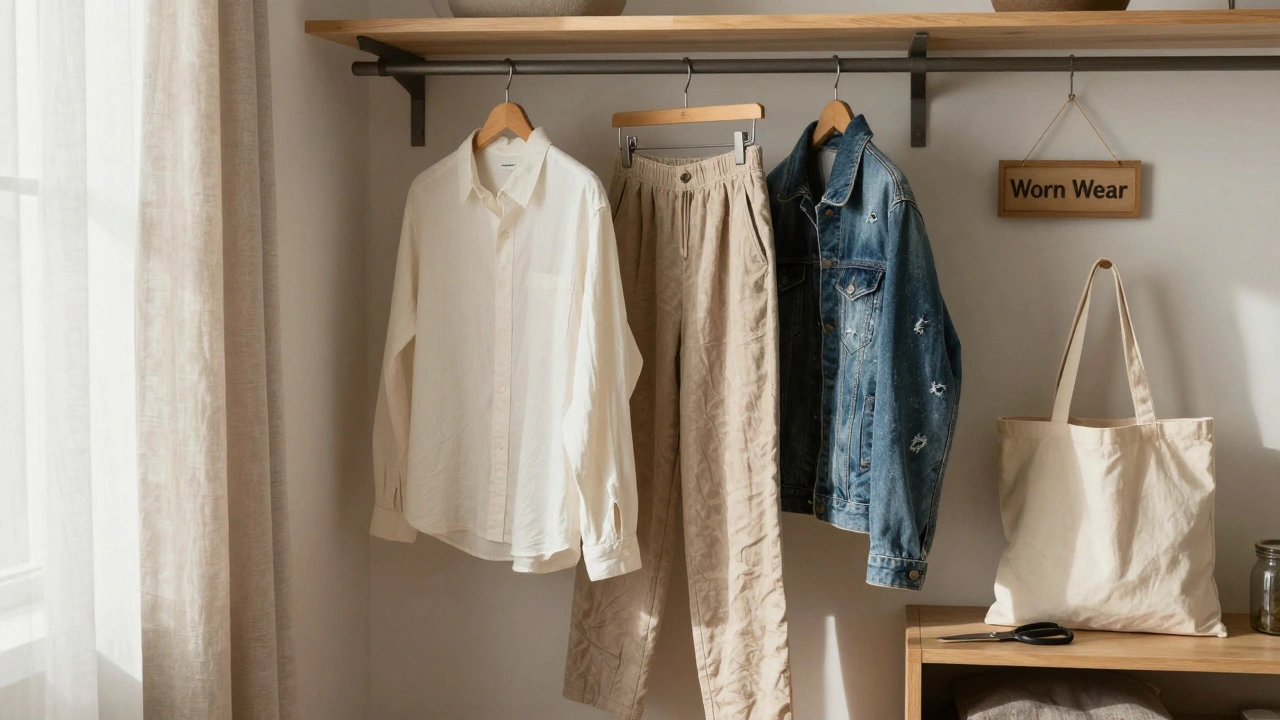
Learn how to build a wardrobe that reflects your environmental and social values-without sacrificing style. Discover practical steps to choose ethical clothing, avoid greenwashing, and make every purchase count.